
ChinaTravelPlus | Premier China Inbound Travel & Private Tours

Turkish Airlines Opens Chengdu Nonstop: The Istanbul

1.1 Three "Announcements" on the Timeline

This route moved from "rumour" to "confirmed" through three clear signal points, which the CTP Research Department reconstructs here so that readers can follow the full sequence:

  • Signal one (late July 2026): bookings opened before the formal announcement. According to airline media citing Aeroroutes, Turkish Airlines opened reservations for the Istanbul–Chengdu Tianfu route on 23 July, planning to launch this new China service in the northern winter 2026/27 schedule; the flight plan showed Boeing 787-9 operation from 11 November at three weekly frequencies, with TK226/TK227 timings already listed. Source: The Paper / CARNOC, 2026-07-24
  • Signal two (early-to-mid August 2026): the board chairman articulated the Asia-Pacific strategy in Nikkei Asia. Murat Şeker told Nikkei Asia that Türkiye's flag carrier would raise Asia-Pacific frequencies by up to 20% over the coming years, with China and Australia at the centre of the Asia-Pacific expansion; he disclosed that weekly China services had reached 42 flights and could grow to 49 under existing traffic rights, with the Chengdu route planned for November and Urumqi under preparation. Source: Observer Net, 2026-08-26; Source: Embassy of Türkiye in China / Toutiao repost, 2026-08-24
  • Signal three (18-25 August 2026): multiple sources confirmed the launch date and flight details. On 18 August Travel News China and MiceCN, and between 19 and 25 August a series of international aviation media (rustourismnews, traicy, traveltrade.today, turkmenportal and others) confirmed: launch on 11 November 2026; Chengdu as Turkish Airlines' 4th mainland China destination; Boeing 787-9, three weekly round trips, 300 seats (30 Business + 270 Economy), adding up to 1,800 scheduled seats between Istanbul and Chengdu each week. Source: Travel News China, 2026-08-18; Source: rustourismnews, 2026-08-25; Source: traicy, 2026-08-22

The three signals progressed layer by layer, revealing Turkish Airlines' mature launch cadence — "release seats first, announce later, synchronise across multiple channels" — and the confidence in its market-demand assessment for this route.

1.2 Flight Parameters: A Schedule Designed for Connecting Travelers

Breaking down the hard parameters of this route, the CTP Research Department believes its design logic is itself "inbound-tourism friendly":

| Flight | Origin | Timing (local) | Destination | Days | Flight time

|--------|--------|----------------|-------------|------|-------------

| TK226 | Istanbul IST | dep 02:05 | Chengdu Tianfu TFU arr 15:40 | Wed/Fri/Sun | ≈8h35m

| TK227 | Chengdu Tianfu TFU | dep 00:45 | Istanbul IST arr 05:55 | Mon/Thu/Sat | ≈10h10m

  • Aircraft and cabins: Boeing 787-9 Dreamliner, 300 seats (30 Business + 270 Economy), three round trips per week, adding roughly 1,800 seats per direction each week. Source: Travel News China; Source: rustourismnews
  • Timing design: the return TK227 departs Chengdu at 00:45 and arrives in Istanbul at 05:55 — a "red-eye departure, early-morning arrival" pattern that makes it easy for travellers to connect onward the same day to European, Middle Eastern and African destinations via Istanbul, enabling seamless "single-transfer via Istanbul" itineraries. The outbound TK226 departs Istanbul at 02:05 and arrives in Chengdu at 15:40 Beijing time, allowing arriving visitors to complete their 240-hour visa-free transit entry procedures the same day and start their itinerary the next day. Source: Observer Net
  • Promotional fares: to celebrate the launch, Turkish Airlines is offering economy round-trip fares from RMB3,640 including tax and business-class round-trip fares from RMB13,422 including tax on the Chengdu–Istanbul route, applicable through official Turkish Airlines sales channels. Source: Travel News China; Source: MiceCN

1.3 Why Chengdu: A Two-Way Choice Between Airline Strategy and City Endowment

Turkish Airlines CEO Ahmet Olmuştur gave the official explanation in the launch announcement: "China has always held an important position in Turkish Airlines' global strategy. Chengdu is not only an important tourism, technology and aviation-industry centre in China, but also a UNESCO Creative City of Gastronomy. With the launch of the Chengdu route, we will further refine Turkish Airlines' route network in China." Source: Travel News China; Source: MiceCN

From the carrier's perspective, Chengdu's value rests on at least three pillars. First, it is the demographic and economic centre of western China: a mega-city of more than 21 million residents with clustered strategic industries in electronics, automotive, aviation, biotechnology and artificial intelligence, offering both business and leisure traffic. Second, Chengdu operates the rare configuration of "two international airports" — Shuangliu and Tianfu — with the most extensive international route network in central and western China; by 2025 it had restored 85 scheduled international direct routes, building a "10-hour intercontinental, 5-hour Asia" flight circle. Third, Chengdu sits deep in China's western hinterland: for Turkish Airlines it is the key to the "western market". As rustourismnews put it, Chengdu lets the carrier move beyond "concentrating its mainland network exclusively on the country's largest eastern and southern gateways" and extend its reach across the entire west. Source: rustourismnews; Source: People's Daily Overseas Edition, 2026-05-27

Chengdu the destination is itself a "traffic magnet" for international source markets: the Chengdu Research Base of Giant Panda Breeding is the city's number-one draw for global travellers; its UNESCO Creative City of Gastronomy status makes Sichuan cuisine, hotpot and mapo tofu a "taste of China"; and Dujiangyan (a dam-less irrigation project from 256 BC, a UNESCO World Heritage site), Qingcheng Mountain (one of the birthplaces of Taoism) and the Jiuzhaigou-Huanglong national parks together form a world-class natural-cultural combination. Source: The Times Australia In the words of international travel media, Chengdu is the "City of Pandas" and one of the "12 best places to visit in China" — the departure point for tours to the national parks of Jiuzhai Valley and Huanglong and the regions around Sichuan. That is precisely the answer to "where do travellers come from, and where do they go next" once the corridor opens.

2.1 133 Countries, 358 Destinations: A Network That Flies to More Countries Than Almost Any Other

To understand the hub value of this corridor, one must first understand where Istanbul sits on the map of Eurasia and Africa. Turkish Airlines describes itself as "the airline flying to more countries than any other" — its network spans 133 countries and 358 destinations, and Istanbul is the single hub of this vast web. Source: Anadolu Agency (AA); Source: Observer Net

For inbound tourism, the value of a hub lies not in "nonstop" but in "connection": a traveller from a secondary European city (say Lyon in France, Stuttgart in Germany, or Valencia in Spain) need not transfer through Paris, Frankfurt or another mega-hub in multiple layers — instead, one flight to Istanbul and one flight onward to Chengdu. Istanbul is adjacent to both Europe and Asia, and the distance to Africa and the Middle East lies within the radius of a "single transfer". That is the practical meaning of "flying to more countries than any other": there is almost no source country in the world from which China is unreachable via Istanbul.

2.2 Source-Market Restructuring: What Africa-Asia +70% and Eastern Europe-Asia +40% Mean

The most striking data set for inbound-tourism practitioners in this edition comes from Turkish Airlines' Q2 and H1 2026 results:

  • Africa-Asia passenger traffic jumped 70% year-on-year, and Eastern Europe-Asia traffic rose 40%, enabled largely by shorter transit routings over Russian airspace; Source: Anadolu Agency (AA); Source: Observer Net
  • Asia's revenue share climbed five percentage points to 32%, overtaking Europe's 27% for the first time, while Asia's share of total passenger traffic rose from 10% to 12%; Source: Anadolu Agency (AA)
  • After the Middle East situation, Turkish Airlines redirected wide-body capacity to high-demand markets such as Japan, China, Australia, Thailand, Singapore and Vietnam, adding 58 weekly passenger flights and 61 weekly cargo flights. Source: Observer Net; Source: Embassy of Türkiye in China / Toutiao repost

Taken together, these three signals outline an "eastward shift" of the Istanbul hub: uncertainty over Middle East airspace has in fact accelerated the carrier's deployment of capacity into Asia; and the double-digit — in the Africa-Asia case 70% — passenger growth between Africa, Eastern Europe and Asia shows that "to Asia via Istanbul" is moving from a niche choice to a mainstream corridor. For Chengdu and the whole of western China, this means a source belt that was previously almost out of reach — Africa, the Middle East and Eastern Europe — is being "pulled closer" onto a route network where a single transfer in Istanbul suffices.

2.3 Financial Proof: When "Asia" Becomes the Profit Engine

Turkish Airlines' financials further confirm the sustainability of this eastward shift: in Q2 2026, revenue grew 20.5% year-on-year to US$7.2 billion, with passenger revenue up 15% and cargo revenue surging 58%. Despite rising jet-fuel prices from Middle East tensions — an additional cost of roughly US$1.3 billion, with total conflict-related spending around US$2.1 billion — H1 total revenue still rose 20.8% to US$13.1 billion. The Q2 passenger load factor reached 84.0%, the highest ever for the quarter; in July 2026 the carrier carried 9.5 million passengers at a load factor of 86.5%. Source: Observer Net; Source: Anadolu Agency (AA); Source: aviationa2z

The CTP Research Department reads this as follows: "Asia equals profit engine" means the Asia-Pacific expansion is not a political gesture but a commercial choice — and Chengdu, as the first stop in western China, is exactly where this commercial logic lands on the map of China.

2.4 Transit Is the Product: Why "Via Istanbul" Itself Is a Selling Point

Going further, Istanbul's "transit" has already been productised by Turkish Airlines, turning it into a reason to choose this corridor: passengers with a transfer of more than six hours can join the free Touristanbul city tour, with official buses and guides covering landmarks such as the Blue Mosque, Hagia Sophia and Topkapı Palace, with some tours including a Bosphorus cruise and dinner; passengers with a transfer of more than 20 hours can apply for the Stopover free-hotel (with breakfast) programme. For Chinese travellers, Istanbul Airport has also earned a "China-Friendly Airport" certification, with Chinese signage, digital services and Chinese-speaking staff. The essence of these "transit benefits" is to turn "waiting for a connection" into "adding a free city break" — for travellers coming to China from Europe, the Middle East and Africa, and equally for Chinese travellers heading via Istanbul to Europe, strengthening the stickiness of the "via Istanbul" routing in both directions.

3.1 Policy Foundation: 240-Hour Visa-Free Transit and Chengdu's Two Air-Ports

A corridor needs more than a route — it needs a policy that "lets people in". On this front, Chengdu holds a "top configuration":

  • The 240-hour transit visa-free policy: in effect since 17 December 2024, with the list of eligible countries and ports continuously expanding. Eligible foreign nationals holding a valid ordinary passport and a confirmed, dated itinerary with interline tickets, transiting through China en route to a third country or region, may enter visa-free and stay within designated areas for up to 240 hours (10 days). During the stay they may engage in tourism, business, visits and family visits, and cross-province travel is permitted. Source: National Immigration Administration; Source: TravelChinaGuide
  • Both Chengdu air-ports qualify: on 20 August 2026, the National Immigration Administration announced that the 240-hour transit visa-free policy had again expanded its eligible-country list (adding Kyrgyzstan and Vietnam), and the designated open ports covered by the policy explicitly include Chengdu Shuangliu International Airport and Chengdu Tianfu International Airport — foreign travellers can enjoy 240-hour visa-free transit convenience at both of Chengdu's aviation ports. Source: Chengdu Release / The Paper, 2026-08-20; Source: Sina / Chengdu Release
  • Eleven Sichuan cities, inter-provincial travel: within Sichuan Province, Chengdu, Zigong, Luzhou, Deyang, Suining, Neijiang, Leshan, Yibin, Ya'an, Meishan and Ziyang — eleven cities in total — are covered by the 240-hour transit visa-free policy, with inter-provincial movement permitted within the applicable area. This means a traveller entering via Chengdu can continue on to Chongqing, Yunnan, Guizhou and other surrounding provinces and cities. Source: TravelChinaGuide

The CTP Research Department notes that the policy is still dynamically expanding (the numbers of eligible countries and ports are rising), and practitioners should defer to the National Immigration Administration's latest official announcements. But the direction is unmistakable — the dividend of "transit means a 10-day stay, cross-province roaming included" is locking precisely onto the route supply of "single-transfer via Istanbul, nonstop to Chengdu".

3.2 Corridor Blueprint: A One-Ticket Conversion Formula

Putting the route and the policy together, the corridor's complete formula becomes clear:

> Europe / Middle East / Africa source market → single transfer in Istanbul → nonstop to Chengdu Tianfu (under 11 hours) → 240-hour visa-free transit at the dual ports → 10-day deep tour of western China (Chengdu + western Sichuan + cross-province) → exit via Chengdu or any designated open port to a third country

For the traveller, the value is "two destinations solved in one ticket": enjoy both Türkiye/Istanbul and a deep tour of western China, seamlessly connected on one interline booking. For inbound-tourism practitioners, the value is "source-market upgrade": in the past, western China's inbound source markets depended heavily on near-haul Southeast Asian travellers and a handful of direct European/American cities; the Istanbul hub gives the "long-haul source belt" (Africa, the Middle East, Eastern Europe, even South America) its first low-cost, low-barrier aerial route into the western hinterland.

3.3 Chengdu's "Guest-Receiving" Readiness: From Port Subsidies to E-Wallets

Once the corridor is open, the city must also "receive" the guests. Chengdu's inbound-facilitation investments over the past two years provide exactly the supply-side preparation this corridor needs:

  • Transit subsidies: the Chengdu Eastern New Area, where Tianfu International Airport is located, offers international transit passengers subsidies of up to RMB400 per person, comprising RMB200 for hotel stays, RMB100 in consumption vouchers and RMB100 in rail tickets; Source: The Times Australia, citing the Chengdu Information Office
  • Tax-refund network: Chengdu has more than 600 tax-refund stores with instant tax refunds and direct payment via overseas e-wallets; in January-November 2025, the number of departure tax-refund transactions grew 283% year-on-year, driving a 142% rise in sales value. More than 200 "buy-now, refund-instantly" stores are concentrated in core commercial districts such as Chunxi Road, with the fastest single-transaction refund completed in about three minutes; Source: The Times Australia; Source: Cover News, 2026-08-10; Source: People's Daily Sichuan
  • Language and services: Chengdu has more than 6,000 taxi drivers trained in English; the Xiling Snow Mountain scenic area has launched an international booking platform supporting real-time translation in 24 languages and transactions in 29 currencies; multilingual AI translation screens are deployed across major scenic areas and transport hubs. The Jinli Street "Open Chengdu" cultural tourism base, officially opened on 6 February 2026, features a professional English-speaking service team, more than 300 bilingual signs and more than 10 bilingual self-service ticketing machines; across more than 50 Jinli locations — from museum gift shops to street vendors — international credit cards such as VISA are widely accepted; Source: The Times Australia
  • Payment environment: more than 90% of Chengdu's key commercial districts support international credit-card payment, and foreign visitors can conveniently use Alipay and WeChat Pay. Source: Cover News

This combination of "port subsidy + tax refund + payment + language" turns "a 10-day deep tour of western China" from a slogan into a deliverable product.

4.1 The Hard Numbers: 2.38 Million Inbound Tourists, +44.3%, the Confidence of Western China's Top Inbound City

Chengdu's inbound-tourism fundamentals are the city-side evidence that this corridor "deserves to be opened":

  • Full year 2025: Chengdu hosted 2.38 million inbound tourists, up 44.3% year-on-year; inbound-tourism consumption ranked fifth nationally. Source: People's Daily Sichuan, 2026-01-29; Source: China News Service Sichuan, 2026-01-22; Source: Cover News
  • 2026 Spring Festival: Chengdu welcomed 77,000 inbound tourists, up 47.2% year-on-year, with a growing number of international travellers choosing Chengdu as their top destination for experiencing China. Source: The Times Australia
  • Port passenger flow: according to the Sichuan General Station of Immigration Inspection, as of 31 July 2026, Chengdu's aviation ports had received 570,000 foreign tourists this year, up 37.9% year-on-year; visa-free-entry foreigners totalled 450,000, accounting for 78.8%. Source: Cover News

In July 2026, Chengdu ranked fourth among the country's most popular inbound destinations in a leading aviation-data platform's statistics — a city with no coastline and no border achieving this position through the stacking of "route network + facilitation policy + city appeal". Source: Cover News

4.2 Route Network: Chengdu's Fast-Paced International Expansion in 2026

Chengdu's 2026 pace of international-route expansion is itself a footnote to the "corridor economy":

  • From 3 September: Chengdu's scheduled nonstop passenger service to Busan, South Korea, launched, operated by Air Busan with two weekly flights (Thursday and Sunday) on Airbus A321 aircraft, departing from Chengdu Tianfu International Airport, with a one-way flight time of about four hours; Source: Chengdu Daily / Sichuan Observer, 2026-08-20
  • From August: Vietnam's Sun Air Phu Quoc launched a Chengdu Tianfu–Ho Chi Minh City route with four round trips per week; Chengdu became the first mainland China city for Sun Air Phu Quoc, which now operates 14 weekly flights between Chengdu and Vietnam; Source: Chengdu Daily
  • From 26 October: Russia's S7 Airlines will launch a Novosibirsk–Chengdu Tianfu scheduled passenger route at two weekly frequencies (outbound Monday/Thursday, return Tuesday/Friday), operated by Airbus A320 narrow-body aircraft; Source: Chengdu Daily
  • From 11 November: Turkish Airlines will launch Chengdu–Istanbul with three weekly round trips (the subject of this edition). Source: Chengdu Daily

Combined with the Air China Chengdu–Brussels nonstop launched in March (three weekly round trips on Airbus A330-300, with a 95% load factor on the inaugural flight), Chengdu's 2026 international-route matrix shows a two-wheel rhythm of "near-haul Asia densification + intercontinental long-haul breakthroughs" — and Turkish Airlines' entry is the most hub-significant stroke in the intercontinental breakthroughs. Source: The Times Australia

4.3 Destination Stories: A World-Class Combination of Nature and Culture

A corridor ultimately lands on "what the traveller experiences". Chengdu and its surroundings offer a world-class tourism combination capable of sustaining "10-day deep-tour" product design:

  • Chengdu Research Base of Giant Panda Breeding: the number-one destination for global visitors to the city, and Chengdu's most recognisable city IP;
  • UNESCO Creative City of Gastronomy: Sichuan cuisine, hotpot and mapo tofu; The Times lists Chengdu among its "12 best places to visit in China", with food the most direct entry point for inbound travellers;
  • Dujiangyan: the dam-less irrigation project dating to 256 BC, a UNESCO World Heritage site and the source of the "Land of Abundance";
  • Qingcheng Mountain: one of the birthplaces of Taoism, famed as "the quietest mountain under heaven";
  • Jiuzhaigou / Huanglong: UNESCO World Natural Heritage sites; the combination of colourful lakes, waterfalls and travertine terraces is unique worldwide, about 300 km from Chengdu and the classic extended destination for deep western-China tours.

The CTP Research Department believes the greatest product value of this corridor lies in the "rarity of the combination": a European traveller flying in from Istanbul can, on one interline ticket and one 240-hour visa-free stay, enjoy four rare experiences at once — the confluence of Eurasian civilisations (Istanbul), pandas and Sichuan cuisine (Chengdu), world natural heritage (Jiuzhaigou-Huanglong), and Taoism with the water-conservancy civilisation (Qingcheng Mountain and Dujiangyan). Such a "one corridor, multiple rare experiences" combination is almost impossible to replicate in traditional inbound products.

Spread the map wider, and Chengdu's world-class resources go far beyond the city proper: to the north lie the snow mountains of western Sichuan and the Tibetan-Qiang culture corridor; to the west, the Dujiangyan irrigation district and the Taoist grotto-heavens of Qingcheng Mountain; to the southeast, the Mount Emei-Leshan Giant Buddha dual World Cultural and Natural Heritage. Within a day's drive of Chengdu, the density of natural and cultural landmarks is rare among cities in China or the world. For European travellers, the rhythm of "land at a major international airport, then switch to a World Heritage site within hours" is especially friendly; for Middle Eastern and African travellers, the cool climate of western Sichuan and Jiuzhaigou's "lakes + waterfalls + travertine" combination make it an outstanding summer-escape and discovery destination. In summer 2026, Xiling Snow Mountain's visitor numbers rose 27.98% year-on-year and tourism revenue grew 25.05%, with travel groups from Southeast Asia and the Middle East heading for the mountains at an average temperature of 23°C — coolness, world heritage, gastronomy and pandas form the four cards Chengdu plays to receive long-haul source markets.

5.1 Reverse Context: Türkiye's Visa-Free Policy for Chinese Citizens

This blog focuses on the inbound corridor "Europe-Middle East-Africa → Chengdu", but the China-Türkiye air corridor has always been two-way. As reverse context, the CTP Research Department mentions only briefly, to help readers see the full picture of this corridor:

  • Türkiye has granted visa-free entry to holders of ordinary Chinese passports since 1 January 2026 (applicable to tourism and transit purposes, with a cumulative stay of no more than 90 days within any 180-day period); Source: Embassy of the People's Republic of China in Türkiye, 2026-01-12; Source: Gov.cn, 2026-01-01
  • In H1 2026, the number of Chinese tourists travelling to Türkiye grew 28.05% to 245,000, making China Türkiye's fastest-growing tourism market; Türkiye is moving steadily toward its target of welcoming 1 million Chinese tourists annually, Istanbul Airport has earned "China-Friendly Airport" certification, and the GoTürkiye platform has launched a Chinese-language section. Source: Observer Net, citing Travel and Tourism World; Source: People's Daily, 2026-01-04

5.2 Why "Two-Way" Is More Valuable Than "One-Way"

For inbound tourism, "two-way" is more valuable than "one-way" for a simple reason: a route with demand in both directions is a route that will keep flying. The Chengdu-Istanbul service not only serves "Europe/Middle East/Africa travellers coming to Chengdu" but also "Chengdu/southwest-China travellers going to Türkiye and transferring onward to Europe". China's visa-free policy for Türkiye plus Türkiye's visa-free policy for China give both directions a policy foundation. Istanbul's hub character as the "crossroads of Eurasia" pairs with western China's "ultra-large destination" receiving character to create a "twin-hub view" on this route: one end sends the world's travellers, the other end makes the China experience deep and rich.

6.1 Five Supply-Side Posts: From Near-Haul Asia to the Eurasian Hub

Aviation supply has been a continuous thread in the CTP inbound-tourism series. Reviewing the trajectory:

  • Blog 44 (China-Indonesia routes): recorded the expansion of China-Indonesia routes, focusing on supply breakthroughs for near-haul Southeast Asian source markets;
  • Blog 48 (Shenzhen Airlines capacity): viewed international capacity recovery from the perspective of a Chinese carrier;
  • Blog 51 (Shanghai aviation hub): used Shanghai as a sample of the dual passenger-and-cargo driving of an inbound hub;
  • Blog 54 (Yantai–Seoul routes): documented the densification of near-haul routes between the Shandong Peninsula and South Korea;
  • Blog 55 (the Korean carrier merger): analysed the impact of the merger of two Korean carriers on the China-Korea source-market structure;
  • This Blog 62 (Turkish Airlines Chengdu nonstop): for the first time switches to the long-haul source-market perspective of "Europe/Middle East/Africa travellers coming to China via a single transfer in Istanbul".

If Blogs 54 and 55 answered "how to make near-haul source markets denser", Blog 62 answers "how to make long-haul source markets reachable" — the Istanbul hub is the critical leap that connects western China to the distant source markets of Europe, the Middle East and Africa.

6.2 Supply-Side Logic: Capacity Is Source Market; Routes Are Traffic Entries

The methodological takeaway of Blog 62 for practitioners: in the inbound evidence chain, "demand-side explosion" (the OTA platform's triple-digit order growth recorded in Blog 61) and "supply-side opening" (this edition's new route) must be read together. The demand side proves "overseas travellers want to come"; the supply side decides "whether and how they can come". A 787-9 route at three weekly frequencies means roughly 1,800 seats per week arriving in Chengdu from the Istanbul direction — and every seat could be a "10-day deep tour of western China" order under 240-hour visa-free transit. Capacity is source market; routes are traffic entries; that is the most direct value transmission from the aviation supply side to inbound tourism.

6.3 Three-Sentence Outlook for H2 2026 to 2027

  • One: the corridor dividend will be realised gradually. After the 11 November launch, the first full season (winter 2026/27) spans Christmas, New Year and the 2027 Chinese New Year — the product window for European/Middle East/African travellers "coming to Chengdu via Istanbul to escape winter" is worth locking in early;
  • Two: the hub network will keep densifying. The Urumqi route is already under consideration; if a second western-China gateway lands, the corridor via Istanbul will become a "two-point support" and its source-market coverage will expand further;
  • Three: the "route × visa-free" compound interest is forming. The 240-hour transit visa-free policy turns "stopping over in China" from a burden into a benefit, and the Istanbul hub makes the stopover smoother — their combination is the most certain growth structure for western-China inbound tourism in the next phase.
  • Four: a direct message to practitioners — do not just stare at "capacity"; translate "capacity" into "product". If 1,800 weekly seats are digested by individual travellers alone, the corridor's value is diluted; if they are converted into packaged "Istanbul transfer + Chengdu/western-Sichuan deep tour + cross-province roaming" products, the same capacity can unlock higher average spending and longer stays.

Section 7. CTP Flagship Route Design: Four "Istanbul → Chengdu" Inbound Receiving Routes

Based on this edition's corridor logic — "Europe-Middle East-Africa travellers → Istanbul → Chengdu → 240-hour visa-free deep tour of western China" — the CTP Research Department designs four flagship receiving routes from the perspective of the Sichuan anchor and the CTP four provinces (Guangdong, Jiangsu-Zhejiang, Hunan and Yunnan), for practitioners to reference and implement.

Route 1: Sichuan "Panda Capital · World Heritage" Deep-Dive Route — Chengdu Entry · Pandas + Western Sichuan

Target source markets: first-time visitors from Europe/Middle East/Africa, especially families, foodies and nature lovers.

Itinerary skeleton (example): Chengdu (Giant Panda Breeding Research Base + Kuanzhai Alley + Jinli "Open Chengdu" bilingual services) → Dujiangyan (dam-less irrigation project from 256 BC + Qingcheng Mountain Taoist culture) → Jiuzhaigou/Huanglong (world natural heritage) → one-stop departure tax refund in Chengdu.

This edition's selling points: Turkish Airlines nonstop to Chengdu Tianfu (TK226 arrives 15:40 the same day); 240-hour visa-free transit at both ports, a 10-day itinerary with no visa needed; the Eastern New Area's RMB400 transit subsidy (RMB200 hotel + RMB100 voucher + RMB100 rail) can be used directly for the Chengdu-Jiuzhaigou rail leg; more than 6,000 English-trained taxi drivers and the 24-language translation platform at Xiling Snow Mountain ensure smooth communication.

Product hook: "One interline ticket: Istanbul + Chengdu + Jiuzhaigou-Huanglong in a single trip."

Route 2: Guangdong "Southern Gateway" Linkage Route — Guangzhou/Shenzhen Entry · Sichuan-Guangdong Linkage

Target source markets: European/Middle East travellers who transfer via Istanbul and wish to tour both southern China and western China; post-meeting sightseeing extensions for business and MICE travellers in southern China.

Itinerary skeleton (example): entry via Guangzhou/Shenzhen → Pearl River Delta urban culture (Cantonese morning tea, Lingnan gardens) → westbound by high-speed rail or air to Chengdu → Chengdu + western-Sichuan deep tour → exit from Chengdu or back via Guangzhou.

This edition's selling points: the Chengdu-Istanbul route enables cross-regional "Istanbul-Guangzhou-Chengdu" or "Istanbul-Chengdu-Guangzhou" itineraries; the 240-hour transit visa-free policy supports inter-provincial travel, and both Guangzhou and Chengdu lie within the applicable area, allowing "southern China + western China" dual-city products.

Product hook: "Enter through the Southern Gateway, exit through the Western Gateway — one interline ticket linking Lingnan and western Sichuan."

Route 3: Jiangsu-Zhejiang "Misty Water Towns" Linkage Route — Shanghai/Hangzhou Entry · East-West Linkage

Target source markets: European deep travellers who favour the "water towns + gastronomy + world heritage" combination; repeat visitors with prior eastern-China experience.

Itinerary skeleton (example): entry via Shanghai/Hangzhou → Suzhou-Hangzhou gardens and water towns → westbound by high-speed rail to Chengdu → Chengdu urban culture + western-Sichuan world heritage → exit from Chengdu (or via a third country).

This edition's selling points: the Istanbul hub itself connects Europe with eastern China (Turkish Airlines has already raised frequencies on its Beijing and Shanghai services), and with the Chengdu route open, European travellers can design "Istanbul-Chengdu-Shanghai" or "Istanbul-Shanghai-Chengdu" loops; 240-hour visa-free transit allows eastern China plus western China in one trip.

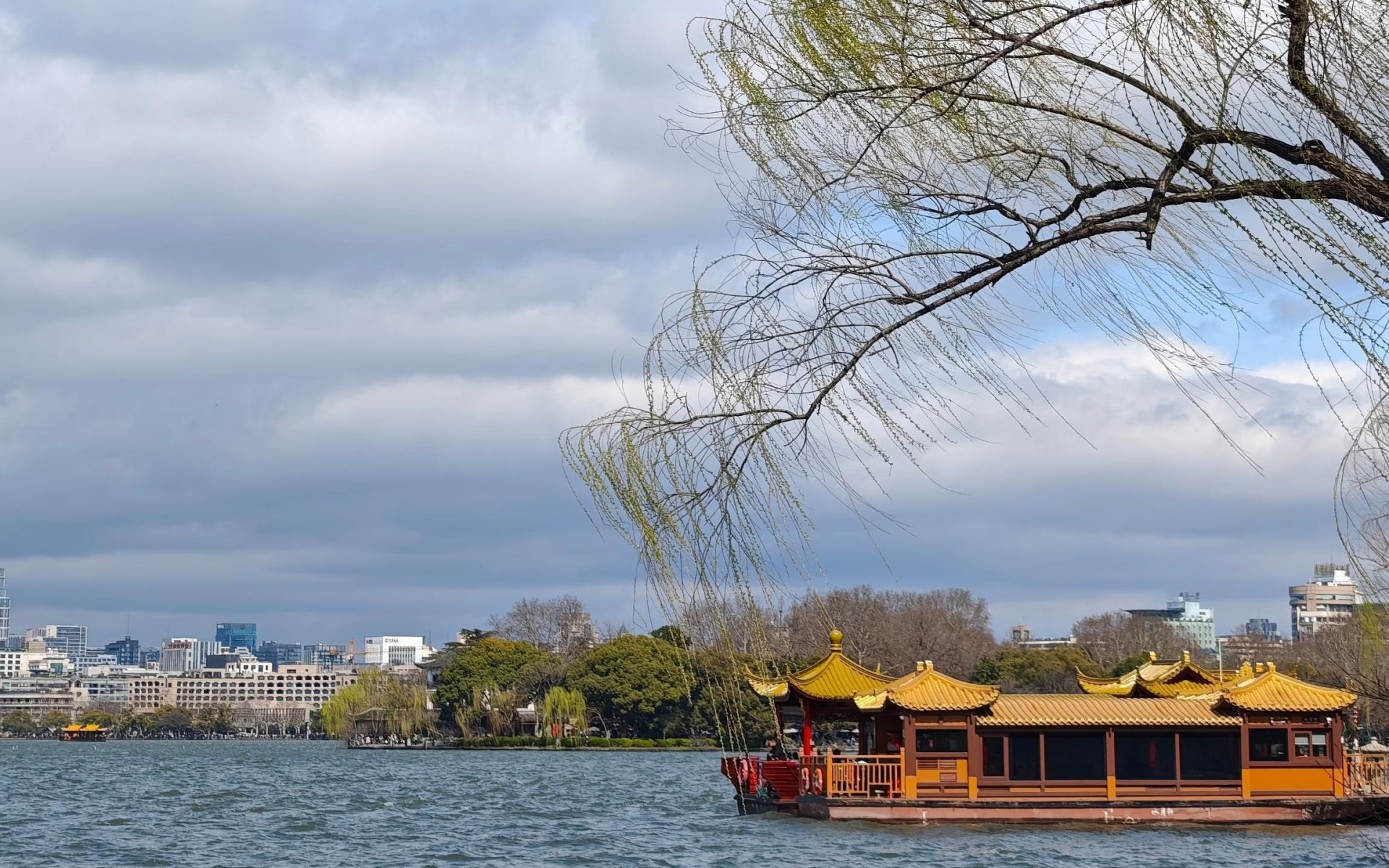
Product hook: "From West Lake to the Giant Panda Base — cross half of China in 10 days."

Route 4: Yunnan-Hunan "Landscape & Wellness" Extension Route — Chengdu/Kunming · Yunnan-Hunan Linkage

Target source markets: Middle East/African high-net-worth travellers who favour natural landscapes and wellness getaways.

Itinerary skeleton (example): entry via Chengdu → Chengdu urban + western Sichuan → southbound to Kunming/Dali/Lijiang (cool living, ethnic culture) → eastbound to Zhangjiajie in Hunan (world-class peak forest) → exit from Changsha.

This edition's selling points: the 240-hour transit visa-free policy covers Sichuan, Yunnan and Hunan with inter-provincial travel permitted; "Istanbul-Chengdu" serves as the first landing point, stringing the world heritage of three western provinces into a "western-China landscape network"; with the Eastern New Area rail subsidy, cross-province connection costs are lower.

Product hook: "Pandas, snow mountains, ancient towns and peak forests — see the landscapes of western China in one visa-free trip."

Flagship Route Summary

The common logic of these four routes: use Chengdu as the western entry point from the Istanbul direction, use the cross-province roaming of the 240-hour visa-free policy as the policy base, and convert "Eurasian-hub source markets" into "deep-tour orders for western China". For ground operators, hotels, scenic areas, transport and payment service providers, whoever builds a "receives well, plays well, spends well" product loop around this corridor first will eat the first mouthful of western-China inbound tourism's next growth wave. It is worth noting that the four routes can be implemented in two steps: first, strengthen the single-province product around "Chengdu entry + western-Sichuan depth" to validate conversion and repeat-purchase rates among long-haul source markets; second, once validated, leverage the cross-province roaming of the 240-hour policy to launch the Guangdong, Jiangsu-Zhejiang and Yunnan-Hunan linkage products, forming a "Chengdu as the axis, four provinces as the wings" western-China inbound product network.

8.1 Risk Alerts

While optimistic about this corridor, the CTP Research Department must also flag the following risks for practitioners to weigh carefully:

  • Frequency risk: three weekly flights in the early phase is a "trial" density; if winter/spring load factors underperform, schedules may be adjusted — product design and capacity commitments should keep some flexibility;
  • Middle East spill-over risk: this edition's data show that Turkish Airlines' Asia-Pacific expansion is itself a result of capacity rebalancing amid Middle East tensions; if the geopolitical situation reverses, the transit efficiency and routing stability of the Istanbul hub may be affected, and travellers' decision cycles may lengthen;
  • Policy-change risk: the lists of countries and ports covered by the 240-hour transit visa-free policy are dynamically expanding; practitioners should use the National Immigration Administration's latest announcements and avoid outdated wording in external communications;
  • Source-market education cost: awareness of "western China" among Europe/Middle East/Africa travellers remains lower than for eastern tier-1 cities; sustained destination marketing and channel education are needed to convert "capacity" into "traffic";
  • Competition risk: Chengdu-Istanbul is no longer an exclusive route (Sichuan Airlines has related operations), so competition on the same route may bring fare volatility and place higher demands on the quality of ground products.

8.2 Outlook: H2 2026 to 2027

Looking ahead 18 months, the CTP Research Department offers three judgements:

  • First, the November 2026 launch is a starting point, not an end: if the Chengdu route performs well, Turkish Airlines will most likely keep adding capacity in the west (Urumqi is already under consideration), moving the western-China corridor via Istanbul from "single point" to "network";
  • Second, the "visa-free × route" compound interest will show in 2027: as the 240-hour transit visa-free policy keeps expanding and Chengdu's inbound-facilitation system matures, the corridor's source-market conversion rate will rise year by year;
  • Third, inbound products are entering a "hub-customisation" era: whoever turns "Istanbul transfer + western-China deep tour" into a standardised, sellable product will hold the entry point to Eurasian long-haul source markets.

Section 9. FAQ: Ten Questions Inbound-Tourism Practitioners Ask Most

Q1: What does this route mean for western-China inbound tourism?

For the first time it provides Europe/Middle East/Africa long-haul source markets with a low-barrier aerial corridor of "single transfer via Istanbul, nonstop to Chengdu", filling a structural gap in western China's access to European source markets. Specifically: on the supply side, it brings roughly 1,800 seats per week into Chengdu from the Istanbul direction, expanding the western source-market structure — which once relied heavily on near-haul Southeast Asian travellers and a few direct European/American cities — to the Istanbul hub network spanning 133 countries and 358 destinations; on the demand side, it packages "Istanbul + western China" into one interline ticket, sharply lowering decision barriers for long-haul travellers; on the policy side, it stacks with 240-hour visa-free transit at the dual ports and the Eastern New Area transit subsidy, forming a "route × policy × city" triple dividend.

Q2: Do travellers need a visa?

Foreign nationals eligible for 240-hour transit visa-free (holding an ordinary passport and a confirmed, dated interline itinerary, transiting China en route to a third country/region) can enter visa-free at Chengdu Shuangliu or Tianfu and stay up to 240 hours (10 days), with eleven Sichuan cities covered and inter-provincial travel permitted. Always defer to the National Immigration Administration's latest announcement.

Q3: Why is Istanbul a "single-transfer" hub?

Turkish Airlines covers 133 countries and 358 destinations, with Istanbul as its single hub; travellers from secondary European cities, Africa and the Middle East can mostly reach China with "one flight to Istanbul + one flight to Chengdu" — a single transfer.

Q4: How much capacity is three weekly flights?

The Boeing 787-9 has 300 seats (30 Business + 270 Economy); at three round trips per week, the route adds roughly 1,800 seats per direction each week.

Q5: Is Chengdu's inbound supporting ecosystem ready?

Largely yes: 240-hour visa-free transit at both ports, transit subsidies of up to RMB400 per person in the Eastern New Area, 600+ tax-refund stores with instant refunds and e-wallet direct payment, 6,000+ English-trained taxi drivers, the Jinli bilingual service base, and the 24-language platform at Xiling Snow Mountain.

Q6: What opportunities does this route offer OTAs and ground operators?

The opportunity is to turn "Istanbul transfer + Chengdu/western-Sichuan/western-China cross-province deep tour" into a standardised, sellable product, locking in hotels, transport and multilingual guides in advance, and receiving incremental orders from the Istanbul direction.

Q7: Are Turkish and Chinese travellers the main source market for this route?

Both directions: Türkiye has been visa-free for Chinese passport holders since 1 January 2026, with 245,000 Chinese travellers in H1 2026 (+28.05%); but the greater value of this route is the Europe/Middle East/Africa source markets coming to Chengdu via a single transfer in Istanbul.

Q8: How is the 240-hour transit visa-free different from earlier policies?

The 240-hour (10-day) transit visa-free policy took effect on 17 December 2024, with substantially expanded stay duration, applicable areas and port numbers versus earlier schemes, and it permits cross-province travel. Practitioners must use the "240-hour" wording in all external communications.

Q9: Do Jiuzhaigou and Huanglong fit into this corridor's products?

Absolutely. Jiuzhaigou and Huanglong are UNESCO World Natural Heritage sites about 300 km from Chengdu; together with Chengdu's pandas, Dujiangyan and Qingcheng Mountain they form a scarce "world heritage + gastronomy + nature" combination — a classic product for the 10-day visa-free deep tour.

Q10: How can CTP help practitioners implement this corridor?

ChinaTravelPlus (CTP, official website) offers source-market research, destination product design, channel marketing and ground-receiving resource matching; welcome to reach our inbound-tourism research team via the contact details at the end of this blog.

Section 10. CTA · Contact CTP

If you are an inbound-tourism practitioner, a destination manager, or a researcher interested in this new corridor, welcome to contact the CTP inbound-tourism research team:

Sam · Sam@ChinaTravelPlus.com · WhatsApp: +86 150 9633 5677

Luppy · Luppy@ChinaTravelPlus.com

Official website: https://chinatravelplus.com

Reply "TK62-EN" to receive the bilingual PDF version of this blog, the day-by-day itineraries of the four "Istanbul → Chengdu" flagship routes, and a western-China inbound receiving checklist. We look forward to working with you to convert this new air corridor — opened jointly by routes and policy — into real incremental growth for western-China inbound tourism.

Appendix A: Core Data Quick Reference

| Item | Key Point

|------|-----------

| Subject | Turkish Airlines (Türkiye's flag carrier)

| Launch event | Nonstop Istanbul→Chengdu Tianfu from 11 November 2026

| Frequency | 3 round trips/week (outbound Wed/Fri/Sun, return Mon/Thu/Sat)

| Aircraft | Boeing 787-9 Dreamliner, 300 seats (30 Business + 270 Economy)

| Weekly capacity | ≈1,800 seats per direction

| Network status | 4th mainland China destination (after Beijing/Shanghai/Guangzhou)

| China weekly flights | 21 → 42 (10 added this year), ceiling 49

| Asia-Pacific expansion | Frequencies +15%-20%

| Global network | 133 countries / 358 destinations

| Financials | Q2 revenue +20.5% to US$7.2bn; H1 +20.8% to US$13.1bn

| Asia revenue share | 32% (exceeded Europe's 27%)

| Asia traffic share | 10% → 12%

| Africa-Asia traffic | +70%; Eastern Europe-Asia +40%

| Load factor | Q2 84.0% (quarterly record); July 2026 86.5%

| 2025 Chengdu inbound tourists | 2.38m (+44.3%), consumption ranked 5th nationally

| 2026 Spring Festival inbound | 77,000 (+47.2%)

| Chengdu ports | Shuangliu + Tianfu both qualify for 240-hour visa-free transit

| Sichuan eligible cities | 11 cities incl. Chengdu

| Eastern New Area subsidy | Up to RMB400/person (RMB200 hotel + RMB100 voucher + RMB100 rail)

| Tax refund | 600+ stores, instant refunds, e-wallet direct payment

| Tax refund growth | +283% in Jan-Nov 2025

| International routes | 85 scheduled direct routes; 19 intercontinental (12 to Europe)

| New 2026 routes | Busan (3 Sep), Ho Chi Minh City (Aug), Novosibirsk (26 Oct), Istanbul (11 Nov)

| Jinli "Open Chengdu" | Opened 6 Feb 2026; 300+ bilingual signs, 10+ bilingual ticket machines

| Services | 6,000+ English-trained taxi drivers; Xiling Snow Mountain 24 languages/29 currencies

| Reverse context | Türkiye visa-free for Chinese from 1 Jan 2026; 245,000 Chinese travellers H1 (+28.05%)

| Policy wording | 240-hour transit visa-free (policy name only; no country-list figures reused)

Appendix B: Glossary

  • Turkish Airlines: Türkiye's flag carrier and a Star Alliance member, with a network covering 133 countries and 358 destinations — one of the airlines flying to the most countries in the world;
  • Istanbul Hub: Turkish Airlines' single hub, connecting Europe, Asia, Africa and the Middle East, with a "single-transfer" ability to cover the world's principal source regions;
  • Chengdu Tianfu International Airport (TFU): one of Chengdu's two international airports and the landing point of this edition's route; Chengdu Shuangliu International Airport (CTU) is the other;
  • 240-hour transit visa-free: eligible foreign nationals holding an ordinary passport and a confirmed, dated interline itinerary, transiting China en route to a third country/region, may stay visa-free for up to 240 hours (10 days) in designated areas, with cross-province travel permitted;
  • Traffic rights: the rights agreed between countries for airlines to operate international services; the latest China-Türkiye agreement raised the weekly capacity ceiling for each side;
  • Boeing 787-9 Dreamliner: a long-haul wide-body aircraft and the equipment for this edition's Chengdu route, 300 seats (30 Business + 270 Economy);
  • Premium Economy: a cabin class between Economy and Business; Turkish Airlines plans to rely on its revenue to support the ultra-long-haul Sydney/Melbourne services from 2028;
  • Departure tax refund: the mechanism by which overseas visitors may reclaim tax on goods purchased for export; Chengdu offers instant refunds and e-wallet direct payment;
  • Inbound-tourism supply side: the supply elements that determine whether overseas visitors can come smoothly — capacity, routes, ports and visa facilitation — as opposed to the "demand side" (orders);
  • Source market / source region: the country or region that supplies travellers to a destination; this edition focuses on the long-haul source belt of Europe, the Middle East and Africa;
  • CTP four provinces: the inbound-receiving battlefields of Guangdong, Jiangsu/Zhejiang, Hunan and Yunnan on which the ChinaTravelPlus (CTP) Research Department focuses, linked with Sichuan (this edition's anchor).

Appendix C: CTP Four-Province Receiving Map Quick Reference

| Battlefield | Core Entry | Target Source Markets | Flagship Route | This Edition's Selling Points

|-------------|-----------|----------------------|----------------|------------------------------

| Sichuan | Chengdu Shuangliu/Tianfu | Europe/Middle East/Africa long-haul | Route 1 | Dual-port 240-hour visa-free + RMB400 Eastern New Area subsidy + pandas/western-Sichuan world heritage

| Guangdong | Guangzhou Baiyun/Shenzhen Bao'an | European/Middle East business, MICE, sightseeing | Route 2 | Southern Gateway entry + Sichuan-Guangdong linkage + cross-province roaming

| Jiangsu-Zhejiang | Shanghai Pudong/Hongqiao, Hangzhou Xiaoshan | European deep travellers, repeat visitors | Route 3 | Eastern water towns + western world heritage in one loop

| Yunnan/Hunan | Kunming Changshui / Changsha Huanghua / Zhangjiajie Hehua | Middle East/African nature and wellness travellers | Route 4 | Three-province landscape network + cool living + peak forests

> Appendix note: These quick-reference tables and glossary are intended to help practitioners get up to speed. Route and flight data are subject to Turkish Airlines' official announcements; policy details are subject to the National Immigration Administration's latest announcements; and Chengdu's local data are subject to official municipal figures.

Section 12. URL Matrix (26 Official/Authoritative Sources)

  1. Observer Net (Guancha) "Turkish Airlines Bets Big on Asia-Pacific: Why the China Market Is the Core Fulcrum" (2026-08-26): http://m.toutiao.com/group/7678287650150679080/
  1. Embassy of Türkiye in China / Toutiao repost "Turkish Airlines Plans to Raise Asia-Pacific Capacity by 20%" (2026-08-24): http://m.toutiao.com/group/7677509157930418722/
  1. Anadolu Agency (AA) English "Turkish Airlines aims for 20% capacity boost in Asia-Pacific" (2026-08-21): https://h.aa.com.tr/en/economy/turkish-airlines-aims-for-20-capacity-boost-in-asia-pacific/4033891
  1. aviationa2z "Turkish Airlines Bets Big on China and Australia With 20% Flight Expansion Plan in Asia" (2026-08-21): https://aviationa2z.com/index.php/2026/08/21/turkish-airlines-plans-more-asia-flights/
  1. Travel News China () "Turkish Airlines Further Expands China Network; Chengdu Route to Launch in November" (2026-08-18): http://ctna.cn/viewnews/2026/08/18/UP4aCIi8cn3NhQ3OWikT0.shtml
  1. rustourismnews "Turkish Airlines to Launch Chengdu Flights in November" (2026-08-25): https://www.rustourismnews.com/2026/08/25/turkish-airlines-to-launch-chengdu-flights-in-november/
  1. MiceCN "Turkish Airlines Further Expands China Route Network" (2026-08-18): http://www.micecn.com/articles/show/12112
  1. The Paper / CARNOC "Turkish Airlines to Open Chengdu Route" (2026-07-24): https://m.thepaper.cn/newsDetail_forward_33654635
  1. traicy "Turkish Airlines Launches Istanbul–Chengdu Service" (2026-08-22): https://en.traicy.com/posts/2026082239230/
  1. traveltrade.today "Turkish Airlines Launches New Chengdu Flights in November" (2026-08-25): https://traveltrade.today/tourism-news/turkey-tourism/turkish-airlines-launches-new-chengdu-flights-in-november/
  1. turkmenportal "Turkish Airlines will launch Istanbul-Chengdu flights from November 11, 2026" (2026-08-15): https://turkmenportal.com/en/news/104022-turkish-airlines-will-launch-istanbul-chengdu-flights-from-november-11-2026
  1. Aviation Week "Turkish Airlines Deepens China Network Amid Asia Expansion" (2026-08-14): https://aviationweek.com/air-transport/airports-networks/turkish-airlines-deepens-china-network-amid-asia-expansion
  1. National Immigration Administration "Transit Visa-Free Policy" (2026-08-20): https://www.nia.gov.cn/n794014/n1050181/n1050484/c1731205/content.html
  1. Chengdu Release / The Paper "From Today, the 240-Hour Transit Visa-Free Policy Adds Two More Eligible Countries" (2026-08-20): http://m.toutiao.com/group/7675979142709461540/
  1. Sina News / Chengdu Release "From Today, the 240-Hour Transit Visa-Free Policy Adds Two More Eligible Countries" (2026-08-20): https://k.sina.cn/article_1523766213_5ad2d3c5019017ads.html
  1. TravelChinaGuide "China 240-Hour (10 Days) Visa-Free Transit" (2026-08-26): https://www.travelchinaguide.com/tour/visa/free-transit-144-hours.htm
  1. Chengdu Daily / Sichuan Observer "Chengdu Direct! New International Routes Are Coming" (2026-08-20): https://mobile.chengdu.cn/show/id/6a86bc8d6ae29339da7e28fe
  1. The Times Australia "Nonstop in 11 Hours to the 'City of Pandas': Chengdu Launches Direct Flights to Brussels" (2026-03-26 / 2026-08-27): https://www.thetimes.com.au/news/news-from-asia/48944-nonstop-in-11-hours-to-the-city-of-pandas-chengdu-launches-direct-flights-to-brussels
  1. People's Daily Sichuan "RMB2.48 Trillion, +5.8%: Behind Chengdu's GDP Climbing Six RMB100-Billion Steps" (2026-01-29): http://sc.people.com.cn/n2/2026/0129/c345167-41487100.html
  1. People's Daily Overseas Edition "Chengdu's Panda Creativity Contest Opens Another Window of Openness" (2026-05-27): http://paper.people.com.cn/rmrbhwb/pc/content/202605/27/content_30159376.html
  1. China News Service Sichuan "2025 Chengdu Sense of Happiness, Written in These Details" (2026-01-22): http://www.sc.chinanews.com.cn/cdxw/2026-01-22/239935.html
  1. Cover News "Why Global Travellers Come to Chengdu to Experience Chinese Daily Life" (2026-08-10): http://m.toutiao.com/group/7672385395069370880/
  1. Embassy of the People's Republic of China in Türkiye "Friendly Reminder on Türkiye's Visa-Free Policy for Holders of Ordinary Chinese Passports" (2026-01-12): https://tr.china-embassy.gov.cn/sgxw/202601/t20260112_11811289.htm
  1. Gov.cn "Türkiye Announces Visa-Free Entry for Chinese Citizens" (2026-01-01): https://www.gov.cn/yaowen/liebiao/202601/content_7053597.htm
  1. People's Daily "Türkiye's Visa-Free Policy for China Takes Effect; First Chinese Travellers Enter Smoothly" (2026-01-04): http://world.people.com.cn/n1/2026/0104/c1002-40637959.html
  1. ChinaTravelPlus official website: https://chinatravelplus.com

SEO Description (150-160 chars): Turkish Airlines Istanbul-Chengdu nonstop Nov 2026: 3x weekly, 4th China gateway; 240-hour visa-free transit opens western China to Europe, Middle East, Africa.

> Disclaimer: This blog is an original production of the ChinaTravelPlus (CTP) Research Department; sources are listed in the text and in Section 12, the URL Matrix. This is Blog 62 of the CTP inbound-tourism research series. Route, schedule, aircraft and fare data are subject to Turkish Airlines' official announcements; the countries and ports covered by the 240-hour transit visa-free policy are subject to the National Immigration Administration's latest official announcements; Chengdu's local passenger-flow and consumption data are subject to official municipal figures. The CTP Research Department has exercised reasonable care, but makes no express or implied warranty as to the accuracy, completeness or timeliness of the data. If any data is corrected or supplemented, please contact us via the email addresses at the end of this blog.

Conclusion: When a Route Becomes a City's New "Balance Beam" with the World

From Blog 57 documenting "the policy side opening the door", to Blog 59 documenting "the port side welcoming the travellers", Blog 60 documenting "the consumption side spending", and Blog 61 documenting "the platform side placing orders", the evidence chain of the CTP inbound-tourism series has kept asking the same question: where, exactly, does China's inbound-tourism growth come from?

This Blog 62 offers a "supply-side" answer: it comes from routes, from hubs, and from being "reachable". When Turkish Airlines folds Chengdu into the global network of the Istanbul hub, and when Chengdu's Shuangliu and Tianfu air-ports open their doors to Europe, the Middle East and Africa with the 240-hour visa-free policy, a new air corridor that did not exist before is born — it turns "western China", a geographical far-away, into a destination that is "one single transfer away" within the Istanbul hub network.

To use the balance-beam metaphor: on one side stands Istanbul — one of the most internationally connected aviation hubs in the world — weighing travellers from across the globe into this flight; on the other side stands Chengdu — the City of Pandas, the City of Gastronomy, the Gateway to World Heritage — receiving every arriving traveller and converting the visit into a deep China experience. When these two endpoints are placed on the same balance beam by a single route, the source-market structure of western-China inbound tourism is quietly changing.

Looking toward the inaugural flight on 11 November 2026, the CTP Research Department's advice to practitioners is three "do-it-early" actions: study the source market early — the preferences, spending habits and stay rhythms of Europe/Middle East/Africa travellers differ fundamentally from near-haul Asian travellers, and products must be redesigned; lock in supply early — hotels, transport, multilingual guides and tax-refund settlement must be rearranged around the "10-day visa-free deep tour"; build the brand early — make "western China = a world-class destination reachable via Istanbul" a shared understanding in overseas source markets.

One route, one hub, and a west that is being reconnected. That is the most anticipated new chapter of the China Travel story.

S

About the Author — Sam · Senior Travel Planner

Sam designs custom itineraries for solo travelers, families and food lovers, delivering a complete plan within 48 hours.

Email SamWhatsApp Sam

Frequently Asked Questions

Q1: What does this route mean for western-China inbound tourism?

** For the first time it provides Europe/Middle East/Africa long-haul source markets with a low-barrier aerial corridor of "single transfer via Istanbul, nonstop to Chengdu", filling a structural gap in western China's access to European source markets Specif

Q2: Do travellers need a visa?

** Foreign nationals eligible for 240-hour transit visa-free (holding an ordinary passport and a confirmed, dated interline itinerary, transiting China en route to a third country/region) can enter visa-free at Chengdu Shuangliu or Tianfu and stay up to 240 ho

Q3: Why is Istanbul a "single-transfer" hub?

** Turkish Airlines covers 133 countries and 358 destinations, with Istanbul as its single hub; travellers from secondary European cities, Africa and the Middle East can mostly reach China with "one flight to Istanbul + one flight to Chengdu" — a single transf

Ready to Plan Your China Trip?

Email Sam — your personal China travel planner, for customized itineraries (solo, family, food, roots) delivered within 48 hours.

Email Luppy — for group travel and business missions (10+ travelers), with hotels, transport and logistics fully handled.

WhatsApp Sam for instant trip planning.

WhatsApp Luppy for group bookings.

Visit ChinaTravelPlus.com for the full collection.

More Than Travel. It's the Plus That Matters.
Read More
ChinaTravelPlus | Premier China Inbound Travel & Private Tours

Vietnam Joins China's 240-Hour Visa-Free Transit Circle: The ASEAN Source-Market Policy Dividend and New Windows for ChinaTravelPlus's Four Provinces

Section 1. The Hook: On 20 August, "Vietnam" Was Written into China's Visa-Free Circle

On 20 August 2026, the National Immigration Administration issued a notice: effective that day, citizens of Kyrgyzstan and Vietnam would be eligible for the 240-hour visa-free transit policy and the Hainan 30-day visa-free entry policy.Source: NIA Notice, 2026-08-20

To the casual reader, this may look like just another routine "country added to the list" item. To CTP Research, it is a structural event worthy of its own full blog edition. Why? Because Vietnam is not an ordinary source market.

Vietnam has a population of nearly 100 million — the third most populous country in Southeast Asia — shares the longest land border of any ASEAN member with China (the Sino-Vietnamese land boundary runs roughly 1,300 kilometers), and is China's largest trading partner within ASEAN. According to figures reported by Beijing Daily citing the Ministry of Commerce, bilateral trade between China and Vietnam surpassed USD 290 billion in 2025; and as Tran Thi Thuy, deputy director of the China Studies Center at the Vietnam Academy of Social Sciences, noted, Vietnam currently ranks as China's fourth-largest source of international tourism, with strong and growing demand among Vietnamese travelers to visit China; moreover, 2026–2027 has been designated the "Sino-Vietnamese Tourism Cooperation Year."Source: Beijing Daily, 2026-08-20

Put those three facts together and the conclusion writes itself: a populous neighbor, connected to China by both land and sea, with one of the closest economic ties and the most vigorous source-market growth, has now obtained a "visa-free-grade" pass to travel to China. It means Vietnamese tourists can shift from "filing for a visa to come to China" to "packing a bag and coming on a whim." And it means the structure of China's ASEAN inbound source market is about to move from "niche increment" to "scale variable."

Let us zoom in on the Vietnamese traveler's perspective. Picture a young family in Hanoi wanting to spend a weekend in Guangzhou for dim sum and a walk through the old city, then an evening in Shenzhen's skyline. In the past, they would have needed to prepare visa materials half a month in advance and wait for approval. Today, all they need is an interline ticket with confirmed dates and itinerary — flying from Hanoi through Guangzhou to a third destination (say Hong Kong or Bangkok) — and they can stay visa-free in China for up to ten days, turning a "transit" into a genuine deep-dive trip. This is the most elegant design feature of the 240-hour policy: it converts the "time gap" of transit into the "golden window" of inbound tourism.

In this edition, we will use data, policy, scenarios and routes to break down the ASEAN source-market opportunity ignited by Vietnam's visa-free entry — from the full panorama of the 240-hour visa-free transit network, to the underlying logic of Vietnam's near-100-million-person market, to CTP's three flagship routes across the four provinces plus Hainan, and to a grander imagination of ASEAN inbound tourism's future.

One point deserves emphasis at the outset: the "gold content" of this policy cannot be judged by Vietnam alone, but by its "slotting" significance within the entire ASEAN source-market policy system. Let us first take stock of the ten ASEAN states: Vietnam (now inside the 240-hour visa-free transit list of 57), Malaysia, Singapore, Indonesia, and Brunei (all on the 57-country list); Thailand, the Philippines, Laos, Myanmar, and Cambodia, while not on the 240-hour transit list, can all enter via the Hainan 30-day visa-free list (61 countries) or via the ASEAN group visa-free arrangements (Xishuangbanna / Guilin). In other words, after Vietnam's addition, no ASEAN country is any longer a complete "blank" on the map of visa-free travel to China — the ASEAN policy map has, for the first time, achieved full coverage.

That is precisely the core argument of this edition: Vietnam's accession to the 240-hour visa-free transit circle is not an isolated "country added" event, but the closing move in China's ASEAN source-market strategy, from "point breakthroughs" to "networked coverage." Together with the earlier expansion of China-Indonesia routes (Blog #44) and the maturing of the China-Laos Railway land corridor (Blog #53), this completes a three-pronged push of "aviation + land + visa-free" — and CTP's four provinces plus Hainan sit precisely at the center of this ASEAN source-market dividend storm.

2.1 Reading the Policy Text: Two Visa-Free Policies, One Announcement

Start with the policy itself. According to the notice (No. 4 of 2026) issued by the NIA on 20 August 2026:

  • 240-hour visa-free transit: citizens of Vietnam and Kyrgyzstan holding ordinary passports and interline passenger tickets with confirmed dates and itineraries, transiting China en route to a third country or region, may enter visa-free through any of the 65 open ports nationwide (including Beijing and Shanghai) and stay no more than 240 hours within the designated area;
  • Hainan 30-day visa-free entry: citizens of the two countries holding ordinary passports may enter through Hainan's open ports and stay visa-free for no more than 30 days across the provincial administrative area;
  • Policy boundary: during the visa-free period, travelers may engage in short-term activities such as tourism, business, exchange visits, and family visits; activities requiring prior approval — employment, study, and news reporting — still require a visa obtained before entering China.Source: NIA Notice, 2026-08-20

The announcement also confirmed two "ceiling" numbers: the 240-hour visa-free transit policy now covers 57 countries, and the Hainan 30-day visa-free policy now covers 61.Source: People's Daily, 2026-08-21

2.2 Network Panorama: 57 Countries / 65 Ports / 10 Days / Nationwide City Clusters

To truly grasp the weight of this policy, one must pull the camera back to the full panorama of the 240-hour visa-free transit network. This is the core Policy & Visa Updates section of this edition:

Layer one: covered countries — 57, with Asia expanding to nine. According to the NIA's "Visa-Free Transit Policy" page (updated 2026-08-20), the 240-hour visa-free transit policy now covers 57 countries: 40 European (Austria, Belgium, Czech Republic, Denmark, Estonia, Finland, France, Germany, Greece, Hungary, Iceland, Italy, Latvia, Lithuania, Luxembourg, Malta, Netherlands, Poland, Portugal, Slovakia, Slovenia, Spain, Sweden, Switzerland, Monaco, Russia, UK, Ireland, Cyprus, Bulgaria, Romania, Ukraine, Serbia, Croatia, Bosnia-Herzegovina, Montenegro, North Macedonia, Albania, Belarus, Norway), 6 Americas (US, Canada, Brazil, Mexico, Argentina, Chile), 2 Oceania (Australia, New Zealand), and 9 Asian (South Korea, Japan, Singapore, Brunei, UAE, Qatar, Indonesia, Vietnam, Kyrgyzstan).Source: NIA Visa-Free Transit Policy, 2026-08-20

Layer two: port network — 65 open ports. The 65 open ports covered by the policy span major cities and international aviation hubs nationwide — Beijing, Shanghai, Guangzhou, Shenzhen, Kunming, Haikou, Sanya and more — across all major provincial regions, forming a nationwide entry network of city clusters including the Beijing-Tianjin-Hebei, Yangtze River Delta, Pearl River Delta, Chengdu-Chongqing, and Yunnan-Guangxi-Hainan corridors.Source: NIA, 2026-08-20

Layer three: length of stay — 240 hours (10 days). Since 17 December 2024, when the NIA comprehensively relaxed and optimized the visa-free transit policy and unified the stay from 72/144 hours to 240 hours, the "10-day transit trip" has become one of the most competitive policy products in China's inbound tourism toolkit.Source: NIA Visa-Free Transit Policy Relaxation, 2024-12-17

Layer four: activity area — cross-province travel within the designated region. 240-hour transit travelers may move freely across provinces within the designated area (covering provincial regions including Anhui, Hainan and Guizhou, with some provinces fully open and others limited to designated cities), and the 10-day window is ample to support an "entry–multi-city–exit" deep-link itinerary.

2.3 From 55 to 57 Countries: The Strategic Rise of Southeast Asia's Share

Pulling the timeline straight, the expansion trajectory of the 240-hour visa-free transit network is clear:

  • 17 December 2024: the policy was comprehensively relaxed and optimized — 54 countries, 60 ports, stays unified at 240 hours;Source: State Council/China.gov.cn, 2024-12-17
  • 12 June 2025: Indonesia and others were added, further expanding the covered countries (the policy foundation beneath Blog #44's China-Indonesia route story);
  • 3 November 2025: the NIA issued ten innovative measures to support opening-up and high-quality development, adding five ports in Guangdong Province as 240-hour visa-free transit entry ports;Source: NIA Ten Measures Notice, 2025-11-03
  • 20 August 2026: Vietnam and Kyrgyzstan were added, expanding the covered countries to 57at this point, major ASEAN members including Vietnam, Indonesia, Singapore, Brunei, and the Philippines (via the Hainan 30-day visa-free) are all within the visa-free network, making Southeast Asia the segment of China's visa-free "circle" with the highest geographic proximity and source-market depth.

This timeline supports one core judgment: the expansion of China's visa-free "circle" is shifting from "long-haul Europe and the Americas" to targeted "neighboring regional" coverage. Zhou Mi, a researcher at the Chinese Academy of International Trade and Economic Cooperation under the Ministry of Commerce, notes that by concentrating on neighboring countries, this round of adding Kyrgyzstan and Vietnam precisely closes the coverage gap that previously existed in visa-free facilitation for nearby markets.Source: Beijing Daily, 2026-08-20

Milestones of China's visa-free transit policy evolution:

| Date | Milestone | Key Parameters

|------|-----------|----------------

| 2024-12-17 | Comprehensive relaxation and optimization of transit visa-free policy | 54 countries / 60 ports / stay extended to 240 hours

| 2025-06-12 | Indonesia and others added (historical) | covered countries further expanded (later to 57)

| 2025-11-03 | Ten measures to support opening-up | Guangdong +5 ports; 24-hour direct transit no-inspection extended to 10 airports

| 2026-08-20 | Vietnam and Kyrgyzstan added | covered countries to 57 / Hainan to 61

> Note: The table outlines the historical evolution; the currently effective caliber is subject to the NIA's latest releases. This edition focuses on the latest "57-country state" as of 2026-08-20.

2.3.1 Why "Transit Visa-Free"? The Policy Design Logic

The 240-hour transit visa-free policy balances two objectives — "opening" and "order." First, by requiring transit to a third country, it ensures entrants have a clear itinerary and departure intent, preserving orderly immigration management. Second, by granting a generous 10-day (240-hour) window, it makes "transit" carry real travel and consumption value, converting "transit passengers" into "deep-dive tourists." The design has been validated in practice: since implementation, visa-free transit has remained a core engine of inbound tourism, with the share of visa-free foreign arrivals climbing steadily — in H1 2026, 17.82 million foreign visitors entered China visa-free, up 30.6% year on year and representing 77.7% of all foreign arrivals.Source: Dân trí / Dtinews, 2026-07-22

2.4 Hainan's 30-Day Visa-Free: The "Free Trade Port Engine" in Parallel

Running alongside the 240-hour transit policy is the Hainan 30-day visa-free entry policy. According to the NIA's "Regional Visa-Free Entry Policies for Foreigners" page (updated 2026-08-20), citizens of 61 countries holding ordinary passports may, for short-term purposes such as tourism, business, visits, family visits, medical treatment, exhibitions and sports competitions (excluding employment and study), enter Hainan visa-free, with the activity area covering the entire provincial administrative region, entry and exit through all of Hainan's open ports, and a stay of no more than 30 days. Within the Southeast Asian segment, covered countries include Malaysia, Thailand, Singapore, Indonesia, the Philippines, Vietnam, and Brunei, alongside Russia, South Korea, Japan, and many European and American countries — 61 in total.Source: NIA Regional Visa-Free Entry Policies, 2026-08-20

For CTP's four-province receiving map, the significance of Hainan's 30-day policy is that it is a "whole-province 30-day" regional visa-free, running in parallel with the "10-day transit" 240-hour policy — the former suits long-stay needs (resort, wellness, conventions), the latter suits efficient multi-city travel (transit and linking). Combined, they make Hainan a "dual-engine springboard" for Southeast Asian (especially Vietnamese) travelers into China's hinterland: a deep 30-day Hainan holiday first, then onward via Haikou Meilan or Sanya Phoenix to the Greater Bay Area or the Yangtze River Delta.

2.5 The ASEAN Regional Visa-Free Matrix: Completing the Puzzle from "Group" to "Individual"

Another significance of this policy lies in how it fills out the existing ASEAN regional visa-free matrix. According to the NIA's "Regional Visa-Free Entry Policies for Foreigners":

  • ASEAN group visa-free for Xishuangbanna, Yunnan: tourist groups (2+ persons) from the ten ASEAN states (Malaysia, Indonesia, Thailand, the Philippines, Singapore, Brunei, Vietnam, Laos, Myanmar, Cambodia), organized and received by licensed travel agencies in China, may enter and exit visa-free via the Xishuangbanna Gasa International Airport port and the Mohan railway and highway ports, with activity limited to the Xishuangbanna Dai Autonomous Prefecture and a stay of no more than 6 days;Source: NIA Regional Visa-Free Entry Policies, 2026-08-20
  • ASEAN group visa-free for Guilin, Guangxi: the same ten ASEAN states' tourist groups (2+ persons) may enter and exit visa-free via the Guilin airport port, with activity limited to Guilin City, Guangxi, and a stay of no more than 6 days.Source: NIA Regional Visa-Free Entry Policies, 2026-08-20

Put these pieces together and we get a complete "Vietnamese / ASEAN travelers' policy map":

| Policy Tool | Eligible | Stay | Ports / Area | Use Case

|-------------|----------|------|--------------|----------

| 240-hour visa-free transit | Vietnamese citizens (57 countries) | ≤10 days | 65 open ports nationwide | Transit + multi-city linking

| Hainan 30-day visa-free | Vietnamese citizens (61 countries) | ≤30 days | All Hainan open ports | Resort + wellness + MICE

| Xishuangbanna 144h group | 10 ASEAN groups | ≤6 days | Gasa airport / Mohan rail & road ports | Yunnan ethnic depth tours

| Guilin 144h group | 10 ASEAN groups | ≤6 days | Guilin airport port | Guangxi landscape tours

2.6 Policy Positioning: High-Level Opening-Up and a Community with a Shared Future

A responsible official of the NIA explained that implementing the two visa-free policies for Kyrgyzstan and Vietnamese citizens is a pragmatic move to steadily advance high-level opening-up and to help build a community with a shared future for neighboring countries, conducive to promoting mutual trust and cooperation and making tourism, trade, visits and investment more convenient and efficient; going forward, the NIA will balance development and security, firmly uphold an orderly immigration order, and better facilitate people-to-people exchanges and international cooperation in service of the country's high-quality opening-up and development.Source: People's Daily, 2026-08-21

The Vietnamese side responded positively as well. At a regular press conference on 20 August 2026, Vietnamese Foreign Ministry spokesperson Pham Thu Hang said Vietnam welcomes China's inclusion of Vietnam in the 240-hour visa-free transit and Hainan 30-day visa-free entry programs and looks forward to deepening people-to-people exchanges with China; Kyrgyzstan's Presidential Administration likewise welcomed the measure, expressing confidence that it will create conditions for trade and tourism cooperation between the two countries.Source: Xinhua via Jimu News, 2026-08-21

> CTP Insight: At the policy level, this expansion is by no means a routine "country added" item, but the landing of a "neighboring-first, dual-track" strategy. For inbound-tourism operators, this means the "customer-acquisition cost" for ASEAN (especially Vietnamese) source markets will fall systemically — the process cost of visa agencies and document review is now erased by the visa-free policy. CTP's four provinces should upgrade "ASEAN source-market receiving" from an opportunity list to a strategic priority.

3.1 A Fact Repeatedly Confirmed by Official Data: Vietnam = China's Fourth-Largest Source Market

In July 2026, Vietnamese media outlet Dân trí reported, citing data from China's NIA, that Vietnam ranked as China's fourth-largest source of international visitors in the first half of 2026, behind South Korea, Russia, and Malaysia. In the same period, China welcomed roughly 22.9 million international visitors, up 20.4% year on year; of these, 17.82 million foreign visitors entered visa-free, up 30.6% and accounting for 77.7% of all foreign arrivals.Source: Dân trí / Dtinews, 2026-07-22

How heavy is this "fourth-largest" designation? Put it in overall context: in H1 2026, national immigration authorities processed 38.053 million foreign entries and exits, up 30.2% year on year, with 13.64 million foreign visa-free entries, surging 53.9% — visa-free policies have become the core engine pulling inbound tourism.Source: COITM Inbound & Outbound Travel Expo, 2026-06-23

On the consumption side, platform data shows that in H1 2026, inbound tourism trips rose 49% year on year and inbound tourism consumption rose 44%; visa-free foreign arrivals reached 17.815 million, up 30.6%; and the "ChinaTravel" hashtag on overseas social platforms has accumulated more than 28 billion views.Source: Beijing Youth Daily Hotspot, 2026-08-21

3.2 Vietnam's Three Structural Advantages as a Source Market

First, population and age structure. Vietnam's population is nearly 100 million — the third largest in Southeast Asia — and the country sits in a "demographic dividend" window, with a high share of young people. Younger cohorts are far more receptive to outbound travel, social-media word of mouth, and short weekend trips; they are the natural audience for "pack-and-go" visa-free travel.

Second, geographic and economic proximity. Vietnam and China share a land border of roughly 1,300 kilometers, with high-frequency people flows across ports such as Dongxing and Pingxiang in Guangxi and Hekou in Yunnan. According to Ministry of Commerce figures cited by Beijing Daily, bilateral trade reached USD 290 billion in 2025; Vietnam is China's largest trading partner within ASEAN, and China has for years been Vietnam's largest trading partner.Source: Beijing Daily, 2026-08-20 High-frequency economic exchange inevitably transmits into high-frequency people-to-people exchange.

Third, cultural affinity and converging tastes. Vietnam and southern China share much in common — noodle soups, tropical fruit, coffee culture, festivals (Lunar New Year, Mid-Autumn), and architectural aesthetics (arcades, temples). Vietnamese travelers face virtually no "cultural threshold" in China, which drives high repeat-visit rates and strong conversion into deep travel.

3.3 Where Do Vietnamese Travelers Go? From "Classic Lines" to "Diverse Lines"

According to Nguyen Tien Dat, CEO of Vietnamese travel company AZA Travel, which has organized tours to China for nearly 20 years, Vietnamese travelers continue to favor itineraries such as "Beijing–Great Wall–Forbidden City," "Shanghai–Hangzhou–Suzhou," and "Zhangjiajie," drawn by China's multiple attractions: geographic proximity, competitive tour prices, easier visa procedures, an extensive flight network, and a wide range of destinations — from ancient towns and cultural heritage sites to modern cities.Source: Dân trí / Dtinews, 2026-07-22

Notably, since 17 June 2026, Vietnamese citizens applying for tourist visas independently are no longer required to provide proof of a minimum VND 50 million (about USD 1,910) bank balance, further lowering the visa threshold.Source: Dân trí / Dtinews, 2026-07-22 With this edition's 240-hour visa-free policy, Vietnamese travelers no longer need a visa at all — "visa-free" plus "no bank-balance requirement" is a double win that flattens the cost curve for Vietnamese outbound travel to China.

3.4 Vietnam's Source-Market City Structure and Traveler Segmentation

The Vietnamese source market is not monolithic; it is a composite of multiple city origins and traveler segments. CTP Research recommends unpacking it along two dimensions — "source city × segment":

Source-city dimension: Hanoi (northern Vietnam; administrative and cultural center; gateway to the Guangxi/Yunnan land corridors); Ho Chi Minh City (southern Vietnam; largest economy and population center; radiating from the Mekong Delta); Da Nang (central coastal city; concentration of middle-class resort travelers); and Hai Phong (northern industrial port city; concentration of business travelers). Different origin cities show distinct segment profiles: northern-origin travelers maintain closer land-route ties with Guangxi and Yunnan, southern-origin travelers depend more on aviation, and central-origin travelers lean toward resort leisure.

Segment dimension:

  • Business travelers: with Sino-Vietnamese trade surpassing USD 290 billionSource: Beijing Daily, 2026-08-20, many Vietnamese merchants have high-frequency procurement, exhibition, and inspection needs in China — the ideal audience for "transit visa-free + business" products;
  • Family travelers: Vietnamese middle-class families are drawn to parent-child trips, island resorts, and theme parks, preferring relaxed, experience-rich itineraries;
  • Young travelers: Vietnam's young population is large and socially active, highly willing to spread content about Chinese urban night scenes, food discovery, and check-in spots;
  • Culture travelers: deep travelers interested in Chinese history, ancient capitals, intangible heritage, and ethnic customs;
  • Study and exam travelers: those going to China to study, take exams, or visit institutions, with rigid demand for convenient short-term entry.

CTP recommendation: build a Vietnam source-market segmentation model along the "source city × segment" axes, and design differentiated products and messaging for each combination rather than a one-size-fits-all approach.

3.5 Directional Judgment: The "New Blue-Chip" Southeast Asian Market with Fast-Growing Outbound Travel and Rising Spending Intent

To be transparent: CTP Research has not yet verified an authoritative figure for Vietnam's precise outbound-tourism growth rate, and therefore this blog makes no fabricated claim. But several verified directional signals allow a cross-check: first, Vietnam's rank as China's fourth-largest source market is itself the "result variable" of its outbound scale and growth; second, the launch of the Sino-Vietnamese Tourism Cooperation Year (2026–2027) will institutionally drive two-way flows; third, Vietnamese travelers have historically been among the fastest to respond to visa-free policies in the region. The conclusion is directional: Vietnam is in a "new blue-chip" cycle of fast-growing outbound travel and rising spending intent, and the "policy friction" on its travel to China has been sharply reduced by this edition's visa-free policy.

Section 3-B. The ASEAN Source-Market Panorama: Why This Is China's "Near-Home Base" of Inbound Tourism

Before diving into CTP's receiving playbook, one strategic question deserves an answer: why should CTP's four provinces treat the ASEAN source market as a "home base"? Four layers of logic underlie the answer:

3B.1 Geographic Proximity: The "High-Frequency Repeat" Gene of Near-Home Source Markets

Inbound tourism follows a simple law: the closer the distance, the faster the travel decision and the higher the repeat rate. Southeast Asia sits close to China: for travelers from Vietnam, Thailand, Malaysia, Singapore, and the Philippines, flight times to China commonly range from two to six hours; on land, the Sino-Vietnamese border runs roughly 1,300 kilometers, and cross-border corridors such as the China-Laos Railway make "taking a train abroad" a reality. Near-home source markets mean that high-frequency scenarios — weekend escapes, holiday trips, family outings — arise naturally, complementing the "low-frequency, high-spend" long-haul segments from Europe and the Americas, and constituting the "base-line traffic" of inbound tourism.

3B.2 Population Base: The "Ceiling Imagination" of a Nearly 700-Million-Person Market

The ten ASEAN states have a combined population of roughly 700 million — Vietnam nearly 100 million, Indonesia over 270 million, the Philippines over 110 million, Thailand around 70 million. With the rapid rise of ASEAN middle classes, the "penetration rate" of outbound travel still has vast headroom. When visa-free policy lowers the barrier to visiting China to its minimum, even a small share of these 700 million choosing China as an outbound destination represents a meaningful increment for CTP's four provinces.

3B.3 Cultural Affinity: From "Looks Similar" to "Really Understands"

Southeast Asia and southern China share deep cultural kinship in food, festivals, architecture, and family values. For Vietnamese travelers, the cost of understanding China is extremely low: a bowl of pho and a bowl of rice noodles, an arcade and an ancestral hall, a Lunar New Year and a Mid-Autumn Festival — all give Southeast Asian travelers a "familiar strangeness" in China. Cultural affinity means higher conversion, lower communication cost, and stronger repeat visits — an advantage long-haul source markets cannot easily match.

3B.4 Policy Completeness: Zero Visa "Blank Spots" Across the Ten ASEAN States

As set out in the introduction, after Vietnam's addition, all ten ASEAN states now have full coverage on the "visa-free travel to China" policy map: Vietnam, Malaysia, Singapore, Indonesia, and Brunei are on the 240-hour transit list; Thailand, the Philippines, Laos, Myanmar, and Cambodia can enter via the Hainan 30-day visa-free or ASEAN group arrangements. Policy completeness turns "ASEAN source-market receiving" from case-by-case marketing into systematic operations.

> CTP Judgment: The ASEAN source market is the "near-home base" of CTP's four-province inbound tourism — high frequency, high repeat, low communication cost. The true value of this edition's Vietnam visa-free landing is completing the most dynamic piece (Vietnam) of that home base.

Section 4. Dividend Transmission: The Full Chain from "Visa-Free" to "Four-Province Receiving"

Policy dividends do not automatically become passenger flows; a clear transmission chain must intervene. CTP Research breaks it into five links:

Link one: policy relief — lower customer-acquisition cost. Visa-free means Vietnamese travelers no longer need visa agencies, document review, or waiting periods; "deciding to visit China at the last minute" becomes possible. For receiving agencies and group operators, communication cost, cancellation risk, and scheduling windows in the visa stage are all compressed.

Link two: supply relay — aviation and land dual corridors. For a policy dividend to land, "capacity" must be available to carry it. On the aviation side, the Sino-Vietnamese route network continues to densify, with direct flights from Guangzhou, Shenzhen, Shanghai, Kunming, and Nanning to Hanoi, Ho Chi Minh City, and Da Nang; on the land side, the corridor concept represented by the China-Laos Railway (Blog #53 story chain) is maturing, allowing Vietnamese travelers to connect to southwestern China via Laos and Thailand — and this edition's policy multiplies exactly with that corridor into a "policy × corridor" effect.

Link three: product adaptation — from "transit" to "inbound deep travel." The 240-hour (10-day) window comfortably supports a transit-style deep trip such as "Hanoi → Guangzhou → Shenzhen → Hong Kong," and a land cross-border trip such as "Ho Chi Minh City → Kunming → Xishuangbanna." The design key is filling those ten transit days with China's most attractive experiences.

Link four: port receiving — the "last kilometer" of 65 ports. The inbound service capacity of the 65 open ports — Guangzhou Baiyun, Shenzhen Bao'an, Kunming Changshui, Haikou Meilan, Sanya Phoenix, Beijing Capital, Shanghai and more — multilingual guidance, payment facilitation, visa-free declaration assistance — directly shapes the Vietnamese traveler's "first impression." CTP can help connect local receiving resources and multilingual services at the port level.

Link five: repeat accumulation — one visa-free trip activates a long-term source. Vietnamese travelers skew young and have strong social-media reach. One high-quality visa-free trip spreads via TikTok, Facebook, and Instagram, driving family, friends, and colleagues to follow. What visa-free policy truly leverages is not one-off traffic but a compoundable source-market asset.

> CTP Insight: The pivot of the five-link transmission is "four-province receiving." Guangdong, Yunnan, Hainan, Jiangsu-Zhejiang, and Hunan correspond respectively to the gateway, corridor, resort, hub, and hinterland roles for Vietnamese/ASEAN source markets. Let us unpack each.

5.1 Guangdong (Guangzhou / Shenzhen / Greater Bay Area): The "Southern Gateway" for ASEAN Source Markets

Guangdong is the first gateway for Vietnamese travelers to China. Guangzhou Baiyun and Shenzhen Bao'an international airports are core hubs among the 65 open ports, with dense direct flights to Hanoi, Ho Chi Minh City, and Da Nang — flight times of just two to three hours. The Greater Bay Area's "city cluster on rail" makes multi-city linking across Guangzhou, Shenzhen, Dongguan, and Zhuhai exceptionally easy.

For Vietnamese source markets, Guangdong's core appeal is "food + city + commerce": Cantonese morning tea, Cantonese cuisine, and late-night dining naturally appeal to Vietnamese travelers; Guangzhou's wholesale markets (apparel, small commodities) match Vietnamese merchants and procurement groups; Shenzhen's tech vibe and skyline resonate with younger aesthetics.

CTP receiving playbook: turn "transit" into a "Guangzhou–Shenzhen dual-city+" deep trip, linking Guangzhou's old-town food, Shamian architecture, Pearl River night cruises, Shenzhen's bay skyline and theme parks — with compact 3–5-day and deep 5–7-day product tracks running in parallel.

5.2 Yunnan (Kunming / Xishuangbanna): "Corridor-Type Receiving" via Land Corridor + Ethnic Flavor

Yunnan is the confluence of this edition's policy and the Blog #53 China-Laos Railway story chain. Kunming Changshui Airport is one of the 65 open ports and an aviation hub facing Southeast Asia; Xishuangbanna's Gasa Airport and the Mohan ports are visa-free ports for ASEAN group tours.

For Vietnamese source markets, Yunnan's core appeal is "ethnic flavor + tropical rainforest + cross-border culture": Xishuangbanna's Dai culture, Gaozhuang night market, and tropical botanical gardens echo the Southeast Asian aesthetic Vietnamese travelers know; the China-Laos Railway (land corridor concept) makes a "Hanoi–Vientiane–Kunming–Xishuangbanna" cross-border loop possible; and Yunnan's climate (cool summers, mild winters) complements Vietnam's, ideal for heat avoidance in summer and winter warmth.

CTP receiving playbook: design the "Hanoi → Kunming → Xishuangbanna" cross-border line (Route 1 below), stacking the 240-hour transit visa-free, the ASEAN group visa-free, and the China-Laos Railway land corridor into a differentiated product moat.

5.3 Hainan (Haikou / Sanya): "Resort-Type Receiving" via the 30-Day Provincial Visa-Free

Hainan is the direct beneficiary of this edition's second visa-free policy (30-day entry). With 61 countries covered, a whole-province 30-day stay, and entry/exit through all open ports, Hainan becomes the first choice for ASEAN "deep resort" travelers.

For Vietnamese source markets, Hainan's core appeal is "island resort + duty-free shopping + wellness and MICE": Sanya's beach resorts and duty-free malls strongly appeal to Vietnamese middle-class families; the Hainan Free Trade Port's facilitation continues to improve post-customs-clearance, with entry-exit figures up 31.2% year on year in H1 2026.Source: COITM Inbound & Outbound Travel Expo, 2026-06-23

CTP receiving playbook: design the "Vietnam travelers: Hainan + Guangdong link trip" (Route 3 below), using the Hainan 30-day visa-free as the base and linking Guangdong's Greater Bay Area urban experiences into a "resort + city" combination.

5.4 Jiangsu-Zhejiang (Shanghai / Hangzhou / Suzhou): "High-Quality Hub-Type Receiving" for the East

Jiangsu-Zhejiang is home to one of the classic lines Vietnamese travelers favor most — according to AZA Travel, Vietnamese travelers consistently favor "Shanghai–Hangzhou–Suzhou" itineraries.Source: Dân trí / Dtinews, 2026-07-22 Shanghai is an international hub among the 65 open ports with high flight density and mature entry services; Hangzhou's West Lake and Song-dynasty culture, and Suzhou's gardens and water towns, match the "quality culture" demand of Vietnamese middle-class travelers.

CTP receiving playbook: upgrade the classic "Shanghai–Hangzhou–Suzhou" line into a "high-speed-rail-linked + themed customization" product, serving both Vietnamese family and young segments.

5.5 Hunan (Changsha / Zhangjiajie): "Hinterland-Type Receiving" of Landscape Cities

Hunan is the "rising star" on Vietnamese travelers' itineraries. Zhangjiajie's towering peaks and glass walkways enjoy strong social-media reach in Vietnam, and Changsha's urban vibrancy and food appeal to younger visitors. The Changsha-Zhuzhou-Xiangtan area is an important central-region transit node for ASEAN source markets.

CTP receiving playbook: build Zhangjiajie into a "check-in destination" for Vietnamese/ASEAN travelers, paired with Changsha's urban leisure, to form a "landscape + city" central-region receiving product.

5.6 The Coordination Mechanism: From "Five Fronts" to "One Network"

The five fronts should not fight separately; through "policy sharing, corridor interoperability, and product mutual recognition" they form a synergy network:

First, policy-sharing mechanism. The 240-hour transit visa-free, Hainan 30-day visa-free, and ASEAN group visa-free should operate as "one policy, provincial-wide application" across the four provinces plus Hainan. Receiving operators in Guangdong, Yunnan, Hainan, Jiangsu-Zhejiang, and Hunan should jointly build a standardized service flow — "visa-free policy lookup → itinerary compliance check → interline ticket booking" — so travelers receive consistent policy guidance on any front.

Second, corridor-interoperability mechanism. Vietnamese travelers can "enter at multiple points, combine multiple lines": enter via Guangzhou and high-speed-rail across the Bay Area; enter via Kunming and travel along the China-Laos Railway land corridor north or south; enter via Sanya/Haikou and connect onward to the Bay Area. CTP recommends building a "four provinces + Hainan" intermodal timetable and port-connection plan, linking scattered ports into a freely combinable network.

Third, product-mutual-recognition mechanism. Guangdong's urban lines, Yunnan's ethnic lines, Hainan's resort lines, Jiangsu-Zhejiang's quality lines, and Hunan's landscape lines should form a "standard module + free combination" product system. Vietnamese travelers can choose "Guangzhou 3 days + Kunming 3 days + Xishuangbanna 3 days," or "Hainan 5 days + Guangzhou 3 days," achieving "one visa-free trip, multi-province linkage, customized on demand."

Fourth, data-interoperability mechanism. Build a shared Vietnamese/ASEAN source-market dashboard across the four provinces, tracking port entry volumes, traveler structure, spending preferences, and popular destinations to inform product iteration and marketing.

> CTP Synergy Recommendation: The synergy of the five fronts essentially converts "policy dividend" into "network dividend." Single-point receiving captures only the "first bite" of policy; network synergy captures the policy's full-cycle dividend.

Route 1 | Hanoi → Kunming → Xishuangbanna Cross-Border Line (Land-Corridor-Linked)

Linking logic: With the 240-hour visa-free transit as the policy base and the China-Laos Railway land-corridor concept (Blog #53 story chain) as the corridor, connect Vietnam's Hanoi with China's Yunnan via a dual "aviation + rail" channel, giving Vietnamese travelers a "cross-border + cross-province" deep experience within ten days.

Recommended itinerary (8 days / 7 nights):

  • D1: fly Hanoi → Kunming Changshui, enter, stay in Kunming, try crossing-the-bridge rice noodles;
  • D2: full-day Shilin Stone Forest World Heritage, evening high-speed rail to Xishuangbanna;
  • D3: Xishuangbanna Gaozhuang Xishuang Jing, Starlight Night Market, Dai culture;
  • D4: Xishuangbanna Tropical Botanical Garden + Wangtianshu scenic area;
  • D5: Manting Park, Dai garden village, water-splashing culture experience;
  • D6: high-speed rail along the China-Laos Railway corridor toward the Mohan/Boten area, exploring cross-border trade-port scenery (land corridor experience);
  • D7: return to Kunming, Dianchi Lake, Green Lake, Military Academy, evening flight to a third destination or homeward;
  • D8: exit, closing the 240-hour transit loop.

Target segments: Vietnamese young travelers, families, and depth travelers seeking "cross-border novelty."

Route 2 | Ho Chi Minh City → Guangzhou → Greater Bay Area Urban Line (Southern Gateway)

Linking logic: With the 240-hour visa-free transit as the base, bring southern Vietnamese travelers (Ho Chi Minh City and the Mekong Delta) into Guangdong's Greater Bay Area urban experience, using "food + city + commerce" to receive the ASEAN source market.

Recommended itinerary (6 days / 5 nights):

  • D1: fly Ho Chi Minh City → Guangzhou Baiyun, enter, Beijing Road and Shangxiajiu old-city food;
  • D2: Guangzhou morning tea, Chen Clan Ancestral Hall, Shamian, Pearl River night cruise;
  • D3: high-speed rail to Shenzhen, bay skyline, talent park, Qianhai;
  • D4: Shenzhen theme park day (optional), or Zhuhai Chimelong Ocean Kingdom;
  • D5: Dongguan Songshan Lake / Keyuan, or back to Guangzhou for wholesale-market browsing (apparel / small commodities procurement);
  • D6: exit from Guangzhou to a third destination or homeward, closing the 240-hour transit loop.

Target segments: Vietnamese business/procurement travelers, families, and young urban enthusiasts.

Route 3 | Vietnam Travelers: Hainan + Guangdong Link Trip (30-Day × Transit Visa-Free Stacked)

Linking logic: Stack the Hainan 30-day visa-free (61 countries) with the 240-hour transit visa-free (57 countries) so Vietnamese travelers first complete a deep Hainan resort holiday, then connect via Haikou/Sanya to Guangdong's Greater Bay Area — "one vacation, two experiences."

Recommended itinerary (10–12 days):

  • D1: fly Ho Chi Minh City/Hanoi → Sanya Phoenix, enter (Hainan 30-day visa-free), Yalong Bay resort;
  • D2–D4: Sanya beach resort, duty-free shopping, Wuzhizhou Island;
  • D5: Haikou, Qilou Old Street, volcanic geopark;
  • D6: fly Haikou Meilan → Guangzhou (transition into transit visa-free window), start the Bay Area leg;
  • D7–D9: Guangzhou and Shenzhen urban deep experiences (Route 2 highlights);
  • D10: exit from Guangzhou to a third destination or homeward.

Target segments: Vietnamese middle-class families, honeymoon/parent-child travelers, and wellness resort travelers.

> CTP Note: All three routes are designed on a "policy × corridor × product" triple-integration basis, fully filling Vietnamese travelers' 10-day or 30-day visa-free windows. CTP can provide day-by-day itineraries, port clearance guidance, multilingual ground resources, and ticket booking services.

6.1 Four Key Designs for Productizing the Routes

Turning the three flagship routes from "ideas" into "sellable products" requires four key designs:

First, policy-fit design. Every route must close its itinerary loop within the "240-hour (10-day) transit visa-free" or "Hainan 30-day visa-free" framework. For Route 1, an 8-day/7-night itinerary must ensure an exit action on day 8 (flight to a third destination or homeward), with interline tickets consistent with policy requirements — CTP can help travelers lock in compliant interline ticketing at the booking stage.

Second, pace-density design. Southeast Asian travelers (especially young Vietnamese) prefer "rich content without rushing." CTP splits each route into "city-depth segment + transport-linking segment + relaxation segment," avoiding tiring "two cities a day" schedules and balancing "density" with "ease" within limited stays.

Third, cultural-empathy design. Leveraging Vietnamese travelers' cultural affinity, embed "familiarity" elements: Yunnan Dai-style barbecue versus Vietnamese barbecue, Cantonese morning tea versus Vietnamese pho, Xishuangbanna's tropical botanical gardens versus the Mekong Delta's ecology — surprising travelers within "familiar strangeness."

Fourth, repeat-accumulation design. Each itinerary leaves travelers a reason to return: an unvisited city, a season-limited ticket, a shareable travel list. The low barrier of visa-free policy makes the "not enough this time, come again next time" repeat chain natural.

6.2 Competitive-Moat Comparison of the Three Routes

| Dimension | Route 1 Hanoi-Kunming-Xishuangbanna | Route 2 HCMC-Guangzhou-GBA | Route 3 Hainan + Guangdong

|-----------|-------------------------------------|----------------------------|----------------------------

| Policy tool | 240-hour transit | 240-hour transit | Hainan 30-day + transit

| Corridor | Aviation + China-Laos Railway land | Aviation + HSR city cluster | Dual ports + dual policy

| Core experience | Ethnic flavor + rainforest | Food + city + commerce | Island resort + city

| Segment fit | Young/family/cross-border curious | Business/family/urban | Middle-class family/honeymoon/wellness

| CTP moat | Scarce land-corridor resources | GBA receiving network | Dual-policy stacking

The three routes are not substitutes but a complementary matrix: CTP can flexibly combine and splice among them based on the Vietnamese traveler's "days, segment, and policy tool," delivering "customized on demand" receiving.

6.3 Case Scenarios: Three Vietnamese Travelers on "Visa-Free China" Itineraries

Case one: Minh, a Hanoi apparel trader (business segment). Minh runs a garment trade business in Hanoi and procures fabric from China almost weekly. In the past, each tourist visa took five to seven working days, making scheduling passive. Today, using the 240-hour transit visa-free, he books an interline itinerary "Hanoi → Guangzhou → Shenzhen → Hong Kong," spends six days in Guangzhou-Shenzhen completing procurement, samples, and orders, then exits via Hong Kong. No visa, dramatically higher procurement efficiency, and a chance to bring his family for Cantonese food.

Case two: Nguyễn Thu, a Ho Chi Minh City office worker (young segment). Thu is a moderately popular travel blogger on TikTok whose followers often ask "how to travel China." Previously she could only share friends' photos; now she books "Ho Chi Minh City → Kunming → Xishuangbanna," spending eight days on the Stone Forest, rainforest, and Dai water-splashing festival, filming short videos along the way — one clip drew hundreds of thousands of views and drove follower interest in "visa-free China." She is already planning next month's Guangzhou trip.

Case three: Mr. Tran and family from Da Nang (family segment). Mr. Tran wanted a "pack-and-go" long vacation for his wife and two children. He chose the Hainan 30-day visa-free: the family of four flies Da Nang → Sanya, enjoying Yalong Bay, duty-free shopping, and Haikou's Qilou Old Street and volcanic geopark over 15 unhurried days. At the end, they fly Haikou Meilan → Guangzhou and spend three more days in the Bay Area on the 240-hour transit window — "one vacation, two experiences."

> CTP Case Reading: Three travelers represent three typical segments, mapped to three product forms across three flagship routes. The beauty of visa-free policy is that it makes "pack-and-go" an everyday reality — and widens the design space for four-province receiving products.

Section 7. Source-Country Matrix: Ten ASEAN States × Policy × CTP Receiving Products

| Source Country | 240h Transit Visa-Free | Hainan 30-Day | ASEAN Group (Xishuangbanna/Guilin) | CTP Lead Product

|----------------|:---:|:---:|:---:|------------------

| Vietnam | ✅ (57) | ✅ (61) | ✅ | Routes 1/2/3

| Thailand | via regional tracks | ✅ (61) | ✅ | Hainan resort + GBA

| Malaysia | Asian nine | ✅ (61) | ✅ | GBA + Yangtze River Delta

| Singapore | Asian nine | ✅ (61) | ✅ | GBA + Jiangsu-Zhejiang

| Indonesia | Asian nine | ✅ (61) | ✅ | GBA + Yunnan

| Philippines | via regional tracks | ✅ (61) | ✅ | Hainan + Guangdong

| Laos | via regional tracks | ASEAN group | ✅ | Yunnan cross-border line

| Myanmar | via regional tracks | ASEAN group | ✅ | Yunnan cross-border line

| Cambodia | via regional tracks | ASEAN group | ✅ | Yunnan cross-border line

| Brunei | Asian nine | ✅ (61) | ✅ | Hainan + Guangdong

> Note: In the "240h transit" column, only countries explicitly listed by the authorities among the 57 (Vietnam, Malaysia, Singapore, Indonesia, Brunei within the Asian nine) are marked ✅; Thailand, the Philippines, Laos, Myanmar, and Cambodia are not on the 57-country list but can enter via the Hainan 30-day visa-free, ASEAN group arrangements, or other channels. All table data follow official NIA calibers; nothing unverified is fabricated.

7.1 ASEAN Source-Market Segmentation and CTP Product Strategy

The characteristics of different ASEAN source countries differ markedly, and CTP's four provinces should adopt differentiated product strategies by segment:

| Segment | Representative Sources | Core Traits | CTP Product Strategy

|---------|------------------------|-------------|----------------------

| Near-home high-frequency | Vietnam, Thailand | Close, fast decisions, weekend trips | 3–6-day compact + multi-city linking

| Trade cross-border | Vietnam (trade), Malaysia (business) | Procurement/MICE/business | Urban commerce + HSR linking

| Middle-class family | Singapore, Malaysia | Quality, parent-child, resort | Island resort + theme parks

| Young social | Indonesia, Philippines | Social-media seeding, check-ins | Trend destinations + night economy

| Regional group | Laos, Myanmar, Cambodia | Group tours, border proximity | Yunnan/Guangxi cross-border group lines

CTP recommendation: operate "ASEAN source-market receiving" as a product matrix rather than a single market. Use Vietnam as the "new detonator," existing ASEAN markets as the "stock home base," and match the three policy tools — 240-hour transit, Hainan 30-day, and ASEAN group visa-free — with three product forms: transit tours, resort tours, and group tours.

7.2 ASEAN Consumer Profile and Adapted Services

Drawing on CTP Research's observation of inbound consumer behavior, ASEAN (especially Vietnamese) travelers generally display the following consumer profile, and CTP's four provinces can optimize service provision accordingly:

  • Payment preference: high acceptance of mobile payments; multi-channel payment solutions (Visa/Mastercard, UnionPay, major e-wallets) are needed;
  • Language preference: rising demand for Vietnamese, Thai, Malay, and Indonesian services; Vietnamese-language guides and signage are a key gap;
  • Food demand: strong interest in "familiar strangeness" food (noodle soups, tropical fruit, barbecue, night markets), and openness to Cantonese and Yunnan cuisine;
  • Accommodation preference: coexistence of mid-to-high-end chain hotels and boutique lodging; family segments favor rooms with kitchens and child-friendly facilities;
  • Content preference: short videos, food reviews, and check-in spots on TikTok, Facebook, and Instagram significantly influence decisions.

8.1 Eligibility Quick Check (Vietnamese citizens)

Per the NIA's "Visa-Free Transit Policy" and this edition's notice, Vietnamese citizens must satisfy all of the following for the 240-hour visa-free transit:

  1. Identity: hold a valid ordinary passport (validity of no less than three months) and meet the entry requirements for the third country (region);
  1. Itinerary: hold an interline passenger ticket or relevant proof with confirmed dates and itinerary to a third country (region) within 240 hours;
  1. Port: enter through any of the 65 open ports nationwide;
  1. Stay: visa-free stay is counted from 00:00 the day after entry, no more than 240 hours (10 days), within the designated area;
  1. Purpose: short-term activities such as tourism, business, visits, and family visits; employment, study, and news reporting require a visa obtained in advance.Source: NIA Visa-Free Transit Policy, 2026-08-20

8.2 FAQs and Boundary Notes

  • What does "transit" mean? The 240-hour transit visa-free requires "transiting China to a third country or region" — after entering, travelers must leave for a place outside mainland China within ten days (e.g., Hong Kong, Macao, Bangkok, Singapore). This is the biggest difference from "pure entry visa-free," and itineraries must reserve the "exit action."
  • Is Hainan's 30-day more flexible? If Vietnamese travelers only want a deep Hainan holiday, the 30-day entry visa-free does not require "transit to a third place" — merely entry/exit through Hainan's open ports, with activity across the province for up to 30 days; it is the better choice for a "pure resort" type.
  • How to book interline tickets? Purchase an interline itinerary such as "entry city → in-China city → third destination," or a multi-leg "third destination → entry city → in-China → exit," ensuring tickets match the itinerary dates.
  • Activity boundaries: employment, study, and news reporting are prohibited during the visa-free period; violations may incur penalties and affect future entry records.
  • Area limits: 240-hour transit travelers are limited to the designated area (covering provincial regions including Anhui, Hainan, and Guizhou, with some provinces limited to designated cities); cross-area travel must comply with policy.

8.3 CTP Four-Province Operational Recommendations

  1. Group operators: market "visa-free + interline tickets" as a selling point with "flight + hotel + itinerary" packages, lowering Vietnamese travelers' decision threshold;
  1. Ground operators: prepare Vietnamese-language guides, menus, and wayfinding, and payment solutions supporting cross-border acceptance, completing the "last kilometer" experience;
  1. Port services: configure Vietnamese-language services and visa-free declaration guidance at core ports including Kunming Changshui, Guangzhou Baiyun, Haikou Meilan, and Sanya Phoenix;
  1. Cross-border linkage: in the Yunnan direction, link with Laos ground resources (connecting to the China-Laos Railway land-corridor concept) to build a "Hanoi–Vientiane–Kunming–Xishuangbanna" multi-country linked product.

8.4 The "Three-Piece Set": Payment, Connectivity, and Multilingual Services

Whether Vietnamese/ASEAN travelers "stay and spend" hinges on three infrastructure pieces — payment, connectivity, and multilingual service:

Payment convenience: ensure full-chain acceptance of foreign cards and mobile-payment binding across attractions, hotels, dining, and transport. China has improved payment facilitation for foreign visitors at major ports and commercial districts; CTP recommends that core receiving venues across the four provinces achieve 100% coverage of "foreign card + mobile payment + cash."

Connectivity convenience: offer purchasable short-term SIM or eSIM packages for Vietnamese travelers so navigation, translation, and social media work without limits. Southeast-Asian-language service counters can be set up at airport arrival halls providing SIM cards, transit cards, and payment guidance in one stop.

Multilingual service: Vietnamese is the core capability gap for the four provinces receiving Vietnamese travelers; recommend deploying Vietnamese-language guides and configuring Vietnamese signage and menus at core ports, attractions, and hotels to minimize last-kilometer communication costs.

8.5 Marketing and Customer Acquisition: How to Build Visibility in Vietnam and ASEAN

Converting policy dividends into actual flows requires precise marketing reach. CTP Research recommends four channels:

  • Social content: produce Vietnamese-language short videos on TikTok, Facebook, and Instagram showcasing the ease of "visa-free, pack-and-go" and destination appeal, leveraging young Vietnamese travelers' high activity for viral reach;
  • KOL/influencer collaboration: partner with Vietnamese travel and food bloggers on "visa-free China" theme seeding to directly reach target travelers;
  • Travel-agency channels: partner with Vietnamese group operators and OTA platforms to list "visa-free interline" packages, extending reach through their channels;
  • Business/MICE: leverage the Sino-Vietnamese Tourism Cooperation Year, the Canton Fair, and other major exhibition nodes to promote "transit visa-free + trade procurement" linked solutions to Vietnamese business travelers.

Section 9. Risk Notes and Policy Boundaries

  1. Policy dynamics: visa-free policies may adjust with immigration policy changes; travel agencies and travelers should follow NIA official releases; this article is not legal advice;
  1. Data prudence: precise growth-rate data for Vietnamese outbound tourism that CTP has not verified is described directionally only, with no fabricated figures;
  1. Compliance red lines: employment, study, and news reporting are prohibited during the visa-free period; ground and group operators should fulfill their duty of notice;
  1. Exchange-rate and cost: Vietnamese dong volatility may affect price sensitivity; product pricing should reserve flexibility.

Five operating red lines for inbound operators:

  • Red line one: do not arrange "work-nature" activities for visa-free entrants (e.g., paid internships, part-time work, commercial advertising shoots), or agencies may bear joint liability;
  • Red line two: 240-hour transit travelers must depart within ten days; operators should establish "departure reminder" mechanisms to avoid overstays harming travelers' future entry records;
  • Red line three: the interline ticket is the key credential; operators should verify the ticket's "confirmed date and itinerary" attributes to avoid entry refusals due to ticketing defects;
  • Red line four: activity areas must comply with policy (some provinces limited to designated cities); cross-area itineraries require prior compliance checks;
  • Red line five: multilingual statements involving policy calibers should follow NIA official interpretations and must not overstate the policy's scope.

Risk–response matrix:

| Risk Type | Manifestation | CTP Response

|-----------|---------------|--------------

| Policy change | Visa-free list/port adjustments | Policy tracking mechanism; follow official releases

| Ticketing compliance | Interline ticket non-conforming | Double-verify date and itinerary at booking

| Source volatility | Seasonal Vietnamese fluctuations | Multi-country source combination

| Service capacity | Insufficient Vietnamese-language resources | Build multilingual guides and signage in advance

| Compliance | Beyond-scope activities | Clarify policy boundaries in service contracts

Section 10. CTP Window Assessment: Why This Is the Best Window to Receive ASEAN Source Markets

Viewed against CTP's "2026 window" for the four provinces, at least three windows overlap:

First, the policy window. The 240-hour transit visa-free (57 countries) × Hainan 30-day visa-free (61 countries) × ASEAN group visa-free (Xishuangbanna/Guilin) are all in place, liberating Vietnamese travelers from the "visa threshold" entirely — a policy combination unseen in the past decade.

Second, the corridor window. On the aviation side, the Sino-Vietnamese route network is dense (extending the Blog #44 story chain); on the land side, the cross-border corridor concept represented by the China-Laos Railway is mature (extending the Blog #53 story chain). The "aviation + land" dual corridor lets Vietnamese travelers "enter at multiple points, combine multiple lines."

Third, the source-market window. Vietnam ranks as China's fourth-largest source market, and the Sino-Vietnamese Tourism Cooperation Year (2026–2027) has launched, placing two-way flows on an institutional rising track. Suppliers who position first for ASEAN source-market receiving will gain a clear first-mover advantage over the next two years.

Window assessment (CTP view): Vietnam's accession to the 240-hour visa-free transit circle marks China's ASEAN source-market strategy moving from "aviation expansion" (Blog #44) and "land-corridor connectivity" (Blog #53) into the "policy closing" stage (this edition #57). CTP's four provinces plus Hainan sit at the center of this closing dividend — those who move first win Southeast Asia, and those who win Southeast Asia secure the "near-home, high-repeat" source-market base.

Section 11. Future Outlook: The "Policy Depth" of ASEAN Inbound Tourism and CTP's Long-Term Layout

Looking forward from August 2026, ASEAN inbound tourism holds three layers of "policy depth" worth laying out for early:

11.1 The Visa-Free Network Will Keep Expanding; Southeast Asia Is the "Priority Patch Zone"

From the expansion pace of the 240-hour transit visa-free list — 54 countries (December 2024) to 57 (August 2026), with multiple rounds of "added countries" in between, in which Southeast Asian nations were priority patch targets — China's visa-free "circle" remains in an expansion channel. As a "neighboring-first, economically close, people-connected" block, Southeast Asia is the priority direction for policy patches. Thailand and the Philippines, not yet on the 57-country transit list, may be included in the future — operators should build "policy foresight" and lay out multi-country ASEAN product lines in advance.

11.2 The "Policy × Corridor" Multiplier Will Keep Releasing

The stacking of this edition's Vietnam visa-free with the China-Laos Railway land corridor (Blog #53) and the China-Indonesia route expansion (Blog #44) shows that China's inbound competitiveness is shifting from "single-policy dividend" to a "policy × corridor × product" compound dividend. As the Pan-Asian railway network, regional aviation network, and cross-border port services improve, the "friction" of ASEAN travelers coming to China will keep falling — and CTP's four provinces should build the compound dividend as a long-term competitive moat.

11.3 The Institutional Dividend of the Sino-Vietnamese Tourism Cooperation Year

2026–2027 is the "Sino-Vietnamese Tourism Cooperation Year," during which the two countries will carry out systematic cooperation in tourism promotion, visa facilitation, and people-to-people exchange. This edition's visa-free policy is therefore not an isolated "one-time benefit" but part of the institutionalization of bilateral tourism cooperation, with room for further policy deepening and source-market release.Source: Beijing Daily, 2026-08-20

11.4 CTP Long-Term Layout Recommendations

  • Product: expand Vietnamese/ASEAN products from "three flagship routes" into a "seasonally iterated product library" covering transit tours, resort tours, and group tours of varying lengths;
  • Resources: sink core resources — Vietnamese-language ground services, port clearance, cross-border ticketing — in Yunnan (land corridor), Guangdong (southern gateway), and Hainan (resort engine);
  • Data: build a Vietnamese/ASEAN traveler behavior database to continuously track the structural changes visa-free policy brings and inform product iteration;
  • Ecosystem: build a cross-border linkage network with Laos and Thai ground partners to create a differentiated "multi-country linked tour" competitiveness (connecting the China-Laos Railway land-corridor concept).

> CTP Outlook: This edition's Vietnam visa-free is a landmark "policy closing" event for ASEAN inbound tourism — but by no means the end. Over the next two years, ASEAN source markets will likely become one of the fastest-growing segments of China's inbound tourism, and CTP's four-province-plus-Hainan receiving layout is precisely timed.

Section 12. Conclusion: A New Narrative of ASEAN Source Markets Opened by "Vietnam Visa-Free"

Reviewing this edition's complete logic chain, we can compress the "Vietnam visa-free" event into one sentence: a Southeast Asian power of nearly 100 million people, connected to China by land and sea, ranked fourth among China's international source markets in H1 2026, has been swept into China's visa-free policy network — marking China's ASEAN source-market strategy's entry into the final "policy closing" stage after "aviation expansion" and "land-corridor connectivity."

For CTP's four-province-plus-Hainan receiving map, this edition's policy releases three certainties:

First, policy certainty. The 240-hour transit visa-free (57 countries) × Hainan 30-day visa-free (61 countries) × ASEAN group visa-free (Xishuangbanna/Guilin) — three policy tools build a "full-caliber visa-free matrix" for ASEAN travelers. Operators no longer need to worry about uncontrollable "visa-stage" factors and can devote all attention to products and services.

Second, source-market certainty. Vietnam ranks fourth among China's international source markets, and the Sino-Vietnamese Tourism Cooperation Year (2026–2027) has launched; the ten ASEAN states have a combined population of nearly 700 million, with both base scale and growth momentum. The direction of ASEAN source markets moving from "niche increment" to "scale variable" is now clear.

Third, receiving certainty. Guangdong, Yunnan, Hainan, Jiangsu-Zhejiang, and Hunan correspond exactly to the "gateway, corridor, resort, hub, and hinterland" roles for ASEAN source markets, and can be synergized into a network through "policy sharing, corridor interoperability, product mutual recognition, and data interoperability."

CTP Research has always believed that the essence of inbound tourism is "letting the world see China" — and ASEAN travelers are precisely the group most likely to "see and fall in love with" China: they are near, they understand, and they want to come. This edition's Vietnam visa-free is the decisive step turning that "want to come" into "can pack-and-go." The only question that remains: are CTP's four provinces ready?

Section 13. CTA · Contact CTP

ChinaTravelPlus (CTP) has long specialized in inbound tourism across Yunnan, Guangdong, Jiangsu-Zhejiang, and Hunan, layered with Hainan Free Trade Port receiving capabilities, providing "policy + corridor + product" one-stop services for ASEAN and global inbound operators. Around Vietnam's accession to the 240-hour visa-free circle, CTP can provide:

  • Day-by-day itineraries and quotation templates for the three flagship routes;
  • Port-clearance SOPs for the 240-hour transit visa-free and Hainan 30-day visa-free;
  • Vietnamese-language guide, translation, and ground-resource connections;
  • Multi-city linked product design and operations training for Vietnamese/ASEAN source markets;
  • Inbound service resource connections across the 65 open ports.

Sam · Sam@ChinaTravelPlus.com · WhatsApp: +86 150 9633 5677

Luppy · Luppy@ChinaTravelPlus.com

Official site: https://chinatravelplus.com

Reply "Visa-57-EN" to receive the bilingual PDF of this blog, the day-by-day itineraries of the three flagship routes, and the port-clearance SOP for the 240-hour visa-free transit. We look forward to joining hands with you to convert the policy dividend of Vietnam's visa-free accession into the growth momentum of CTP's four-province ASEAN receiving, so that more Vietnamese and Southeast Asian friends can come to know a real, multidimensional, and comprehensive China.

Section 14. URL Matrix (22 Official/Authoritative Sources)

  1. People's Daily Online "China's 240-hour visa-free transit 'circle' expands to 57 countries" (2026-08-21): http://world.people.com.cn/n1/2026/0821/c1002-40783894.html
  1. Xinhua via China.org.cn "China adds Kyrgyzstan, Vietnam to 240-hour visa-free transit program" (2026-08-20): http://www.china.org.cn/china/Off_the_Wire/2026-08/20/content_118656588.shtml
  1. People's Daily "China's 240-hour visa-free transit 'circle' expands to 57 countries" (2026-08-21, page 10): http://paper.people.com.cn/rmrb/pc/content/202608/21/content_30176359.html
  1. NIA Notice "On adding Kyrgyzstan and Vietnam as countries eligible for the 240-hour visa-free transit and Hainan 30-day visa-free entry policies" (2026-08-20): https://www.nia.gov.cn/n741440/n741542/c1796294/content.html
  1. NIA "Visa-Free Transit Policy" (2026-08-20): https://www.nia.gov.cn/n741440/n741577/c1731205/content.html
  1. NIA "Regional Visa-Free Entry Policies for Foreigners" (2026-08-20): https://www.nia.gov.cn/n741440/n741577/c1699641/content.html
  1. Ministry of Public Security "China's 240-hour visa-free transit 'circle' expands to 57 countries" (2026-08-21): https://www.mps.gov.cn/n2254098/n4904352/c10586863/content.html
  1. Beijing Daily "240-hour visa-free countries rise to 57, reflecting China's shift toward a 'world consumption market'" (2026-08-20): http://m.toutiao.com/group/7676091492095509035/
  1. Xinhua via Jimu News "Kyrgyzstan, Vietnam welcome China's visa-free transit policies" (2026-08-21): http://m.toutiao.com/group/7676259911839384099/
  1. Beijing Youth Daily Hotspot "Visa-free 'circle' expansion reflects a more open China" (2026-08-21): http://m.toutiao.com/group/7676254902166880811/
  1. NIA "Notice on implementing ten innovative measures supporting opening-up and high-quality development" (2025-11-03): https://www.nia.gov.cn/n741440/n741542/c1751080/content.html
  1. NIA "China comprehensively relaxes and optimizes the visa-free transit policy" (2024-12-17): https://www.nia.gov.cn/n897453/c1688948/content.html
  1. China.gov.cn "NIA Notice on further relaxing and optimizing the visa-free transit policy for foreigners" (2024-12-17): https://www.gov.cn/zhengce/zhengceku/202412/content_6993191.htm
  1. China.gov.cn "'China Travel' upgrade: China comprehensively relaxes and optimizes the visa-free transit policy" (2024-12-17): https://www.gov.cn/yaowen/liebiao/202412/content_6993194.htm
  1. Dân trí / Dtinews "Vietnam ranks fourth among China's biggest inbound tourism markets" (2026-07-22): https://dtinews.dantri.com.vn/lifestyle/vietnam-ranks-fourth-among-chinas-biggest-inbound-tourism-markets-20260722071905556.htm
  1. COITM Inbound & Outbound Travel Expo "Two-way travel heat: 2026 H1 entry-exit data panorama" (2026-06-23): http://www.coitm.cn/cn/COITM-News-58
  1. NIA press-conference transcript on relaxing the visa-free transit policy (2024-12-17): https://www.nia.gov.cn/n741435/n1194535/n1689182/n1689239/index.html
  1. Jiangxi People's Daily Online "China's 240-hour visa-free transit 'circle' expands to 57 countries" (2026-08-21): http://jx.people.com.cn/n2/2026/0821/c186330-41674002.html
  1. China State Railway Group official site: http://www.china-railway.com.cn/
  1. China Railway 12306 English site: https://www.12306.cn/en/index.html
  1. Yunnan Provincial Department of Culture and Tourism (ASEAN group visa-free for Xishuangbanna): https://dct.yn.gov.cn/
  1. CTP official site: https://chinatravelplus.com

SEO Description (150 characters): Vietnam joins China 240-hour visa-free transit (57); Hainan 30-day hits 61; Vietnam is 4th-largest source; ASEAN dividend and CTP four-province routes.

S

About the Author — Sam · Senior Travel Planner

Sam designs custom itineraries for solo travelers, families and food lovers, delivering a complete plan within 48 hours.

Email SamWhatsApp Sam

Frequently Asked Questions

How heavy is this "fourth-largest" designation?

Put it in overall context: in H1 2026, national immigration authorities processed 38.053 million foreign entries and exits, up 30.2% year on year, with 13.64 million foreign visa-free entries, surging 53.9% — visa-free policies have become the core engine pul

CTP's four provinces treat the ASEAN source market as a "home base"?

** Four layers of logic underlie the answer:

What does "transit" mean?

** The 240-hour transit visa-free requires "transiting China to a third country or region" — after entering, travelers must leave for a place outside mainland China within ten days (e.g., Hong Kong, Macao, Bangkok, Singapore) This is the biggest difference fr

Ready to Plan Your China Trip?

Email Sam — your personal China travel planner, for customized itineraries (solo, family, food, roots) delivered within 48 hours.

Email Luppy — for group travel and business missions (10+ travelers), with hotels, transport and logistics fully handled.

WhatsApp Sam for instant trip planning.

WhatsApp Luppy for group bookings.

Visit ChinaTravelPlus.com for the full collection.

More Than Travel. It's the Plus That Matters.
Read More
ChinaTravelPlus | Premier China Inbound Travel & Private Tours

Becoming Chinese" Sweeps Global Social Media

🍜 May 17, 2026 · By Sam

"Becoming Chinese" Sweeps Global Social Media: How a Cup of Hot Water Unlocked Billions in Consumer Spending

News Category

Viral & Trends

Executive Summary

Chinese American creator Sherry Zhu's "Becoming Chinese" series has gone viral on TikTok, inspiring millions of global users to adopt Chinese daily lifestyle routines, from drinking hot water and wearing slippers to avoiding raw vegetables in winter, brewing goji berry tea, and practicing tai chi. This cross-cultural phenomenon has translated from virtual screens into billions of yuan in commercial revenue, emerging as a new engine driving China's inbound tourism.

How It Started

One Video Ignites a Global Movement

In early 2026, Sherry Zhu posted a TikTok video with the opening line: "I'm gonna let you in on a little secret, OK? Tomorrow you are turning Chinese." The video quickly amassed over 1.4 million views, with the series generating tens of millions of total views.

The video humorously laid down the "rules" of becoming Chinese:

  • Always drink hot water
  • Wear slippers at home, no exceptions
  • Never eat raw vegetables in winter
  • Keep a thermos filled with goji berry tea

Global Users Join the Movement

Inspired by Sherry Zhu, millions of overseas users began posting their own videos showcasing the adoption of Chinese daily routines:

  • Drinking warm water and goji berry tea
  • Wearing house slippers indoors
  • Practicing tai chi
  • Using hot water bottles for warmth
  • Learning to use chopsticks

From Online Trend to Offline Commerce

What makes this trend remarkable is its transition from virtual content into tangible commercial gains worth billions of yuan. Goji berry tea, Chinese-style slippers, and thermos flasks have seen surging sales on global e-commerce platforms, with multiple Chinese brands leveraging the moment to enter overseas markets.

Data Highlights

Metric Data
Sherry Zhu's first video views Over 1.4 million
Global participating users Millions
Commercial conversion scale Billions of yuan
Most popular adopted practices Goji tea, slippers, tai chi
Primary platform TikTok, extending to Instagram and YouTube

Deeper Impact on Inbound Tourism

Reducing Cultural Distance

Everyday symbols like "hot water" and "slippers" help international audiences discover the warmth and charm of Chinese lifestyle, dismantling the "mysterious Orient" stereotype and lowering psychological barriers to visiting.

From "Seeing China" to "Living China"

Traditional inbound tourism centered on sightseeing, but the "Becoming Chinese" trend is fundamentally about experiential participation. Travelers are no longer satisfied with photo opportunities; they want to live like locals. This creates enormous demand for immersive experience-based products.

Social Media Word-of-Mouth Effect

User-generated content from around the world forms a natural word-of-mouth network that carries far more credibility and reach than any official promotional campaign.

Brand Opportunities

For inbound tourism service providers like ChinaTravelPlus, the "Becoming Chinese" trend offers three directly actionable product entry points:

  1. Embed Daily Lifestyle Experiences: Integrate morning dim sum, tai chi sessions, wet market visits, and hot spring bathing into existing itineraries
  2. Develop Viral Souvenir Products: Package goji tea gift sets, Chinese slipper kits, and thermos flasks as travel keepsakes
  3. KOL Experience Marketing: Invite TikTok and Instagram creators to experience itineraries, capturing global traffic flow

Outlook

The essence of the "Becoming Chinese" trend is global youth curiosity about and identification with the Chinese way of life. This shift from "cultural novelty" to "lifestyle immersion" is redefining the product logic of inbound tourism. The next blockbuster will not be a landmark, but an experience.

---

> Published: 2026-05-12

> Data Sources: Xinhua, CCTV, China.org.cn, People's Daily

> Brand: ChinaTravelPlus

> Website: chinatravelplus.com

> Slogan: More Than Travel. It's the Plus That Matters.
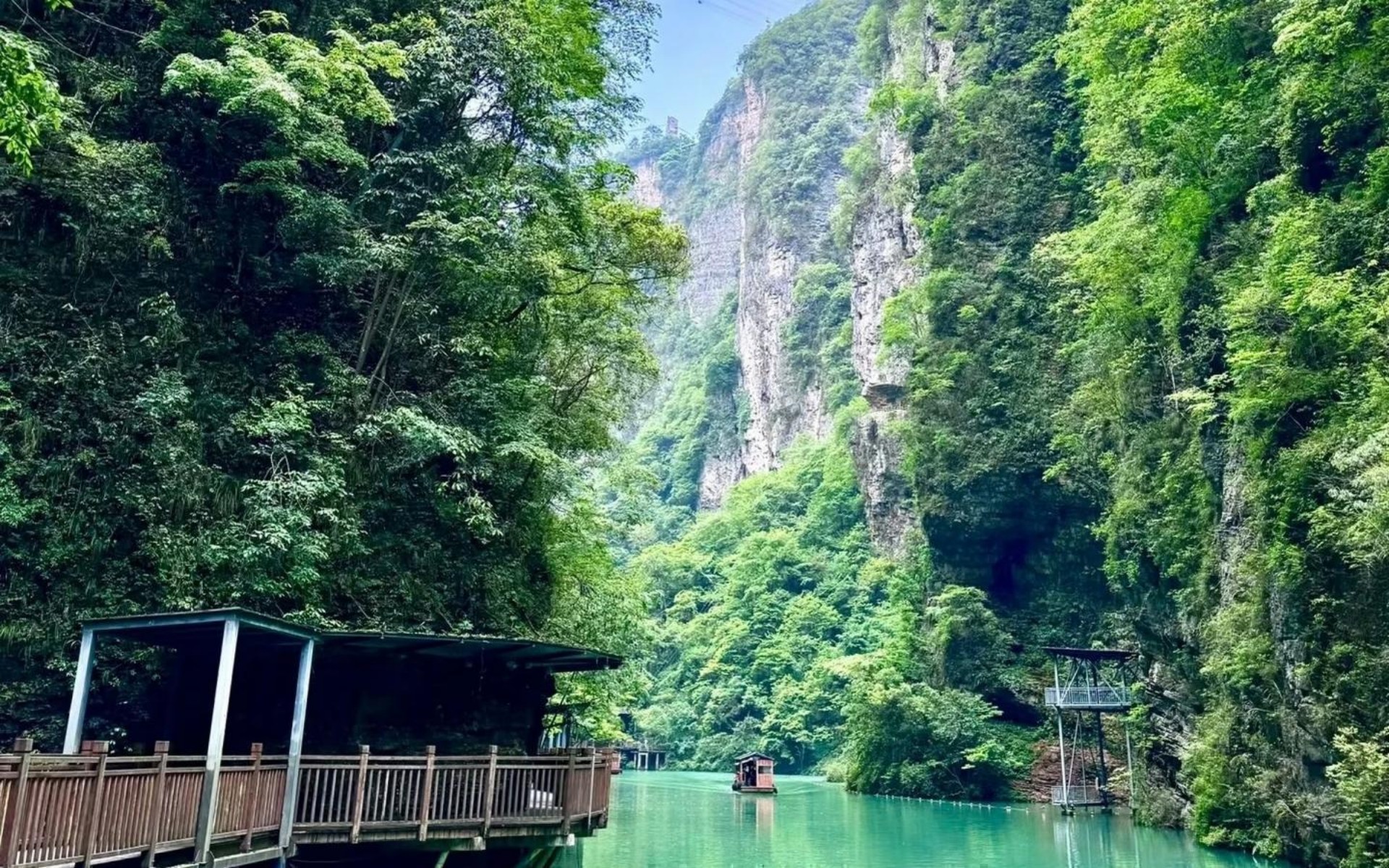
Read More