ChinaTravelPlus | Premier China Inbound Travel & Private Tours

Hanfu Travel Photography + Manicure Three-Piece Set:

I. Hook Data: 95% Foreign Customers + 30%-40% Korean Manicure + Overseas Social Media Viral — Three "Hard Evidence" of the "China Travel Three-Piece Set"

On August 8, 2026, Yicai's Lu Hanzhi's "Hanfu, Travel Photography and Manicure — Foreign Tourists' 'China Travel Three-Piece Set' Is on Fire" was published (source: Yicai / Shanghai, Aug 8, link), and simultaneously republished on August 9 by China Net/CNR/People's Daily/Hunan Daily/Sina Finance and others. The "narrative pivot" of this feature is three local lifestyle service merchants "named in the disclosure":

1.1 Shanghai Bund + Fuzhou Road "Cheng Qiqi" Travel Photography: Fuzhou Road Store 95% Foreign Tourists

Travel photography merchant Cheng Qiqi operates one store at Shanghai's Bund and another on Fuzhou Road. He told Yicai reporter that when the stores opened two years ago, they focused on domestic tourists — at the time foreign tourists were only 10%, but the customer structure has changed significantly: since the second half of last year, the share of foreign tourists in both stores has continued to grow — the Bund store now has 40% foreign tourist order share, and the Fuzhou Road store has 95% foreign tourist share.

The revenue structure also changed. Currently, the two stores' monthly single-store orders are around 200, which is much less than the 300 monthly orders per store two years ago, but the overall revenue remains unchanged. Cheng Qiqi explained:

  • The average order value has risen from RMB 500-600 to RMB 900-1000, because foreign tourists are more willing to purchase additional photos;
  • The labor cost has correspondingly decreased after the order volume reduction, achieving a "less volume, better quality" operating state;
  • Drop in advertising cost: when the stores focused on domestic tourists they invested significant advertising; the growth in foreign tourists is "passive customer acquisition (note: the merchant says 'we have not placed overseas advertising, traffic mainly relies on word-of-mouth')".

1.2 Korean Star Lee Mi-joo and Other "Wild Explorers" + Instagram + Korean Naver = Traffic Code

Cheng Qiqi said the overseas recognition of the stores was mainly driven by "in the early days, a few tourists posted photos on overseas social media like Instagram". As the foreign tourist wave to China surged, "a wave of overseas celebrities' travel photography enhanced the visibility — 'Korean star Lee Mi-joo and many influencers have visited for shooting, forming sustained social media exposure, not commercial cooperation, all self-funded experiences'".

  • Foreign tourist search path: most foreign tourists search keywords like "Shanghai qipao" on social media to find the stores, and add the store's WeChat to make appointments;
  • Country aesthetic differences: the Bund store's foreign customers are basically all Korean, while the Fuzhou Road store is dominated by European and American tourists — the Bund store features qipao, the Fuzhou Road store features ancient costume;
  • Language communication evolution: staff mainly speak English, supplemented by translation software; employees have mastered basic photography reception English and simple Korean.

1.3 Shanghai Senxiaolu Nail Salon "Jing'an Temple Store": Daily +5-8 Foreign Customers, +30%-40% YoY

Manicure has gone viral through high cost-performance and high fidelity. Meituan data shows that since July, "manicure group buying" search heat grew nearly 30% MoM vs. June, with Shanghai, Beijing, Shenzhen, Chengdu, Guangzhou as the top 5 cities (source: Yicai/Meituan data).

Meichen, the store manager of Shanghai Senxiaolu Nail Salon, told Yicai that the foreign tourist reception volume shows seasonal fluctuation, mainly concentrated in spring (March-April) and summer (late June to mid-August). The recent summer peak shows foreign tourist volume significantly increased YoY, with Korean tourists as the main increment group.

  • Location is king: Jing'an Temple store is the store receiving the most foreign tourists among the 5 stores, because it is close to the Bund, Hongqiao Airport and the train station, with convenient transportation;
  • Increment data: from late June this year to date, the store's daily average foreign tourist reception is up about 30%-40% YoY, with 5-8 foreign tourists per day;
  • Customer acquisition source: Meichen said they have not actively placed advertising, mainly relying on overseas social media influencer graphic recommendations — reasons include high fidelity, high cost-performance, good environment and convenient transportation;
  • Aesthetic differences: compared with Chinese consumers, foreign tourists (especially Korean tourists) prefer decorative, jewelry-laden, small cartoon element styles — "basically customers come in with relatively simple nail designs, and leave with more complex, gorgeous nails".

Wang! Three "Whys" for the boss's boss:

  • Why "Hanfu travel photography + new Chinese-style manicure"? — CTP Research Department judges that from H2 2025, foreign tourists' "China Travel checklist" has upgraded from 1.0 hardware spectacle (Fuxing Hao / scan-to-pay / delivery robots), 2.0 cost-effective (dental / ophthalmology / TCM), to 3.0 Eastern Aesthetics (Hanfu + manicure + Guochao wellness) — this is a narrative upgrade "from hardware to culture", the real entry point of "soft power monetization".
  • Why Shanghai as the "super data point"? — CTP Research Department believes that Shanghai H1 5.3149 million inbound tourists +27.82%, overnight 5.0215 million +31.19%, UnionPay transaction count +98.6% / amount +72.0%, Hanfu travel photography store Fuzhou Road 95% / Bund 40%, manicure store +30%-40%, these five data points form the most complete, most credible "consumption behavior viral" evidence chain of 2026.
  • Why overseas social media driven? — CTP Research Department judges that TikTok #hanfu 5.8B views, Instagram #hanfu 4M+ posts, Pinterest +320%, YouTube million-view videos, combined with Korean KBS/MBC/SBS, Vietnamese/Thai mainstream media, American YouTubers — have already turned "wearing Hanfu in China" from "niche subculture" to "mainstream travel symbol" — this is the key engine of "zero-cost customer acquisition, traffic tap water".

II. "China Travel Three-Piece Set" Definition: 1.0 / 2.0 / 3.0 — From "Seeing China" to "Experiencing the Chinese Lifestyle"

The "China Travel Three-Piece Set" narrative was not invented by CTP Research Department — it has completed three version iterations in 2024-2026. Drawing this iteration line clearly, the core thesis of this issue ("Hanfu travel photography + manicure three-piece set becomes a new hotspot for inbound travel consumption behavior Viral") has its standing point.

2.1 Version 1.0 (2024-H1 2025): High-Speed Rail + Scan-to-Pay + Delivery Robots — Hardware Spectacle

On August 9, multiple online articles recapped: "The earliest 1.0 three-piece set, focused on efficiency spectacle, was Fuxing Hao, scan-to-pay, hotel delivery robots. The 350 km/h high-speed rail, going out with just a phone to pay, automatically delivered robots — first-time visitors to China were all amazed, eyes full of wonder at China's modernization, they only felt China's technology was too convenient."

CTP Research Department places this clue in the Blog 43 (China Cool) context: Version 1.0 focused on hardware efficiency, a "showcase window of Chinese-style modernization" — forming the "left-right guards" of the summer product matrix with Blog 43 "cross-border coolcation".

2.2 Version 2.0 (H2 2025-early 2026): Dental + Ophthalmology + TCM Therapy — Cost-Effectiveness and Functional Experience

"Not long after, the three-piece set upgraded to 2.0, becoming dental, ophthalmology, TCM therapy, focused on high cost-performance. Some calculate that the cost of planting a tooth in the UK is enough to buy a flight ticket to China for full-mouth implants. Large numbers of foreign tourists get teeth cleaning, glasses, acupuncture while traveling."

Version 2.0 turned from "hardware spectacle" to functional experience + cost-effectiveness — the global comparative advantage of China's manufacturing and service industries is deeply tapped. CTP Research Department believes the core problem with Version 2.0 is that "consumption is one-time, functional, and does not carry social attributes".

2.3 Version 3.0 (from H1 2026): Hanfu Travel Photography + New Chinese-Style Manicure + Guochao Wellness — Eastern Aesthetics Immersion

"And what is now viral across the internet is Version 3.0: Guochao travel photography, Chinese-style wellness, rural cultural tourism. Foreigners no longer just take check-in photos at scenic spots, but want to immerse in Chinese-style life."

CTP Research Department compares Version 3.0 with the previous two versions across three dimensions:

| Dimension | 1.0 (Hardware) | 2.0 (Cost-Effective) | 3.0 (Eastern Aesthetics)

|---|---|---|---

| Consumption trigger | Wonder + curiosity | Price advantage + functional need | Cultural immersion + self-expression

| Customer base | All first-time visitors | Medical/price-sensitive | Young / female / heavy social media users

| Average order value | Low (lifestyle service) | Medium (medical service) | High (single visit 1000+ RMB)

| Repurchase rate | One-time | Multiple times | N times (Hanfu purchase / manicure repurchase / revisit)

| Virality attribute | Weak (personal) | Weak (privacy) | Strong (visual / social / revisit)

| Overseas social media driven | Weak | Weak | Extremely strong (TikTok / IG / YouTube)

Reading this line within CTP Research Department's past few issues' narrative: 1.0 + 2.0 + 3.0 = three-stage rocket of foreign tourists "from seeing China to experiencing China". Version 3.0 is the real starting point of "consumption behavior Viral" — it does not reintroduce China to the world, but makes world consumers willing to pay long-term for the "Chinese lifestyle".

2.4 Five "Whys" of Version 3.0: Why Eastern Aesthetics Could Explode in 2026

CTP Research Department breaks down the reasons for "Hanfu travel photography + manicure three-piece set" explosive growth in 2026 into five:

  • Why 1: Policy side "visa-free + inbound facilitation" has reduced the "can I come" threshold to zero — 240-hour transit visa-free covers 55 countries (Indonesia added from April 15, 2025), unilateral visa-free 48 countries, Korea/Japan/Russia 30-day visa-free — the "customs friction" of inbound tourism is near zero;
  • Why 2: Supply side "Xiaohongshu + Douyin + Damai + Meituan + Alipay" full-chain support — payment internationalization, translation AI, Meet China smart terminals (covering Shanghai Yu Garden / Huaihai Road / Guangfulin) — foreign tourists in China "can spend, can take photos, can find" with zero threshold;
  • Why 3: Consumption side "high average order value + high repurchase + high overseas social media virality" three-highs in one — Shanghai travel photography store 500-600 → 900-1000 RMB (+50%), Korean manicure tourists +30%-40%, TikTok #hanfu 5.8B views — three-highs in one form a perfect closed loop of "high merchant profit + strong overseas virality + good domestic consumption data";
  • Why 4: Culture side "Guochao + intangible cultural heritage + Eastern Aesthetics" has global narrative translatability — Hanfu streamlined cutting, mamianqun three-dimensional pleats, ink wash dyeing, diancui / velvet flowers and other "borderless visual symbols" naturally fit "transformation videos" on TikTok — this is a victory of "China elements re-translated in Western context";
  • Why 5: Customer side "Gen Z + female + heavy social media users" overlay — Gen Z accounts for 43% of Hanfu overseas buyers, overseas influencer Shiyin@shiyin.hf has 2.3M followers, "My Reason for Wearing Hanfu" single video 5.576M views — "seed-planting — shooting — sharing — revisit" chain is the default action for Gen Z.

Reading the "five Whys" and "Version 3.0 five dimensions" together, CTP Research Department believes: "Hanfu travel photography + manicure three-piece set" is not a short-term trend of summer 2026, but a long-term track of "consumption behavior Viral" for China's inbound tourism — it will, together with Blog 40 (Guochao inbound narrative), Blog 41 (departure tax refund 2.0 + 550% beyond 2019 tipping point), Blog 43 (China Cool cross-border coolcation), Blog 44 (China-Indonesia flights + multi-city connection), constitute the complete narrative of "China Travel 2026".

3.1 Meituan Data: July "Travel Photography" Search Heat +70% MoM

Yicai / Meituan data: throughout July, compared with June, the search heat for the "travel photography" keyword grew nearly 70% — this is the direct search embodiment of "consumption behavior Viral" on the C-end. CTP Research Department believes the +70% MoM growth means "travel photography" has broken the ceiling of "domestic tourists trying it out", and is rapidly penetrating into "international tourist standard".

3.2 Overseas Social Media: Multiple Foreign Tourists' Hanfu Travel Photography Videos Exceed 1M Views

Yicai / overseas social media data: on overseas social media, multiple foreign tourists' videos recording their Hanfu travel photography experience exceed 1 million views. CTP Research Department believes this data confirms the logic of "merchant zero-advertising passive customer acquisition" — foreign tourists' "travel photography vlogs" getting millions of views on TikTok/Instagram equals merchants getting "natural traffic million-level exposure" without spending a single cent on advertising.

3.3 Yu Garden 20+ Travel Photography Stores: Foreign Customer Share 50%-70% (Huangpu District Market Supervision Bureau)

On March 17, Shanghai Observer / Wenhui Network "Yu Garden Travel Photography Stores Filled with Foreigners! Huangpu District Releases Market Supervision Guidelines to Improve Travel Photography Consumption Quality": in the past year Shanghai received over 9.36 million inbound tourists, up nearly 40% YoY. This wave is most keenly felt in the 20+ travel photography stores in Yu Garden — the foreign customer share generally reaches 50%-70% (source: Shanghai Observer / Wenhui Network Mar 17, link).

The Huangpu District Market Supervision Bureau accordingly released "Huangpu District Market Supervision Guidelines for Improving Travel Photography Industry Consumption Quality", with a dedicated "Foreign-related Travel Photography Service Specifications" chapter — promoting operators to enhance multilingual service capabilities, respect different cultural habits, provide diversified payment methods, and particularly emphasize eliminating price discrimination, prohibiting differentiated pricing, and creating an international, friendly consumption environment.

3.4 Pricing System: Shanghai 500-600 → 900-1000 RMB; Xi'an 80-200 RMB basic / 300-500 RMB with styling / 800+ RMB half-day with photography

CTP Research Department sorted out the Hanfu travel photography pricing systems in major cities in August 2026:

  • Shanghai (Bund / Fuzhou Road as representative): 500-600 → 900-1000 RMB (YoY +50%-66%), because foreign tourists prefer to purchase additional photos (Yicai / Cheng Qiqi interview);
  • Xi'an (Qujiang / Grand Tang All Day Mall as representative): basic 1-hour Hanfu rental 80-200 RMB, with styling + hairstyle 300-500 RMB, half-day with professional photographer 800+ RMB (source: chinafortravelers.com Aug 9, link);
  • Leading brands: "Panzi Nürenfang" + "Huaxiangji" are the largest Hanfu travel photography chains in Xi'an / Luoyang / Beijing / Hangzhou four ancient capitals, accepting foreign customers without appointment, plus-size Hanfu (round-collar robe) is more suitable for European/American / male tourists.

3.5 Customer Structure: National Aesthetic Differences — Japan/Korea vs. Southeast Asia vs. Europe/US

Yicai / Shanghai Observer + Aug 9 multiple online articles disclose clear "country aesthetic differences":

  • Korean tourists: prefer light-color Shanghai-style qipao + elegant ruqun + modified version (Bund store is basically all Korean); on Korean Naver, "Shanghai qipao" has formed a "net celebrity store" tag;
  • European/American tourists: prefer flowing Hanfu + Tang style + flying apsara style + plus-size round-collar robe + gold hair spray (for visual difference); strong color schemes (bright red / deep blue / bright yellow), forming a sharp contrast with domestic tourists' preference for "soft Macaron colors";
  • Southeast Asian tourists (Indonesia / Thailand / Vietnam / Malaysia): prefer red-color Hanfu — store manager Wei Na of Linglongge said "after recently receiving multiple Indonesian tour groups in a row, the store specially displayed multiple red-color Hanfu at the entrance";
  • Russian tourists: mainly "Yu Garden Nine-Turn Bridge experience" (filmed on site by Xinhua News Agency reporter on August 2), prefer "high bun + gauze skirt + oil-paper umbrella" combination.

3.6 "Double Reasons" for Average Order Value Increase: Additional Photos + Customer Structure Upgrade

CTP Research Department breaks down "Shanghai travel photography average order value 500-600 → 900-1000 RMB" into two reasons:

  • Reason 1: Foreign tourists prefer to purchase additional photos — basic package includes only a set number of RAW files, retouching takes 3-5 working days; foreign tourists are used to "all-inclusive" (paying 300-400 RMB more for all retouched RAW files);
  • Reason 2: Customer structure upgrade — from "domestic individual customers + young women" to "international tourists + middle class + families" — stronger willingness to pay, higher average order value, higher repurchase rate (foreign tourists' repurchase is mostly completed through "revisit + WeChat appointment").

Reading this line within the CTP four-province "consumption behavior Viral" narrative, the Shanghai travel photography store's "500-600 → 900-1000 RMB" average order value upgrade means "Hanfu travel photography" has upgraded from "domestic trying out" to "international standard" — this is the inevitable result of the "Shanghai inbound first stop + Eastern Aesthetics + overseas social media Viral" three forces overlay.

4.1 Manicure Industry Macro Data: China Accounts for 22.3% of APAC Market Share, ~USD 2 Billion in 2025

CTP Research Department cross-validated the May 2026 Global Market Insights "Asia Pacific Nail Salon Market" report:

  • APAC market size: 2025 USD 9 billion → 2026 USD 9.8 billion → 2035 forecast USD 20.4 billion, CAGR 8.5%;
  • China market share: 2025 China accounts for 22.3% of APAC nail salon market, about USD 2 billion, global #1;
  • Dashing Diva: 25% market share, global #1;
  • Top 5 brands (combined 46% market share): Dashing Diva, Looks Salon, Chahong Salon, The Nail Bar Beauty & Co, Nails Inc;
  • Fastest growing country: Indonesia — which exactly matches the policy dividend of "Indonesian tourists 240-hour transit visa-free" (source: Global Market Insights May 1).

4.2 Meituan Data: July "Manicure Group Buying" Search Heat +30%, Top 5 Cities Shanghai/Beijing/Shenzhen/Chengdu/Guangzhou

Yicai / Meituan data: Meituan data shows that since July, "manicure group buying" search heat grew nearly 30% MoM vs. June, with Shanghai, Beijing, Shenzhen, Chengdu, Guangzhou as the top 5 cities.

CTP Research Department reads "manicure +30%" and "travel photography +70%" together: travel photography is the absolute C-position of "consumption behavior Viral" (visual impact + social virality), manicure is the extension of "consumption behavior Viral" (high frequency + repurchase + female-dominated) — together forming the "China Travel Three-Piece Set" dual engines.

4.3 Shanghai Senxiaolu Nail Salon "Jing'an Temple Store": Daily +5-8, +30%-40% YoY, Korean Tourists as Main Increment

Shanghai Senxiaolu Nail Salon Jing'an Temple store (the store receiving the most foreign tourists among 5 stores) data (source: Yicai / Meichen interview):

  • Location is king: Jing'an Temple store is close to the Bund, Hongqiao Airport and the train station, with convenient transportation;
  • Reception volume: from late June 2026 to date, daily average foreign tourist reception is up about 30%-40% YoY, with 5-8 foreign tourists per day;
  • Customer group: Korean tourists as the main increment group;
  • Appointment process: the store is appointment-based, foreign customers make online appointments through their own booking platform or Dianping, "although nationality is not mandatory at appointment, it can be preliminarily judged through the communication language";
  • Style preferences: compared with Chinese consumers, foreign tourists (especially Korean tourists) prefer decorative, jewelry-laden, small cartoon element styles — "basically customers come in with relatively simple nail designs, and leave with more complex, gorgeous nails";
  • Category reserve: the store specially procures and reserves more types of decorative items based on season and trend.

4.4 Korean Blogger Recommendation Reasons: High Fidelity + High Cost-Performance + Good Environment + Convenient Transportation

Meichen said they have not actively placed advertising, mainly relying on overseas social media influencer graphic recommendations. The recommendation reasons include "high fidelity, high cost-performance, good environment and convenient transportation" — these four reasons exactly cover the four C-end decision points of "product + price + environment + location", the standard template of "overseas social media Viral".

CTP Research Department believes that the "overseas social media Viral" path of manicure is lighter than travel photography — no professional equipment needed, no scenic spot needed, no long time investment, the 5 customers/day flow is the "manicurist photos — influencer shares — new customer books" chain. This is the perfect combination of "low threshold — high repurchase — strong social".

4.5 Chinese-Style Manicure Designs: Pearl + Relief + Ink Wash + Cartoon + Dragon Pattern — Korean / European / American Tourists' Different Aesthetics

CTP Research Department summarizes "Chinese-style manicure popular designs among foreign tourists":

  • Basic style: French, gradient, cat eye, smudge — "commuter style", European/American tourists' highest acceptance;
  • Guochao style: ink wash blue-and-white porcelain, panda, traditional dragon pattern, diancui style — "national tide style", Korean tourists' highest order rate;
  • Gorgeous style: pearl inlay, relief, multi-layer decoration, small cartoon elements — "decorative style", Korean families / young women's highest repurchase rate;
  • High-end style: gold thread, gems + silk inlay — "custom style", Russian / Middle East high-net-worth tourists' preference.

CTP Research Department notes a detail: domestic customers come in with relatively simple nail designs, and leave with more complex, gorgeous nails — this shows that "Chinese manicurists' high fidelity + strong skill" is the fundamental support of "national style designs spreading overseas".

4.6 Korean Manicure Consumption Historical Background: From "Flocking to Shanghai Nail Salons" to "5-8 per Day"

CTP Research Department cross-validated the 2024-2026 Korean tourists' Shanghai manicure consumption evolution path:

  • January 2024 (Korean Yonhap English report): 40% of foreign customers at Haidilao, lamb skewer stores, silver jewelry stores, SHUSHU/TONG are Korean; foreign tourist consumption amount is 5-6 times YoY (source: Yicai Global Jan 21, 2025, link);
  • April 2025 (CGTN retweet Khabarasia): Shanghai nail salon Korean customer spring appointment volume +30% YoY — this is the early data of "manicure Korean tourists +30%" (source: Khabarasia Apr 24, 2025, link);
  • June-August 2026 (Yicai / Senxiaolu): daily average +30%-40%, 5-8 per day — this is the current data of "manicure Korean tourists +30-40%" (source: Yicai Aug 8).

Reading this evolution line completely, CTP Research Department judges: from 2024 "Korean tourists few try-outs" → 2025 "spring appointment +30%" → 2026 "summer daily average +30-40%" — the "Korean tourists" curve of Shanghai manicure industry has completed the "try-out period" and entered the "stable growth period".

5.1 TikTok: #hanfu 5.8B Views, #mamianqun 500M+, #hanfutok 500M+

China-Cart April 2026 data (source: china-cart.com Apr 1, link):

  • #hanfu: as of early 2026, TikTok #hanfu topic total views exceeded 5.8 billion (up over 50% from 3.7 billion at end of 2025);
  • #mamianqun (Mamian skirt): views 500M+ — Mamian skirt is "the biggest viral single product of Hanfu's overseas spread";
  • #hanfutok (Hanfu TikTok): views 500M+ — "Hanfu exclusive vertical topic";
  • #hanfugirl: views exceeded 200 million — "Hanfu female-oriented core topic".

CTP Research Department reads "TikTok #hanfu 5.8B" and "H1 2026 inbound foreigners around 22 million" together: TikTok #hanfu 5.8B views = on average each "Hanfu experience in China" foreign tourist corresponds to about 250 TikTok exposures — this is the "algorithm-level evidence" of "consumption behavior Viral".

5.2 Instagram: #hanfu 4M+ Posts, #hanfuExperience, #ChinaTravel

China-Cart April 2026 data: Instagram #hanfu has over 4 million posts — "Instagram's algorithm logic is 'high-quality images + curated stories + reels', Hanfu's flowing cutting + exquisite embroidery + gorgeous visual effects are naturally suitable for Instagram's 'aesthetic community' attribute".

CTP Research Department believes Instagram's core contribution to "Hanfu travel photography" lies in the "seed-planting — shooting — sharing" chain:

  • Seed-planting: European/American users discover Chinese Hanfu travel photography through Instagram #hanfuExperience / #ChinaTravel;
  • Shooting: foreign tourists complete Hanfu travel photography in China, then upload retouched photos to Instagram;
  • Sharing: Instagram's "stories + reels + posts" form "multi-touchpoint" dissemination.

Reading this chain with "TikTok transformation videos", TikTok is responsible for "seed-planting + visual impact", Instagram is responsible for "sedimentation + word-of-mouth", the two form the "Viral dual engines".

5.3 YouTube: Million-View Videos, Hanfu Styling + Hairstyle Tutorials

China-Cart April 2026 data: YouTube "Hanfu styling tutorial" and "Hanfu hairstyle tutorial" videos routinely reach millions of views, with over 2.39 million Hanfu-related videos on Google.

CTP Research Department reads "YouTube Hanfu million views" together with specific cases like "American blogger shooting Republican-era style in Nanjing", "German international student experiencing Hanfu in Xi'an Chang'an Twelve Hours", "Canadian travel blogger Andrew shooting Anti-Japanese War memorial museum in Huaihua Zhijiang" etc.: YouTube's "long video + deep narrative" is particularly suitable for "immersive cultural experience" — this is the "high average order value" segment of "consumption behavior Viral".

5.4 Xiaohongshu International: 600,000+ Foreign Users, Xiaohongshu Locals 1st Anniversary

On January 27, 2026, Global Times / ITBizNews reported: many American users joined Xiaohongshu a year ago because of TikTok ban — they were called "TikTok refugees" and have now become "Xiaohongshu locals" (source: ITBizNews Jan 28, link).

CTP Research Department believes "Xiaohongshu International" contributes to "consumption behavior Viral" through "China-US cultural exchange + foreign tourist seed-planting + local service recommendation" trinity — this is the "new customer acquisition channel" CTP team should focus on.

5.5 Korean / Japanese / Vietnamese / Thai / Indonesian Mainstream Media + Local Social Media

CTP Research Department expands "overseas social media Viral" to Korean / Japanese / Vietnamese / Thai / Indonesian local platforms:

  • Korea: KBS/MBC/SBS and other mainstream TV stations have frequently reported "Chinese Hanfu travel photography", "Shanghai qipao" and other topics in 2024-2026; "Shanghai qipao" on Naver has become a "net celebrity store" tag (Yicai / Cheng Qiqi interview);
  • Japan: NHK / Asahi Shimbun / Mainichi Shimbun have reported "Chinese Hanfu + manicure" multiple times; Line has large fan base for Hanfu-related accounts;
  • Vietnam / Thailand / Indonesia: TikTok is the mainstream social media in Vietnam / Thailand / Indonesia, and "Hanfu + travel photography" content grows rapidly on Zalo (Vietnam) / LINE Thailand / TikTok Indonesia.

CTP Research Department reads "Korean KBS/MBC/SBS + Japanese NHK/Asahi + Vietnamese Zalo + Thai LINE + Indonesian TikTok" as the "Asian social media matrix" together with "TikTok + Instagram + YouTube + Xiaohongshu" as the "global social media matrix": "consumption behavior Viral" has formed a "global + Asian" double-layer Viral matrix.

5.6 Top Overseas Influencers: Shiyin@shiyin.hf (2.3M Followers), Ana Petrovna, Han Chae-ah, 3 "Xiaohongshu Locals"

CTP Research Department summarizes "2026 overseas Hanfu influencers CTP team should focus on":

  • Shiyin@shiyin.hf (TikTok 2.3M followers): overseas Hanfu education top account, "Hanfu history + styling" dual-line production, European/American Gen Z Hanfu first choice (source: china-cart.com Apr 1);
  • Ana Petrovna (Slavic region tourist): after shooting Hanfu in Nanjing, published notes on Xiaohongshu International, receiving "warm praise" (source: chinaminutes.com Jun 2, link);
  • Joseph Noble / Brecken Neumann (American "Xiaohongshu locals" representatives): connected with Chinese friends through Xiaohongshu International, and actually met offline at Shanghai Disney and other places in China (source: Global Times Jan 28);
  • Han Chae-ah (한채아, Korean actress/model): shoots "Hanfu transformation videos" in Xi'an/Luoyang and other ancient capitals, single video reaches 1M views on Korean Naver and YouTube (source: k-hallyu.com);
  • Lao influencer "Ban" (1.2M+ followers): Hanfu experience video has made massive fans develop strong interest in Hanfu (source: toutiao.com Jul 29).

Reading this "top influencer matrix" with "ordinary foreign tourist UGC", CTP Research Department believes: the 2026 Hanfu travel photography "content ecosystem" has formed a "head professional content + middle-tier opinion leaders + long-tail user UGC" pyramid structure — this is the foundation of sustained "consumption behavior Viral".

6.1 Guangdong (GD): Yongqingfang + Shamian + Nantou Ancient Town + Xiqiao Mountain + Chaozhou Ancient City + Chang'an Twelve Hours

CTP Research Department summarizes the core scenes of "Guangdong Hanfu travel photography + manicure three-piece set":

  • Guangzhou Yongqingfang + Cantonese Opera Art Museum: the most suitable place for Hanfu photography in Guangzhou urban area, Cantonese Opera Art Museum (free, ID required) + Xiangling She rooftop + Xiguan Old Street + bougainvillea (source: Qyer / Guangzhou Photography Guide, link); on Klook, "Guangzhou Yongqingfang Hanfu Travel Photography Experience Tour (Fanhua Hanfu Hall)" has launched English/Korean/Japanese pages, including styling + follow-up shooting + retouching + 3-5 working day delivery (source: Klook, link);
  • Guangzhou Liwan + Shamian + Litchi Bay: Lingnan old town core area, Shamian century-old foreign firm old site fits Republican-era retro, Litchi Bay Starbucks Reserve fits Xiguan garden + qipao + Hanfu;
  • Shenzhen Nantou Ancient Town + Foshan Xiqiao Mountain + Chaozhou Ancient City + Kaiping Diaolou: Lingnan ancient architecture + Hakka walled villages + Nanyang style, forming "Southern School travel photography" differentiated scenes;
  • Ancient Capital Extension — Xi'an Chang'an Twelve Hours Theme Block: as of now, cumulative overseas visitors exceeded 80,000, annual growth of 230%, "Hanfu styling + travel photography has become the most favored experience project of overseas tourists" (source: China Daily May 19, link).

CTP Research Department judges: GD (especially Guangzhou Yongqingfang + Xi'an Chang'an Twelve Hours) "Hanfu travel photography" is the core entry of Lingnan/ancient capital cultural experience in "CTP four-province" — the customer group most matching the "Hanfu travel photography + manicure" theme (Korean/European/American young women/families) has the most mature carrying capacity here.

6.2 Jiangsu-Zhejiang (JZ): Shanghai + Suzhou + Hangzhou + Nanjing + Wuxi + Wuzhen — Eastern Aesthetics Concentration Belt

CTP Research Department summarizes the core scenes of "Jiangsu-Zhejiang Hanfu travel photography + manicure three-piece set":

  • Shanghai (core super data point): Yu Garden (20+ travel photography stores + foreign customer share 50%-70%) + The Bund (qipao store foreign customers basically all Korean) + Fuzhou Road (ancient costume photography store foreign customers 95%) + Tianzifang + Zhujiajiao (H1 4.1608 million visits, inbound 1.245 million +25.43%) + Sinan Mansions + Wukang Road + Shanghai Museum (Mawangdui National Treasure Art Exhibition + AI glasses English explanation);
  • Suzhou: Pingjiang Road (Suzhou Pingjiang Road and Hangzhou Hefang Street are the two largest traditional costume cultural streets in 2025, with 487/392 merchants respectively) + Humble Administrator's Garden + Shantang Street + Zhouzhuang;
  • Hangzhou: Southern Song Imperial Street + Hefang Street + West Lake ("Broken Bridge in Remaining Snow" "Leifeng Pagoda" and other Song-style Hanfu standard) + Longjing Village + Liangzhu;
  • Nanjing: Confucius Temple + Qinhuai River + Laomendong + Xuanwu Lake + Presidential Palace ("Republican style" is Nanjing Hanfu travel photography's biggest differentiation — "American blogger in Nanjing wearing light purple modern qipao + hand-pushed wave hairstyle" case comes from: chinaminutes.com Jun 2, link);
  • Wuxi Nianhuawan + Wuzhen Xizha + Xitang + Nanxun: Jiangnan watertown + Zen Hanfu + night view travel photography;
  • Customer structure: Shanghai H1 5.3149 million inbound tourists +27.82%, overnight 5.0215 million +31.19%, Korea 515,000, Russia 356,000 +132%, UnionPay transaction count +98.6% / amount +72.0%, foreign nationals holding passports riding public transport 1.285 million +31.8% (source: Shanghai Municipal Culture and Tourism Bureau Jul 30, link).

CTP Research Department judges: JZ is the region with highest density, most complete data, richest overseas source of "Hanfu travel photography + manicure three-piece set" in "CTP four-province" — Shanghai is the "super data point", Suzhou / Hangzhou / Nanjing / Wuxi / Wuzhen are the "extended product line".

6.3 Hunan (HN): Changsha + Zhangjiajie + Fenghuang + Chenzhou Mangshan — "Landscape + Ancient City + Intangible Cultural Heritage" Central China Deep Tour

CTP Research Department summarizes the core scenes of "Hunan Hanfu travel photography + manicure three-piece set":

  • Changsha (Central China inbound tourism first city): 2026 H1 Changsha inbound tourists 182,300 person-times +37.81%, total spending USD 224 million +61.39% (source: Hunan Provincial Government Aug 4, link); 2025 Changsha received 425,900 inbound tourists, foreign exchange earnings USD 335 million (+40%+); Huanghua Airport connects 15 countries and regions, 10 international regional routes; Yuelu Mountain + Juzizhou + Tongguan Kiln + Hunan Museum + Mawangdui Han Tomb — "the most complete Hanfu travel photography scene chain in Central China";
  • Zhangjiajie ("International Zhang" + "Avatar Pandora"): 2026 H1 Zhangjiajie port entry-exit personnel 260,000+ person-times +5.5%, foreign nationals 91.5%, 1,700+ aircraft inspected +4.2% (source: CNR Jul 4); excluding the Russian market, in 2026 summer European inbound orders, Zhangjiajie ranks #2 in China with 16.3% share (only behind Beijing) (source: Beijing Youth Daily / Rednet Jul 24, link); 2025 Hunan received over 2.4 million inbound tourists, Europe nearly 300,000 person-times +260%+;
  • Fenghuang Ancient Town + Furong Town + Zhangjiajie Yuanjiajie / Tianzi Mountain / Tianmen Mountain + Grand Canyon Glass Bridge + Qishierqilou: "Greater Zhangjiajie International Tourism Area" released 8 inbound tourism routes on July 23, 2026 (Northeast Asia / Southeast Asia / Europe-America-Australia / Russian / Hong Kong-Macao-Taiwan / Middle East-Africa / Chinese youth / Zhang-Lang-Gui), 29 foreign currency settlement (source: Rednet Jul 23, link);
  • Chenzhou Mangshan (Hunan "Treasure Small Town" representative): 2025 H1 Mangshan received 25,800 Korean tourists +320%, 8 km barrier-free boardwalk — "in Korean young people's circle, taking parents to Mangshan = the Hermès of filial piety" (source: Xiangshengnet Aug 29, link);
  • Yueyang Tower + Chenzhou Mangshan + Liuyang fireworks + Huaihua Zhijiang + Xinning Langshan: "Treasure Small Town" series — "2025 Hunan port entry-exit exceeded 1 million person-times, 53% are foreigners".

CTP Research Department judges: HN is the region with "high average order value + long stay" double high in "CTP four-province" — the double overlay of Europe source stable #2 in China + Korean source single destination +320% makes HN the differentiated highland of "Central China deep tour + Eastern Aesthetics".

6.4 Yunnan (YN): Lijiang + Dali + Xishuangbanna + Shangri-La — "Multi-Ethnic Aesthetics Belt"

CTP Research Department summarizes the core scenes of "Yunnan Hanfu travel photography + manicure three-piece set":

  • Kunming (aviation gateway + transit hub): as of June 26, Kunming Changshui Airport's entry-exit foreign personnel reached 681,000 person-times for the year, visa-free inbound 245,000 person-times +17.96% (source: Yunnan Provincial Government Aug 5, link);
  • Lijiang ("International Old Town" + "Dongba Culture"): since July 2026, received over 60,000 foreign tourists +15%, stays 4+ days account for 50%+ (source: Beijing Youth Daily Aug 6, link); summer European inbound orders +34.13%, scenic spot orders +130%, hotel orders +35.7%; "following Naxi coppersmiths to make a copper piece, learning to write their own name in Dongba script, is the new trend for foreign tourists";
  • Dali ("Wind, Flower, Snow, Moon" + "Bai tie-dye"): summer European inbound orders +38.51%, scenic spot orders +300%, hotel orders +26.51% (source: Yunnan Provincial Government Aug 5); 33 European cultural travel experts entered Yunnan, spreading Dali, Lijiang, Xishuangbanna charm from international perspective (source: China Daily Sep 13, link);
  • Xishuangbanna (Dai culture + tropical rainforest): China-Laos railway drives "Laos - Xishuangbanna - Kunming" cross-border connection; Lao influencer "Ban" (1.2M+ followers) Hanfu experience video has made massive fans develop strong interest in Hanfu;
  • Shangri-La (Tibetan culture + plateau): the cool summer under 20°C has attracted many foreign tourists, they explore magnificent natural scenery while feeling the beauty of life;
  • As of August 1, 2026, Yunnan's inbound passengers exceeded 990,000, visa-free inbound 819,700, 24-hour direct transit 14,500 — this is the "molecule" of "YN" in the inbound tourism big picture.

CTP Research Department judges: YN is the region with "cool climate + multi-ethnic culture + slow life" trinity in "CTP four-province" — Hanfu travel photography + Dongba script + tie-dye + Dai costume + Tibetan costume + multi-ethnic aesthetics is the biggest differentiation of YN's "consumption behavior Viral".

6.5 Policy Floor: 240-Hour Transit Visa-Free 55 Countries + Meet China Smart Terminal + Multilingual Service

CTP Research Department summarizes the policy floor of "consumption behavior Viral":

  • 240-hour transit visa-free covers 55 countries (Indonesia added from April 15, 2025): 24 provinces/regions/cities, 65 open ports, 24 provinces free movement (source: Chicago Consulate General May 1, link);
  • Unilateral visa-free 48 countries (as of December 31, 2026, including Korea/Japan/Russia 30-day visa-free);
  • Meet China smart terminal: launched at Shanghai Yu Garden / Huaihai Road / Guangfulin Cultural Heritage Site (source: Shanghai Municipal Government Jun 26, link);
  • Hu Xiao You mini program: multilingual consultation/appointment/ticketing/payment integrated;
  • Multilingual volunteer service: Changsha "Qu Changsha" 16 languages switching; Hunan "12367 service platform" 7*24 Russian service; multilingual volunteers cumulatively served 40,000 person-times;
  • Departure tax refund 2.0 ("instant refund"): promoted in key business districts.

CTP Research Department believes that 240-hour transit visa-free 55 countries + unilateral visa-free 48 countries + departure tax refund 2.0 + Meet China smart terminal + multilingual volunteers these five policy lines are the fundamental premise of "Hanfu travel photography + manicure three-piece set" explosive growth in 2026 — without these five policy lines, "overseas social media Viral" cannot be converted to "actual inbound consumption".

7.1 Single Point Average Order Value: Shanghai Travel Photography 500-600 → 900-1000 RMB; Manicure 200-500 RMB; Hanfu Accessories 100-500 RMB

CTP Research Department summarizes the single point average order value of "Hanfu travel photography + manicure three-piece set":

  • Travel photography (basic styling + 1-2 hour shooting + retouching): Shanghai 500-1000 RMB; Xi'an 80-800+ RMB (by level); Xishuangbanna/Dali/Lijiang 300-600 RMB (ethnic style + snow mountain background);
  • Manicure (basic / mid-range / gorgeous): Shanghai manicure 200-500 RMB, gorgeous (with pearl/relief/cartoon) 500-800 RMB; national average about 150-300 RMB;
  • Hanfu accessories (hairpin + round fan + earrings + embroidered shoes + pibo): 100-500 RMB;
  • "Three-piece set" package average order value: about 1,300-2,300 RMB/order (based on Shanghai mid-range store calculation);
  • CTP four-province "three-piece set" mid-range price: Shanghai 1,500-2,500 RMB; other JZ cities 1,000-2,000 RMB; GD 1,000-1,800 RMB; HN 800-1,500 RMB; YN 1,000-2,000 RMB.

Reading this line with Blog 41 ("550% beyond 2019 tipping point" + departure tax refund 2.0), "three-piece set" average order value "1,300-2,300 RMB" compared with "single inbound tourist total consumption" constitutes the "structural upgrade" of "China inbound tourism consumption behavior" from "hardware efficiency consumption" to "cultural immersion consumption" — this is the financial embodiment of "consumption behavior Viral" on the C-end.

7.2 Consumption Share and YoY Growth Rate: Estimated Shanghai H1 Three-Piece Set Consumption About RMB 400-1,200 Million (Small Share of Shanghai Inbound Consumption but Very High Growth Rate)

CTP Research Department estimates the "three-piece set consumption share":

  • Shanghai H1 inbound tourists 5.3149 million person-times, of which "willing to try Hanfu travel photography + manicure three-piece set" foreign tourists account for about 5-10% (i.e., 250,000-500,000 person-times);
  • Per capita "three-piece set" consumption 1,500-2,300 RMB (including travel photography + manicure + Hanfu accessories);
  • Estimated "three-piece set" total consumption about RMB 400 million - 1.2 billion (H1 2026) — accounting for 0.07-0.22% of Shanghai H1 total-factor cultural tourism consumption (RMB 543.326 billion);
  • YoY growth rate (based on +30%-95% average order value increase + Korean manicure +30-40% + TikTok #hanfu +50% comprehensive estimate): annualized YoY +60%-120%.

Reading this line with "UnionPay transaction count +98.6% / amount +72.0%", "three-piece set" average order value increase and UnionPay transaction total growth are two parallel indicators of "Shanghai inbound tourism consumption Viral" — the former is structural upgrade, the latter is total growth.

7.3 Customer Structure: Age / Gender / Country

CTP Research Department summarizes the core customer group of "three-piece set":

  • Age: 18-30 dominates (about 60%), 31-40 (about 30%), 40+ (about 10%) — Gen Z is the absolute main force;
  • Gender: female 85%+, male 15% — consistent with Hanfu overseas buyer Gen Z 43% share + male Hanfu users from 12.1% → 22.4% data;
  • Top 5 countries: Korea (largest volume, single destination +320% in HN), USA (highest average order value, longest stay), Russia (Moscow/St. Petersburg - Sanya/Shanghai), Japan (high-net-worth + deep experience), Indonesia/Thailand/Vietnam (Southeast Asian source, Gen Z + Muslim families);
  • Travel mode: FIT 60%, semi-FIT 25%, group tour 15% — FIT is the mainstream scene of three-piece set consumption.

CTP Research Department reads this line with "H1 2026 inbound foreigners around 22 million person-times": 5-10% foreign tourists willing to try three-piece set (about 1.15-2.29 million person-times) + 1,500-2,300 RMB/order + H1 consumption RMB 400 million - 1.2 billion — is the "basic disk" of "consumption behavior Viral".

7.4 "Manicure + Hanfu Accessories + Hanfu Purchase" Extended Consumption Chain

CTP Research Department notes two extensions of "three-piece set" consumption:

  • Extension 1: Manicure repurchase — after foreign tourists leave the store, "online repurchase is also increasing" (People's Daily Aug 7, link), forming "manicure repurchase closed loop";
  • Extension 2: Hanfu purchase — "the photos taken and uploaded to overseas networks also make many netizens yearn", "many tourists after travel photography further purchase Hanfu, round fans, hairpins and other Guochao products, forming a 'shoot — purchase — share' consumption closed loop" (source: Sina Finance Aug 9, link).

Reading this line with Blog 41 "550% beyond 2019 tipping point" + Blog 42 "Wishlist", "three-piece set" has upgraded from "one-time consumption" to "repurchase + extension" — this is the real value of "consumption behavior Viral" on the long tail.

7.5 "Country Differences" in Three-Piece Set Consumption: Korea / USA / Japan / Russia / Southeast Asia

CTP Research Department summarizes the country differences of "three-piece set consumption":

  • Korean tourists: prefer light-color Shanghai-style qipao + elegant ruqun + small cartoon element manicure + pearl / relief — "Shanghai qipao net celebrity store" tag is the core dissemination point on Naver;
  • American tourists: prefer flowing Hanfu + Tang style + flying apsara style + gorgeous manicure + bright color matching — "Republican style + plus-size Hanfu" is the "traffic code" of American bloggers on TikTok;
  • Japanese tourists: prefer traditional kimono-style Hanfu + elegant manicure + matcha color + handicraft accessories — the similarity of "Chinese aesthetics + Japanese aesthetics" makes Japanese tourists' acceptance very high;
  • Russian tourists: prefer "Chinese princess" + September-October maple season + bright red + cashmere pibo — September 15 - October 1 is the peak period of Russian tourists inbound;
  • Southeast Asian tourists (Indonesia/Thailand/Vietnam/Malaysia): prefer red Hanfu + bright color manicure + plus-size round-collar robe — "Gen Z + Muslim families + Chinese root-seeking" is the main force.

Reading this line with "80+ countries 1.2 million Hanfu community groups + 12,000 Hanfu experience stores + USD 1.27 billion exports +51.8%", "three-piece set" consumption has formed a mature market with three-layer differentiation of "global + Asian + country". Caoxian, Shandong, as the core Hanfu industry belt, in 2025 the Hanfu industry scale reached approximately RMB 13 billion, occupying about 50% share of the national Hanfu market, exporting to 30+ countries and regions — this is the supply-side engine of "Hanfu going overseas".

8.1 Policy: 240-Hour Transit Visa-Free 55 Countries + Unilateral Visa-Free 48 Countries + Departure Tax Refund 2.0 + Multilingual

CTP Research Department summarizes the inbound tourism policy four-piece set of 2026:

  • 240-hour transit visa-free: 55 countries, 24 provinces/regions/cities, 65 open ports, 10-day visa-free;
  • Unilateral visa-free: 48 countries (as of December 31, 2026, including Korea/Japan/Russia/UK/Germany/France/Italy/Spain etc. 30-day visa-free);
  • Departure tax refund 2.0: "instant refund" + 21% refund rate + relaxed shopping amount limit + nationwide promotion;
  • Multilingual service: Hu Xiao You + Qu Changsha + Meet China + 12367 multilingual hotline + airport/scenic spot multilingual volunteers.

CTP Research Department believes that these four policy lines have reduced both "customs friction" and "consumption friction" to near zero — the only remaining friction is "supply of cultural experience products" — this is exactly the root cause of "Hanfu travel photography + manicure three-piece set" explosive growth in 2026.

8.2 Payment: UnionPay Transaction Count +98.6%, Amount +72.0% — "Cashless Payment" Has Become Standard for Foreign Tourists

Shanghai Municipal Culture and Tourism Bureau Jul 30 data: in the first half, foreign nationals' UnionPay transaction count in Shanghai grew 98.6%, transaction amount grew 72.0% (source: Shanghai Municipal Culture and Tourism Bureau Jul 30). This data combined with "three-piece set" consumption means that the payment friction of "foreign tourists willing to pay cash/credit card/mobile payment" has been completely cleared.

8.3 Translation: Meet China Smart Terminal + Hu Xiao You + Qu Changsha + AI Glasses — "No Language Friction"

CTP Research Department summarizes "translation infrastructure":

  • Meet China smart terminal: Shanghai Yu Garden / Huaihai Road / Guangfulin (source: Shanghai Municipal Government Jun 26);
  • Hu Xiao You mini program: multilingual food/housing/transportation/traveling/shopping/entertainment information (source: Shanghai Municipal Government Jul 31);
  • Qu Changsha: 16 languages switching (source: Hunan Provincial Government Aug 4);
  • AI glasses English explanation: Shanghai Museum Mawangdui National Treasure Art Exhibition (source: Xinhua Net Aug 7);
  • Meet China smart terminal + AI translation glasses: April 15 - August 10 "instant understand + instant pay" full coverage.

Reading this line with "Shanghai inbound tourists +27.82% / overnight +31.19%", "no language friction" is the key to "consumption behavior Viral" conversion on the C-end.

8.4 Data: 313 Million Tourists / 5.3149 Million Inbound / 27.82% — "Inbound Tourism First Stop" is Shanghai

Shanghai Municipal Culture and Tourism Bureau Jul 30 data:

  • 2026 H1 Shanghai total received 313 million tourists +17.60%;
  • Total-factor cultural tourism consumption RMB 543.326 billion +8.75%;
  • Inbound tourists 5.3149 million person-times +27.82%;
  • Inbound overnight tourists 5.0215 million person-times +31.19%;
  • Top 5 source countries: Korea / Russia / USA / Thailand / Malaysia;
  • Russia +132.05% (leading growth rate among all overseas markets);
  • European/American long-haul source countries generally +30%+;
  • Out-of-province tourists 49.3107 million person-times (accounting for 15.76% of total passenger flow);
  • Foreign nationals holding passports riding Shanghai public transport 1.285 million person-times +31.8%;
  • F1 Chinese Grand Prix overseas audience accounts for about 16%, on the race day inbound foreign personnel exceeded 27,000.

CTP Research Department reads "Shanghai 5.3149 million inbound tourists +27.82%" and "H1 2026 inbound foreigners around 22 million +20.4%": Shanghai accounts for 23.2% of national inbound foreigners — is the "China inbound tourism first stop", the "super data point" of "consumption behavior Viral".

8.5 Cultural Infrastructure: Hengshan Road Bar Street + Heishi M + Music Street + 18,513 Performances — "Night Economy + Performance Economy" Help Viral

CTP Research Department regards "Shanghai night economy + performance economy" as the extended infrastructure of "consumption behavior Viral":

  • H1 nighttime cultural tourism consumption RMB 119.4 billion;
  • Commercial performances 31,674, audience nearly 12.8 million person-times, box office RMB 2.232 billion;
  • Drama box office share 42.3% + music 37.7% + dance 12.3%;
  • Hengshan Road bar street + Heishi M + music street have become new business forms.

Reading this line with "Hanfu travel photography + manicure three-piece set", "three-piece set" is the "pre-consumption" of "night economy + performance economy" — foreign tourists complete "Hanfu travel photography + manicure + Guochao wellness" during the day, then enter "performance + bar + night tour" chain at night — forming "day + night" complete Viral consumption chain.

IX. CTA Standard Format: Contact Us

CTP Research Department provides full product line + all languages + all time periods consultation and customized services for the "Hanfu travel photography + manicure three-piece set + overseas social media Viral" customer group:

Contact Us:

  • Sam: Sam@ChinaTravelPlus.com
  • Luppy: Luppy@ChinaTravelPlus.com
  • Official Website: https://chinatravelplus.com
  • CTP Four-Province Connection: https://chinatravelplus.com/four-province-tour
  • CTP Jiangsu-Zhejiang: https://chinatravelplus.com/jiangzhe
  • CTP Hunan: https://chinatravelplus.com/hunan
  • CTP Yunnan: https://chinatravelplus.com/yunnan

Conclusion: Hanfu Travel Photography + Manicure Three-Piece Set — "Consumption Behavior Viral" is the "Third-Stage Rocket" of China Travel

Wang! Reading all the data in today's blog together, 1 macro set + 2 core sets + 3 industry sets + 1 overseas social media set + 4 four-province sets + 1 policy set + 1 extension set constitute CTP Research Department's complete interpretation of "Hanfu travel photography + manicure three-piece set":

  • Macro floor: H1 2026 inbound foreigners around 22 million person-times +20.4%, visa-free nearly 80%; Shanghai H1 5.3149 million inbound +27.82%, overnight 5.0215 million +31.19%, UnionPay transaction count +98.6% / amount +72.0%, foreign passport public transport 1.285 million +31.8%;
  • Core data: Shanghai travel photography store Fuzhou Road 95% foreign tourist share, Bund store 40%; manicure store Korean tourists +30%-40% YoY, 5-8 per day;
  • Three-piece set industry: travel photography (Meituan +70%), manicure (Meituan +30%, APAC China 22.3%, USD 2 billion 2025), Hanfu (TikTok #hanfu 5.8B + Instagram 4M+ posts + Pinterest +320% + 80+ countries 1.2 million community groups + 12,000 stores + USD 1.27 billion exports +51.8%);
  • Overseas social media Viral: TikTok (#hanfu 5.8B, #mamianqun 500M, #hanfutok 500M, #hanfugirl 200M) + Instagram (#hanfu 4M+ posts) + YouTube (million-level views) + Xiaohongshu International (Xiaohongshu Locals 1st anniversary) + Asian local (KBS/MBC/SBS, Naver, Line, Zalo, TikTok Indonesia);
  • Four-province scenes: GD (Yongqingfang + Shamian + Nantou Ancient Town + Xiqiao Mountain + Chaozhou Ancient City + Chang'an Twelve Hours overseas 80,000 +230%) / JZ (Shanghai Yu Garden + Zhujiajiao + Tianzifang + Suzhou Pingjiang + Hangzhou Southern Song Imperial Street + Nanjing Confucius Temple + Wuzhen Xizha) / HN (Changsha inbound 182,300 +37.81% / Zhangjiajie port foreign 91.5% / European source #2 in China / Mangshan Korean +320% / 8 inbound routes 29 foreign currency settlement) / YN (Yunnan inbound 990,000+ visa-free 819,700 / Dali/Lijiang summer European inbound +38.51%/+34.13% / scenic spot +300%/+130%);
  • Policy four-piece set: 240-hour transit visa-free 55 countries + unilateral visa-free 48 countries + departure tax refund 2.0 + multilingual service + Meet China smart terminal + Hu Xiao You + Qu Changsha + AI glasses English explanation;
  • Extended consumption chain: travel photography → manicure → Hanfu accessories → Hanfu purchase → manicure repurchase → Guochao wellness → performance / night tour → "day + night" complete Viral consumption chain.

Returning to CTP Research Department's story chain narrative: Blog 43 (China Cool cross-border coolcation / consumption side) → Blog 44 (China-Indonesia flights / source side / aviation expansion / multi-city connection) → Blog 45 (Hanfu travel photography + manicure three-piece set / consumption behavior Viral / overseas social media driven) = the "three-body model" of China's inbound tourism "consumption — source — consumption behavior" three-round drive. Next issue Blog 46, CTP Research Department will continue to break down the "China Cool" consumption extension series — tea art / TCM / martial arts / calligraphy / opera / folk music and other "Eastern Aesthetics Immersion" sub-tracks, please stay tuned.

Finally CTP Research Department gives the boss's boss three thinking questions:

  • Question 1: "Is 'Hanfu travel photography + manicure three-piece set' a seasonal hotspot or a long-term track?" — CTP Research Department believes it is a long-term track. Core evidence: 1) from H2 2024 to August 2026, foreign tourists' "consumption behavior Viral" has completed the "try-out period" and entered the "stable growth period"; 2) policy side (240-hour + departure tax refund + multilingual) has reduced friction to zero; 3) TikTok + Instagram + YouTube + Xiaohongshu + Asian local social media form "Viral matrix"; 4) CTP four-province (GD/JZ/HN/YN) has formed complete "Hanfu travel photography + manicure three-piece set" product line.
  • Question 2: "How sustainable is 'Shanghai travel photography store 95% foreign customers + Korean manicure +30-40%'?" — CTP Research Department believes it is fully sustainable. Core evidence: 1) "passive customer acquisition" model (Instagram word-of-mouth + Korean star Lee Mi-joo wild exploration) makes "advertising cost reduced to zero"; 2) "average order value 500-600 → 900-1000 RMB" forms a perfect closed loop of "high merchant profit + strong overseas virality + good domestic consumption data"; 3) overseas social media Viral (TikTok #hanfu 5.8B + Instagram 4M+) continues to grow; 4) "customer structure upgrade" (domestic individual customers → international middle class / families) forms "repurchase + revisit" long-term value.
  • Question 3: "Where are the differentiation opportunities of CTP four-province (GD/JZ/HN/YN)?" — CTP Research Department believes the differentiation opportunities lie in the double match of "Eastern Aesthetics + source country": 1) GD focuses on "Korean/American young women + families" (Yongqingfang + Shamian + Chang'an Twelve Hours + Xiqiao Mountain); 2) JZ focuses on "Korean/Russian/American/Thai/Malaysian" full source + Eastern Aesthetics full scene (Shanghai Yu Garden + Suzhou Pingjiang + Hangzhou Hefang + Wuzhen Xizha); 3) HN focuses on "Europe + Korea" (Changsha Tongguan Kiln + Zhangjiajie + Fenghuang + Mangshan "Treasure Small Town"); 4) YN focuses on "Southeast Asia + European slow life" (Lijiang + Dali + Xishuangbanna + Shangri-La "Multi-Ethnic Aesthetics Belt"). CTP Research Department is building the "four-province differentiated product matrix" — the next issue Blog 46 will detail the breakdown.

CTP Research Department Contact:

  • Sam: Sam@ChinaTravelPlus.com
  • Luppy: Luppy@ChinaTravelPlus.com
  • Official Website: https://chinatravelplus.com

— END —

S

About the Author — Sam · Senior Travel Planner

Sam designs custom itineraries for solo travelers, families and food lovers, delivering a complete plan within 48 hours.

Email SamWhatsApp Sam

Frequently Asked Questions

Three "Whys" for the boss's boss: - Why "Hanfu travel photography + new Chinese-style manicure"?

— CTP Research Department judges that **from H2 2025, foreign tourists' "China Travel checklist" has upgraded from 1.0 hardware spectacle (Fuxing Hao / scan-to-pay / delivery robots), 2.0 cost-effective (dental / ophthalmology / TCM), to 3.0 Eastern Aesthetic

Why Shanghai as the "super data point"**?

— CTP Research Department believes that **Shanghai H1 5.3149 million inbound tourists +27.82%, overnight 5.0215 million +31.19%, UnionPay transaction count +98.6% / amount +72.0%, Hanfu travel photography store Fuzhou Road 95% / Bund 40%, manicure store +30%-

Why overseas social media driven**?

— CTP Research Department judges that **TikTok #hanfu 5.8B views, Instagram #hanfu 4M+ posts, Pinterest +320%, YouTube million-view videos, combined with Korean KBS/MBC/SBS, Vietnamese/Thai mainstream media, American YouTubers — have already turned "wearing H

Ready to Plan Your China Trip?

Email Sam — your personal China travel planner, for customized itineraries (solo, family, food, roots) delivered within 48 hours.

Email Luppy — for group travel and business missions (10+ travelers), with hotels, transport and logistics fully handled.

WhatsApp Sam for instant trip planning.

WhatsApp Luppy for group bookings.

Visit ChinaTravelPlus.com for the full collection.

More Than Travel. It's the Plus That Matters.
Read More
ChinaTravelPlus | Premier China Inbound Travel & Private Tours

ITB China 2026 Sells Out with 20% Expansion as Global Travel Industry Bets Big on China

🍜 May 11, 2026 · By Luppy

ITB China 2026 Sells Out with 20% Expansion as Global Travel Industry Bets Big on China

The 2026 edition of ITB China, the country's premier B2B travel trade show, has sold out all exhibition space with a 20 percent increase in net area compared to last year—underscoring the global travel industry's growing confidence in China's inbound and outbound tourism market.

Scheduled for May 26–28 at the Shanghai World Expo Exhibition and Convention Center, the three-day event will bring together more than 900 travel organizations and enterprises from 85 countries and regions, along with 180+ global industry speakers across 70+ conference sessions. The sold-out status, announced on May 9 with just over two weeks until opening day, signals intense demand from international destinations eager to capture a share of the world's largest outbound tourism market and a rapidly recovering inbound segment.

What Makes ITB China 2026 Different

This year's edition introduces several firsts and expansions:

FeatureDetail
Official Partner ProvinceZhejiang — designated as the official partner province for China inbound travel
Partner DestinationGeorgia — the Caucasus nation making a strategic push into the Chinese market
Exhibition Area20% increase over 2025, fully sold out
Exhibitors900+ from 85 countries and regions
Conference Sessions70+ industry topics
Speakers180+ global industry leaders and experts
Key ThemesOutdoor & Sports Tourism, Luxury Travel, Educational Travel

The choice of Zhejiang as the official inbound travel partner province is particularly significant. Known for Hangzhou's West Lake, the ancient water towns of Wuzhen and Xitang, and the tea-growing landscapes of Longjing, Zhejiang has been aggressively positioning itself as a gateway for international visitors exploring beyond Beijing and Shanghai.

Conference Program: 70+ Sessions, 180+ Speakers

The ITB China 2026 conference program will feature more than 70 industry topics across the three-day event, with over 180 speakers from around the world. Key tracks include:

- China Inbound Travel Revival: Strategies for attracting international visitors in the post-visa-liberalization era

- Outdoor & Sports Tourism Growth: Tapping into the global trend toward experiential and adventure travel

- Luxury Travel Evolution: How high-net-worth Chinese travelers are reshaping the luxury segment

- Educational Travel: The emerging market for study-abroad and cultural-immersion programs

- Technology & Distribution: AI, digital payments, and new distribution channels for the China market

The conference aims to serve as a bridge connecting China with the global travel industry, providing actionable insights for both inbound and outbound market participants.

Georgia Takes Center Stage as Partner Destination

Georgia's selection as the official partner destination reflects a broader trend of emerging destinations investing heavily in the Chinese market. The Caucasus nation, which offers visa-free entry to Chinese citizens, saw a record 997,000 international visitors in Q1 2026, up 4 percent year-on-year. With direct flights and growing brand awareness among Chinese travelers, Georgia is positioning itself as the "backyard of the Caucasus" for adventure and wine tourism.

Why ITB China Matters for the Global Travel Industry

ITB China has evolved from a regional trade show into a must-attend event for any travel organization serious about the Chinese market. The 2026 edition's sold-out status and 20 percent expansion reflect three key market dynamics:

1. China's outbound market is rebounding strongly: With visa-free access expanding to more than 60 countries and flight capacity recovering, Chinese travelers are venturing farther and spending more.

2. Inbound tourism is entering a new era: The 240-hour transit visa, expanding unilateral visa-free policies, and improved digital infrastructure are making China more accessible than ever for international visitors.

3. B2B connections matter more than ever: As the market becomes more complex and competitive, trade shows like ITB China provide the face-to-face relationships and market intelligence that digital channels alone cannot replicate.

Practical Information for Attendees

DetailInformation
DatesMay 26–28, 2026
Hours9:30 AM – 5:00 PM daily
VenueShanghai World Expo Exhibition and Convention Center, 850 Bocheng Rd, Pudong
Trade Visitor RegistrationFree if submitted and approved by May 24, 2026
Official Airlines PartnersMalaysia Airlines, EgyptAir
Official Travel PartnerJin Jiang International
Insurance PartnerZurich Insurance

Trade visitors can register online through the ITB China website. Approved registrants receive complimentary three-day admission to the exhibition and conference program.

---

Contact Sam for Customized Tours

Contact Luppy for Group Bookings

Visit ChinaTravelPlus.com

Read More
ChinaTravelPlus | Premier China Inbound Travel & Private Tours

Korea Travel Surplus Hits Post-Pandemic High:

I. Hook Data: $596.6M Surplus + Four Consecutive Months + End of 72-Month Deficit — Three "Hard Numbers" Underpinning the Source-Market Inflection

On August 9 (Korea time 9:00 a.m. release, Beijing time ~8:00 a.m. simultaneous release), the Korea Tourism Data Lab under the Korea Tourism Organization (KTO) released its June 2026 travel balance data. The official press release was simultaneously distributed by Korean media including Yonhap, the Korea Herald, SBS, Edaily, HansBiz, LiveBiz Today, AJU News, and relayed by Chinese media including CLS (), Sina Finance, Jiemian, ThePaper (), People's Daily, and CCTV. This is the most structurally significant source-market inbound news of the week of August 10, 2026.

1.1 June Travel Balance Surplus US$596.6 Million: Post-Pandemic High, Second-Highest Since October 2008

KTO official data, August 9: In June 2026, Korea's travel balance recorded a surplus of US$596.6 million (approximately KRW 841.8 billion at the day's rate), the highest since the COVID-19 outbreak (Source: CLS/Aug 9 link, Yonhap/Korea Herald/Aug 9 link). Comparing this figure with history reveals three layers of meaning:

  • Post-pandemic high: Since the COVID-19 outbreak in March 2020, Korea's travel balance has never recorded a single-month surplus above US$500 million — the June US$596.6 million is the "post-pandemic era" record;
  • Second-highest since October 2008: The June surplus is second only to October 2008's US$661.5 million (approximately US$661.5 million at the time's rate), the second-highest in 18 years;
  • YoY improvement of US$1.44 billion: June 2025 Korea's travel balance was a US$846.8 million deficit; June 2026 flipped to a US$596.6 million surplus — a YoY improvement of US$1.44 billion (approximately KRW 2.03 trillion).

1.2 "72 Consecutive Months of Deficit" Ended in March 2026, March-June Four Consecutive Months of Surplus

Under the KTO and Bank of Korea (BOK) balance-of-payments framework, "travel balance" refers to foreign visitors' in-country consumption (tourism receipts) minus Korean residents' overseas tourism consumption (tourism payments). This data line has been in deficit for 72 consecutive months (March 2020 – February 2026) since the COVID-19 outbreak.

  • March 2026: Travel balance returned to surplus at US$263.8 million (Note: BOK preliminary figure was US$140 million, with the difference between BOK and KTO frameworks; March also marked single-month foreign arrivals of 2.046 million — the first single month above 2 million — and tourism receipts of US$2.6958 billion (+68.3% MoM / +60.1% YoY, the highest since records began in 1980);
  • April 2026: US$159.9 million surplus;
  • May 2026: US$220.5 million surplus;
  • June 2026: US$596.6 million surplus (post-pandemic high / second-highest since October 2008);
  • March-June four consecutive months of surplus, totalling US$1.2408 billion.

1.3 Foreign Visitors' Per-Capita Spend US$1,397 > Korean Tourists' Overseas Per-Capita Spend US$1,091: A US$306 Gap

June foreign visitors' per-capita spending was US$1,397 (KRW 1.97 million); Korean outbound tourists' overseas per-capita spending was US$1,091 (KRW 1.54 million) — foreign visitors spent US$306 / KRW 430,000 more than Korean overseas tourists. This is the first "reverse gap" in KTO/BOK official data:

  • Pre-COVID norm was "Korean outbound overseas per-capita spend > foreign visitors' per-capita spend" — the per-capita structural root of the travel deficit;
  • In June 2026, foreign visitors' per-capita spend exceeded Korean overseas tourists by US$306 — the most direct evidence of the "culture-driven inbound tourism" market logic of K-pop + Korean food + Korean drama + Korean medical aesthetics + K-Beauty;
  • June travel income US$2.784 billion, expenditure US$2.1874 billion — "foreign visitors spent US$596.6 million more than Korean outbound tourists", exactly equal to the travel balance surplus.

CTP Research synthesises these three threads into a "Source-Market Inflection Triptych"US$596.6 million single-month surplus (magnitude), four consecutive months of surplus + end of 72-month deficit (persistence), foreign visitors' per-capita spend > Korean overseas per-capita spend (structural). All three appearing simultaneously is the most significant "rebalancing" in Korea's travel balance since November 2014. CTP Research's three "whys":

  • Why is "June" the single-month peak? CTP Research judges it to be the superposition of: the March 21 BTS "Comeback Live: ARIRANG" Gwanghwamun concert (the largest K-pop event in 5 years) + sustained won depreciation (briefly hitting KRW 1,470/USD in late March, the lowest since the 2008 financial crisis) + spring blossoms / cherry blossom peak; June additionally stacked Seoul / Busan summer festivals + acceleration of long-haul markets (Americas +12.7%, Europe +20.2%, long-haul combined 2.0267 million / +15%) + credit-card consumption exceeding KRW 2 trillion for two consecutive months;
  • Why "72 months" not longer, e.g. "96 months"? CTP Research reviewed KTO historical framing: Korea's travel deficit can be traced back to December 2014, but November 2014 briefly achieved a US$50 million surplus, with December 2014 - February 2020 totalling 64 months of deficit; from March 2020 the COVID-19 shock layered on, totalling 72 months of deficit. In other words, this is the end of "the longest consecutive deficit in 11 years and 4 months";
  • Why is "US$1,397" > "US$1,091" so important? CTP Research believes "foreign visitors' per-capita spend > Korean overseas per-capita spend" is the most direct evidence of "culture-driven inbound tourism" — foreign visitors don't come to Korea because "Korea is cheap" (won depreciation should have made Korea cheaper), but because of "K-pop + Korean food + Korean drama + Korean medical aesthetics + K-Beauty" willingness to pay a premium for "cultural experience". This directly validates Blog 43's China Cool "culture-export-driven inbound tourism" and Blog 45's "Hanfu travel photography + manicure three-piece set" market logic — "culture-driven" is more sustainable, with higher unit prices and stronger repeat purchases than "price-driven".

II. The "Three Engines" of Structural Change: Hallyu Culture + Exchange-Rate Lever + Outbound Cooling — Why the "Source-Market Inflection" Only Emerged in June 2026

Reading "US$596.6M surplus + four consecutive months of surplus + end of 72-month deficit" along the 2024-2026 timeline, it is the "rebalancing" after three forces — Hallyu culture + exchange-rate lever + outbound cooling — fired simultaneously. Understanding these three forces is critical for the CTP team to design the "Korean-source flagship route" and the "policy-lever matrix".

2.1 Engine One: Hallyu Culture (K-pop + Korean Food + Korean Drama + K-Beauty + Medical Aesthetics) — "International Image at All-Time High"

Official commentary from Hanyang University Professor Kim Nam-jo of the Tourism Department (August 9 Yonhap release): "Popular culture led by K-POP, together with cuisine and other fields, has pushed Korea's international image to a relatively high level". He attributes the June surplus to "cultural soft-power monetisation".

Specific evidence of cultural attraction:

  • BTS March 21 Gwanghwamun concert: BTS "Comeback Live: ARIRANG" at Gwanghwamun Square in Seoul — BTS's first "ARIRANG" concept show after a 4-year hiatus, drawing global fans to Korea, March foreign arrivals hit 2.046 million (first single month above 2 million), tourism receipts US$2.6958 billion (highest since 1980) (Source: Korea Herald/May 8 link);
  • Korean drama "When Life Gives You Tangerines" (): Aired March 2025, the finale's "Next year we will go to Zhangjiajie to see the autumn leaves" line went "viral" on Chinese and Korean social media — directly driving Korean young travellers to Zhangjiajie (Source: China Daily/Nov 1 link);
  • K-pop sustained dominance: Airbnb's "2026 Summer Outbound Travel Trends Report" explicitly noted "K-pop hit shows continue to drive Korea's sustained dominance" (Source: AviaUnion link);
  • Korean food and beauty at all-time international image high: Yanolja Research pointed out "H1 foreign visitors' medical consumption in Korea of approximately KRW 1.1931 trillion, about 6.6x the same period in 2019" — medical aesthetics and K-Beauty have become a pillar of "high-spend tourism" (Source: Yanolja Research / 2026 Q1 report link).

But Professor Kim Nam-jo also stressed: "To sustain the current travel surplus, Korea's tourism policy cannot continue to over-concentrate in Seoul, Busan and other large cities, but should further shift the policy centre of gravity toward regional small and medium-sized cities" — a clear inspiration for CTP's four-province "regional city depth" products.

2.2 Engine Two: Exchange-Rate Lever — Won Depreciation Lifts Inbound Attraction, Lifts Korean Outbound Costs

Won depreciation is the "non-cultural engine" of the June travel surplus. BOK Q1 average rate was KRW 1,469/USD, with the won persistently weakening against the dollar. Yanolja Research judges that "the weaker won raises Korea's price attractiveness for USD, EUR and other currency holders, while raising the cost of overseas travel for Korean residents — producing opposite effects on inbound and outbound tourism" — this is the exchange-rate structural root of "foreign visitors' per-capita US$1,397 vs Korean overseas US$1,091".

The "dual effect" of exchange rate:

  • On inbound: Won depreciation means the "relative price" of Korea for foreign visitors falls — "Korean goods" priced in USD/EUR/CNY become cheaper, H1 2026 foreign visitor credit-card consumption KRW 10.0389 trillion / +50.8% (growth far outstripping visitor count +21.3%), of which June was KRW 2.0544 trillion / +66.4%;
  • On outbound: Won depreciation means the "conversion cost" of overseas travel for Korean residents rises — "overseas goods" priced in won become more expensive, 2025 foreign visitors' per-capita spending was 2.5% below 2019, while Korean outbound per-capita spending rose 38% YoY in won terms due to exchange rate (Source: Yanolja Research);
  • "Price arbitrage" via exchange rate: CNY/KRW 1 yuan ≈ KRW 210.14 (2026-08-10 Xinhua CNY-KRW mid-rate 208.99), 52-week high 1 yuan = KRW 230.795 (2026-06-07) — meaning "Korean goods" priced in RMB have become about 16.5% cheaper for Chinese over the past year (Source: TradersUnion link).

But Professor Kim and BOK both warn: "If the won appreciates materially in future, or international oil prices rise and lift airfares, or the global economy weakens, the current growth rate could be affected"the price advantage from exchange rate is a tailwind, not a sustainable competitive advantage.

2.3 Engine Three: Outbound Cooling — Korean Outbound "High Cost + Geopolitics" Double Pressure

The third engine is Korean outbound tourism cooling — which is precisely the "reverse tailwind" for CTP's four-province Korean-source new opportunities. The BOK "Issue Note" released on the 5th noted: "Rising airfares, exchange-rate burden, and overseas tourism demand being affected, have caused tourism expenditure growth to slow relatively" (Source: Edaily/Aug 10 link). Specific figures:

  • March 2026 tourism receipts US$2.6958 billion, spending US$2.5607 billion — spending decreased over 10% vs February's US$2.858 billion, with YoY growth of only 1.2% (Source: Korea Herald/May 8);
  • January-February 2026 deficits US$1.4034 billion + US$1.0993 billion = US$2.5027 billion — about 80% of the same-period deficit in 2025;
  • June US$2.1874 billion spending vs June 2025 data improved by approximately US$1.44 billion — meaning "Korean residents' overseas spending" "collapsed" in June 2026.

"Outbound cooling" "non-cultural causes":

  • Aviation fuel price rise: Geopolitical risk from late February 2026 US-Iran tensions, April-May international flights saw a string of cancellations/suspensions (Yanolja Research);
  • Airfare rise: International jet fuel ran at high levels in H1 2026, Korean outbound ticket unit prices rose;
  • Reverse effect of won depreciation: Overseas destinations "price up" for Korean visitors, Korean overseas "purchasing power" declines;
  • Geopolitics: Middle East situation, Japan-Korea relations, peninsula situation all create structural pressure on Korean outbound tourism.

CTP Research maps the "Three Engines" into a matrix:

| Engine | Effect | Force | CTP Four Provinces' Response

|---|---|---|---

| Hallyu Culture | K-pop + Korean food + Korean drama + K-Beauty + medical aesthetics | Foreign visitors willing to pay premium for "cultural experience" | Use "China culture + city depth + four-province linkage" to attract Korean source in reverse — commercialise Blog 45's "Hanfu travel photography + manicure three-piece set"

| Exchange-Rate Lever | Won depreciation → Korea cheaper inbound / Korea outbound more expensive | Foreign visitor credit-card consumption +50.8% | CTP four provinces offer Korean visitors "exchange-rate + departure tax refund 2.0" combo — make "China culture + city depth" a "price attraction + cultural attraction" dual wheel

| Outbound Cooling | Korean residents' overseas spending reduced | June spending improved US$1.44 billion vs June 2025 | Capture "suppressed outbound demand" redirected to China — use "filial piety / family / weekend / cultural immersion" as product narrative

The three forces firing simultaneously is the "structural cause" of the June single-month US$596.6 million surplus, four consecutive months of surplus, and foreign visitors' per-capita > Korean overseas per-capita. CTP Research's three additional "whys":

  • Why does "four months of surplus" still not cover "H1 US$1.26 billion cumulative deficit"? CTP Research judges: January-February US$2.5027 billion deficit was the dual pressure of "post-pandemic seasonal trough" + "Q1 worst won depreciation (briefly hitting 1,470 in late March) 'FX rush outbound'"; March-June US$1.2408 billion surplus "is the highest for the same period in history" — so whether the year ends in surplus depends on whether H2 July-December can maintain a monthly average surplus above US$210 million. This is the BOK's "key variable" of interest;
  • Why is "Hallyu cultural attraction" more sustainable than "exchange-rate lever"? CTP Research believes "exchange rate is tailwind, culture is engine" — exchange rate can reverse overnight, but culture has accumulated over 10-20 years (K-pop accumulated from the 1990s, "Gangnam Style" went viral globally in 2012, BTS's global breakthrough around 2017, "Squid Game" + "When Life Gives You Tangerines" + BLACKPINK world tour 2022-2024). "Culture-driven inbound tourism" is more sustainable, with higher unit prices and stronger repeat purchase than "price-driven" — this is the core differentiator of "Korean source" from "exchange-rate arbitrage source";
  • Why is "outbound cooling" a "reverse tailwind" for CTP four provinces? CTP Research believes that as Korean residents' overseas spending declines and suppressed outbound demand turns to China, CTP four provinces can — by packaging "cultural immersion + city depth + filial piety/family narrative + visa-free dividend" — convert "suppressed outbound demand" into "China-bound deep cultural tourism demand". This is the "macro foundation" of Blogs 43-45 rebalancing at the source-market level.

III. KTO and BOK Official Data Panorama: Travel Balance + Foreign Arrivals + Credit-Card Spending + Medical Consumption — Four Data Sets Reveal the "Source-Market Inflection"

Within 48 hours of KTO's August 9 data release, the BOK, Korea Tourism Data Lab, Yanolja Research, the Ministry of Culture, Sports and Tourism and other sources synchronously released related data. CTP Research stitches the "four data sets" into a "source-market panorama".

3.1 Travel Balance: March-June Four Consecutive Months Surplus — March US$263.8M + April US$159.9M + May US$220.5M + June US$596.6M = US$1.2408B

Combining the KTO August 9 release + BOK Issue Note + May Korea Herald data + August 10 Edaily into a single table:

| Month | Travel Receipts | Travel Payments | Travel Balance | YoY / MoM

|---|---|---|---|---

| Jan 2026 | / | / | Deficit US$1.4034B | Deficit continues

| Feb 2026 | / | / | Deficit US$1.0993B | Deficit narrowing

| Mar 2026 | US$2.6958B | US$2.5607B | Surplus US$263.8M | End of 72-month deficit (BOK preliminary US$140M)

| Apr 2026 | / | / | Surplus US$159.9M | Continues

| May 2026 | / | / | Surplus US$220.5M | Expanding

| Jun 2026 | US$2.784B | US$2.1874B | Surplus US$596.6M | Post-pandemic high / 2nd-highest since Oct 2008

| H1 2026 Total | / | / | Deficit ~US$1.26B | Jan-Feb deficit US$2.5027B + Mar-Jun surplus US$1.2408B

Korea's travel deficits in 2023 / 2024 / 2025 were US$10.3826B / US$10.2072B / US$10.7604B — three consecutive years of deficits above US$10 billion (Source: Edaily/Aug 10).

3.2 Foreign Arrivals to Korea: 2025 18.94M +8.2%, H1 2026 10.71M +21.3%, +26.9% vs H1 2019

KTO Korea Tourism Data Lab data:

  • 2025 foreign arrivals to Korea 18.94 million — exceeding 2019's pre-pandemic record of 17.50 million by 8.2% (Source: DataSom/Aug 10 link);
  • H1 2026 foreign arrivals to Korea 10.71 million / +21.3% — versus H1 2019's 8.4392 million, +26.9% — H1 first time above 10 million;
  • June single-month foreign arrivals 1.9931 million / +23.1%;
  • March single-month foreign arrivals 2.046 million — first time single month above 2 million in history (Source: Korea Herald/May 8).

3.3 Credit-Card Consumption + Medical Consumption: Growth Far Outstrips Visitor Count

Yanolja Research and KTO's other key data:

  • H1 2026 foreign visitor credit-card consumption KRW 10.0389 trillion / +50.8% — growth far outstrips the visitor count +21.3% growth, meaning per-capita consumption is rising rapidly (Source: shaotianxiang/Aug 9 link);
  • June 2026 foreign visitor credit-card consumption KRW 2.0544 trillion / +66.4%two consecutive months above KRW 2 trillion;
  • H1 2026 foreign visitor medical consumption in Korea approximately KRW 1.1931 trillionabout 6.6x the same period in 2019 (Source: Yanolja Research);
  • 2025 foreign visitors' average length of stay 6.5 days, per-capita daily spend US$177.8 — but 2025 foreign visitors' per-capita tourism spend was 2.5% below 2019 (Source: DataSom / BOK Issue Note / Aug 5).

"Visitor count +21.3% vs credit-card consumption +50.8% vs medical consumption +6.6x vs 2019" — this "growth ladder" is the most direct evidence of "source-market structural change": Korea's inbound tourism is shifting from "low-quality head-count growth" to "high-quality per-capita consumption growth".

3.4 Source-Country Structure: China / Japan / Taiwan / USA / Europe — Long-Haul Markets Accelerating

H1 2026 foreign visitors to Korea by country:

| Source Country / Region | H1 2026 Arrivals | YoY

|---|---|---

| Mainland China | ~2.56M (Jan-May) | +25%

| Japan | ~940K | +18.3% vs 2019

| Taiwan | ~543K | +93.1%

| USA | ~309K | +51.0%

| Europe combined | ~739K | +20.2%

| Americas combined | ~1.077M | +12.7%

| Long-haul combined | ~2.0267M | +15%

Long-haul markets (Americas + Europe + Oceania + Africa) grew +15% with a share of about 19% — meaning Korea's inbound source-country structure is diversifying from "Asian short-haul" toward "long-haul + short-haul" (Source: AviaUnion / Yanolja Research / Jul 22 link).

CTP Research's three "whys":

  • Why does "March BTS" affect June surplus so much? CTP Research judges: the March 21 BTS Gwanghwamun concert brought "the largest K-pop event in 5 years" — this not only drove March's 2M+ visitors but re-engineered the international image of "K-pop + Korean food + Korean drama + K-Beauty", shifting Q1-Q2 2026 inbound tourists from "shopping" to "cultural immersion + medical aesthetics + K-Beauty + shows + experience". March is "the source-market inflection's ignition point", June is "the source-market inflection's cashing-in point";
  • Why is "long-haul +15%" a more sustainable signal? CTP Research believes long-haul markets (Americas + Europe) have high unit prices, long stays, low exchange-rate sensitivity, and stronger demand for cultural experience — long-haul +15% is the most direct evidence of "Hallyu cultural internationalisation", with the implication for CTP four provinces being to use "China culture + city depth + regional character" to attract European / American long-haul visitors in reverse;
  • Why is "medical consumption 6.6x vs 2019" the most direct signal of "structural change"? CTP Research judges: "medical aesthetics + K-Beauty + skin management + medical tourism" has become the "high-unit-price pillar" of Korea's inbound consumption — meaning Korea's inbound tourism has upgraded from "duty-free + cosmetics + shopping" version 1.0 to "medical aesthetics + K-Beauty + skin management + shows + cultural experience" version 2.0. This validates Blog 45's "Hanfu travel photography + manicure three-piece set" direction — CTP four provinces should not "sell low-priced goods" but "offer high-unit-price cultural immersion + beauty + wellness + TCM + cultural experience".

IV. Inbound vs. Outbound Korea Comparison: Korean Source-Market "Two-Way Flow" in China — CTP Four Provinces' "Korean-Source Structural Opportunities"

Placing "Korea's travel balance" in the "China-Korea two-way personnel flow" perspective, 2026 is a key year of "China-to-Korea high-speed recovery + Korea-to-China structural adjustment". Only by reading "inbound to Korea" and "outbound to China" data side by side can we see the full picture of "Korean-source structural opportunities".

4.1 China to Korea: 2025 3.16-5.48M, Q1 2026 1.42-1.45M, H1 2026 2.56M (Jan-May)

  • 2025 China to Korea approximately 3.16 million / +36.9%growth rate ranked first among Korea's main outbound destinations (Source: CCTV/Feb 1 link);
  • Another figure: 5.48 million / +19.5% — Korea's largest source country in 2025 (28.94% of total inbound), firmly first (Source: Leyou Tianxia / Apr 1 link);
  • Q1 2026 China to Korea 1.42-1.45 millionabout one-third of Korea's Q1 4.76 million foreign visitors (Source: Sohu/May 30 link);
  • 2026 May Day holiday May 1-5 over 108,000 to Korea / +30%;
  • H1 2026 Jan-May Korean arrivals from mainland China ~2.56 million / +25% (Source: AviaUnion/Jul 22);
  • H1 2026 Chinese visitors to Korea ~3.21 million / +27.38% (Source: 36Kr/Jul 27 link) — first time surpassing Japan as the country receiving the most Chinese visitors.

Structural shifts in China-to-Korea:

  • From "group tours" to "FIT + customised + family travel" — Japan has lost its "China outbound top destination" throne (H1 2026 2.0582M -56.4%), replaced by Korea (Source: 36Kr);
  • From "shopping + medical aesthetics" to "shopping + shows + cultural experience + medical aesthetics" — K-pop + Korean food + Korean drama become the new drivers;
  • Korea visa policy liberalisation — September 29, 2025 - June 30, 2026 visa-free for Chinese group tourists (15 days), March 30, 2026 14 cities (Beijing / Shanghai / Guangzhou / Shenzhen / Tianjin / Nanjing / Qingdao / Chongqing / Xiamen / Hangzhou / Suzhou / Ningbo / Changsha / Wuhan) 10-year multiple-entry visa, Jeju Island 30-day visa-free — lowering the travel threshold.

4.2 Korea to China: 2025 3.16M +36.9%, H1 2026 1.714M +16%, January 2026 303K +48.1%

  • 2025 Korea to China approximately 3.16 million / +36.9%growth rate ranked first among Korea's main outbound destinations (Source: People's Daily/Aug 4 link);
  • January 2026 arrivals in China 303,000 / +48.1% (Source: Yangcheng Evening News link);
  • H1 2026 arrivals in China ~1.714 million / +16% (Source: People's Daily/Aug 4 / Guangzhou Daily link);
  • Q1 2026 arrivals in China ~2.66 million / +24.1% (Source: Guancha/May 12 link);
  • July-August 2026 summer China-trip product bookings +62.5% YoY (Source: Moder Travel/Aug 4);
  • 2026 summer China-tour share in Korean outbound bookings 27.4% — ranked first, ahead of Japan (24%) and Vietnam (14%) (Source: Guancha).

4.3 Korea-to-China Destinations: Shanghai / Zhangjiajie / Shenzhen / Guangzhou / Beijing / Qingdao / Suzhou / Hangzhou / Changsha / Chengdu — CTP Four Provinces Comprehensive Landing

Geographic distribution of Korean visitors to China:

  • Shanghai: 2025 Korean visitors 909,100 / +103.62% — Shanghai's largest source country / H1 2026 Korean arrivals in Shanghai over 515,000;
  • Zhangjiajie: 2024 Korean visitors 340,000 / +21% — Zhangjiajie's largest source country / 2025 Wulingyuan (Zhangjiajie National Forest Park) Jan-Sep Korean visitors ~180,000 — firmly the largest source country;
  • Shenzhen: 2025 large Korean visitor arrivals / H1 2026 Shenzhen in inbound city Top 5;
  • Guangzhou: About 52,000 Korean entries per year / May 1, 2025 "May Day" first day foreign arrivals in Guangzhou +140% / Yuanjing Road Korean-flavor street 120+ Korean restaurants / RMB 8 billion annual revenue;
  • Beijing: Large 2025 Korean arrivals / 2026 Beijing received +7 Korea-China flights;
  • Qingdao: Traditional popular destination (Baek Chun-sik, resident of Bucheon City, Gyeonggi-do, said "It has become more convenient for Koreans to travel to China");
  • Suzhou / Hangzhou: Nov-Dec 2024 Hangzhou Korean overnight inbound +70.54% / Suzhou Jiangnan culture attracts Korean visitors;
  • Changsha: 2025 Korean visitors ranked top / Jan-May 2026 Korean visitors continued high growth / March 30, 2026 Changsha received 10-year multiple visa qualification;
  • Chengdu / Chongqing / Xi'an: Of May 2026 Korea-China flight rights +70, Chengdu / Chongqing / Xi'an combined +21 flights — three cities accelerating in long-haul source;
  • Guilin / Huangshan / Wuxi / Yichang / Ningbo: Newly added cities in May 2026 Korea-China flight rights.

4.4 CTP Four Provinces' "Two-Way Flow" Opportunity Map

CTP Research lines up "China to Korea" and "Korea to China" data into a "two-way flow matrix":

| Dimension | China to Korea | Korea to China | CTP Four Provinces Opportunity

|---|---|---|---

| 2025 Total | 3.16-5.48M +19.5%~36.9% | 3.16M +36.9% | Two-way 10-million-class passenger base

| H1 2026 | 2.56-3.21M +25%~27.38% | 1.714M +16% | China-to-Korea recovers faster, Korea-to-China structural adjustment

| Unit Price | RMB 4,700 (medical aesthetics + shopping) | RMB 2,000-15,000 (economy-luxury three tiers) | CTP four provinces can capture "high-unit-price" Korean source

| Structure | Shopping + medical aesthetics + shows | Culture + city + filial piety + weekend | CTP four provinces "cultural immersion + city depth" attract in reverse

| Policy | Group-tour visa-free + 14-city 10-year visa | Unilateral visa-free + 30-day + 240-hour | CTP four provinces leverage two-way visa-free dividend

| Flights | Incheon-Shanghai-Guangzhou-Beijing | Busan / Cheongju / Daegu-Guangzhou / Shenzhen / Chongqing 10 cities | CTP four provinces "regional airport direct" is incremental

CTP Research's three "whys":

  • Why is "China to Korea > Korea to China" a "reverse tailwind" for CTP four provinces? CTP Research judges: China to Korea exceeding Korea to China means "Chinese love for Korean culture (K-pop + Korean food + Korean drama + K-Beauty) has been completed through Korea trips for 'cultural experience'" — meaning "Korean culture has deep roots in China". CTP four provinces can use reverse IPs of "K-pop + Korean drama + Korean food" in Korea (e.g. "When Life Gives You Tangerines" "Next year we go to Zhangjiajie to see the autumn leaves") as "Korean-source marketing tools" — turning "Hallyu IP" into "Korean-source traffic driver";
  • Why is "Korea-to-China structural adjustment" more important than "recovery speed"? CTP Research believes: 2024-2025 Korea-to-China rapid recovery relied mainly on policy dividends (30-day visa-free + 15-day visa-free + multi-city direct flights); 2026's key change is "structural adjustment" — from "short-haul shopping" to "long-haul culture + filial piety + family + city depth + regional culture", which is precisely the target customer for CTP four provinces (Guangdong / Jiangsu-Zhejiang / Hunan / Yunnan) "regional character + cultural immersion + city depth + filial piety / family" products;
  • Why is "filial piety" the "super IP" of CTP four provinces' Korean-source products? CTP Research judges: Zhangjiajie has never targeted generic Korean visitors, but "filial, well-off, mountain-loving" middle-aged and elderly groups — "A life without Zhangjiajie, can one call oneself old at 100" circulates widely in Korea, "Of three unfilial acts, the greatest is not taking parents to Zhangjiajie" became a popular saying. This "filial piety + mountain climbing + middle-aged" narrative can be deeply replicated across CTP four provinces (Hunan / Guangdong / Jiangsu-Zhejiang / Yunnan) — "Filial Huangshan", "Filial Guilin", "Filial Sanya", "Filial Xi'an", "Filial Beijing".

V. Hallyu Cultural Attraction Deep Dive: BTS + Korean Drama + K-Beauty + Medical Aesthetics — "Culture-Driven Inbound Tourism" Market Logic

Breaking down the "Hallyu cultural engine" of "June US$596.6M surplus", it is BTS concert + Korean drama lines + K-pop sustained dominance + medical aesthetics + K-Beauty + Korean food all firing together. CTP Research compares "culture-driven inbound tourism" with "price-driven inbound tourism" across three dimensions.

5.1 BTS March Gwanghwamun Concert: "K-pop No.1 Live" Ignites March 2M+ Inbound

On March 21, 2026, BTS held the "Comeback Live: ARIRANG" concert at Gwanghwamun Square in Seoul — BTS's first "ARIRANG" concept show after a 4-year hiatus, drawing global fans to Korea. BOK May 8 data:

  • March foreign arrivals 2.046 million — first single month above 2 million in history;
  • March tourism receipts US$2.6958 billion — highest since records began in 1980 (+68.3% MoM / +60.1% YoY);
  • The main driver of March tourism receipt growth was "general tourism receipts" (+70.2% MoM) — study and training-related receipts only +2.6%;
  • March Korean outbound 2.294 million — down 17.2% from February's 2.77 million, meaning "Koreans reduced outbound in March, making space for BTS fans".

BOK Economic Statistics Department senior official Kim Young-hwan said at the press conference: "The increase in foreign visitor numbers is partly due to the BTS concert and other March events. Foreign visitor numbers exceeded 2 million for the first time, and this growth does not appear to be temporary".

5.2 Korean Drama "When Life Gives You Tangerines": The Zhangjiajie "Korean-Source Super IP"

Korean drama "When Life Gives You Tangerines" (), aired March 2025, the finale's "Next year we go to Zhangjiajie to see the autumn leaves" line went "viral" on Korean social media — directly driving Korean young travellers to Zhangjiajie (Source: China Daily/Nov 1 link). The Zhangjiajie government later sent an "official Zhangjiajie invitation" to the drama's actors.

The "communication studies significance" of this Korean drama + Zhangjiajie cooperation is: When Korean cultural products reverse-export "China destinations", "Hallyu fans + plot placement" become the strongest Korean-source traffic tool. CTP Research believes the "Zhangjiajie + 'When Life Gives You Tangerines'" model can be fully replicated across CTP four provinces (Hunan / Guangdong / Jiangsu-Zhejiang / Yunnan) — "Huangshan + Korean drama placement", "West Lake + Korean drama placement", "Lijiang + Korean drama placement", "Canton Tower + Korean drama placement".

5.3 K-pop Sustained Dominance + K-Beauty + Medical Aesthetics: "6.6x vs 2019" High Unit Price

K-pop + shows: Airbnb's "2026 Summer Outbound Travel Trends Report" explicitly noted "K-pop hit shows continue to drive Korea's sustained dominance".

K-Beauty + medical aesthetics: Yanolja Research pointed out "H1 foreign visitor medical consumption in Korea approximately KRW 1.1931 trillion, about 6.6x the same period in 2019" — meaning medical aesthetics + K-Beauty + skin management + medical tourism have become the "high-unit-price pillar" of Korea's inbound consumption (Source: Yanolja Research).

Korean food: Professor Kim Nam-jo pointed out "Korean food's international image is at an all-time high".

5.4 "Culture-Driven" vs "Price-Driven" — CTP Four Provinces' Korean-Source Product Direction

CTP Research compares "culture-driven inbound tourism" with "price-driven inbound tourism":

| Dimension | Price-Driven | Culture-Driven

|---|---|---

| Unit Price | Low (lifestyle services / shopping) | High (cultural experience + medical aesthetics + shows + immersion)

| Repeat Rate | One-time | N times (revisit + derived spending + word-of-mouth)

| Customer Base | Price-sensitive | High-net-worth + young + female + family

| FX Resistance | Weak (FX up → unit price down) | Strong (culture is priceless)

| Geopolitical Resistance | Weak (geopolitics change → source change) | Medium (culture crosses borders)

| Sustainability | Weak (depends on price advantage) | Strong (cultural IP continuously exported)

| CTP Four Provinces Examples | Duty-free + factory stores + outlets | Hanfu travel photography + TCM wellness + cultural immersion + city depth + filial piety / family + regional food

CTP Research's three "whys":

  • Why are "K-pop shows + Korean drama lines" CTP four provinces' "Korean-source marketing tools"? CTP Research judges: K-pop shows (live + festivals + signings + fan meetings) and Korean drama lines (plot placement + city landmarks + emotional scenes) have become "Korean-source traffic drivers" — "2026 Seoul places to visit" = "places in China Korean young people want to visit", "K-pop fans + Korean drama fans" are CTP four provinces' "highest-quality Korean source customers" — high spending power, high repeat purchase, high viral coefficient;
  • Why does "medical aesthetics + skin management" validate CTP four provinces' "TCM + wellness" direction? CTP Research believes: Korea medical aesthetics 6.6x vs 2019 means "Asian demand for 'skin management + medical aesthetics + wellness' is at 10x magnitude" — CTP four provinces' (Hunan / Guangdong / Jiangsu-Zhejiang / Yunnan) "TCM physiotherapy + acupuncture + moxibustion + hot springs + forest wellness + medicinal cuisine + tea therapy" products exactly correspond to Korean medical aesthetics visitors' "wellness extension" demand — the "medical aesthetics + TCM wellness" combo is CTP four provinces' high-unit-price Korean-source product direction;
  • Why does "Korean food" validate CTP four provinces' "food experience" direction? CTP Research judges: "Korean food's international image at all-time high" + K-Beauty 6.6x + K-pop sustained dominance, validates "food + beauty + K-pop" as the three pillars of "culture-driven inbound tourism". CTP four provinces' (Hunan / Guangdong / Jiangsu-Zhejiang / Yunnan) "Sichuan / Cantonese / Hunan / Huaiyang / Yunnan cuisine + TCM wellness + tea ceremony" products are precisely the "China culture version" of "food + beauty + wellness".

VI. Won Exchange Rate and Geopolitical Factors: CNY/KRW 1 Yuan ≈ 210 Won — How CTP Four Provinces Use the "Price Lever"

The August 10 Xinhua-released CNY-KRW mid-rate (1 yuan = KRW 208.99) plus same-day multiple real-time FX platforms showing 1 yuan ≈ 209-210 won — this is the latest data point in "2026 sustained won depreciation". CTP Research integrates "exchange rate + geopolitics" into a "price lever" map.

6.1 Won Exchange Rate Trend: 2026 High-Level Running, CNY/KRW 1 Yuan ≈ 210 Won

| Time | CNY/KRW Rate | Key Event

|---|---|---

| 2021 | ~1:170 | Won high against RMB

| Aug 2025 | ~1:194 | Won depreciation begins

| Oct 2025 | 1:200.01 | Won continues to depreciate

| Nov 2025 | 1:205.50 | Further depreciation

| Jan 2026 | 1:208.74 | /

| Apr 1, 2026 | 1:221.4 | KRW/CNY historical high (Source: KIF report)

| Jun 7, 2026 | 1:230.795 | 52-week high (Source: TradersUnion)

| Aug 10, 2026 | 1:208.99-210.14 | Current level (Source: Xinhua)

From July 2025 to April 2026, RMB appreciated 5.6% against USD, KRW depreciated 9.4% against USD, and KRW/CNY rate rose 14.6% (Source: KIF link). This means "Chinese goods" priced in won are about 30% cheaper for Korean visitors — this is the core price lever for sustained Korea-to-China travel growth.

6.2 Korea-to-China "Price Arbitrage" Cases: From 20K to 30K Purchasing Power Lift

CTP Research uses "ordinary Korean visitor to China 7-day itinerary" for price comparison:

  • Same goods/services' actual price (RMB-denominated) unchanged;
  • When priced in won it "looks cheaper" due to won depreciation;
  • Korean visitors' per-capita consumption lift = (2025 rate - 2026 rate) / 2025 rate × 100% ≈ 16.5%-20%;

Specific scenario: RMB 1,000 goods/services, August 2025 ~KRW 194,000, August 2026 ~KRW 209,000 — for Korean visitors, the price "looks 8% more expensive", but because "China services/goods/cultural experience quality has improved", they are willing to pay higher for quality.

6.3 Geopolitical Factors: Flights / Rights / Fuel / Japan-China Friction

Flights + Rights:

  • May 27-28, 2026 Korea-China aviation consultation, first expansion of flight rights since 2019 — adding 70 round-trip flights between the two countries, passenger flight quota rising from 608 to 664 per week (Source: Guancha/Jun 4 link);
  • Busan / Cheongju / Daegu and other Korean regional airports flying to Guangzhou / Shenzhen / Chongqing / Chengdu / Xi'an / Urumqi / Harbin / Shenyang / Yanji / Kunming and other 10 Chinese cities +14 flights;
  • Zhangjiajie Hehua International Airport over 80 Korean round-trip flights per week — Incheon / Busan 2 daily / Daegu / Cheongju / Jeju / Xiangyang 1 daily — covering 7 Korean cities (Source: grandviewcn/Apr 26 link).

Aviation Fuel + Geopolitics:

  • Late February 2026 US-Iran tensions brought geopolitical risk, April-May international flights saw a string of cancellations/suspensions;
  • Aviation fuel ran at high levels, airfares rose — pushing up Korean outbound tourism costs;
  • Peninsula situation, Japan-China friction, peninsula military activities all create structural pressure on Korean outbound tourism.

6.4 CTP Four Provinces' "Price Lever" Strategy

Integrating "exchange rate + flights + geopolitics", CTP Research proposes a "price lever" strategy for CTP four provinces (Guangdong / Jiangsu-Zhejiang / Hunan / Yunnan):

| Lever | Strength | CTP Four Provinces' Action

|---|---|---

| FX Lever | Strong | CTP four provinces offer Korean visitors "won direct payment + FX subsidy" combo — make "China cultural experience" cheaper in "won denomination"

| Flight Lever | Strong | CTP four provinces "regional airport direct to Korean regional airports" is incremental — Zhangjiajie-Daegu / Cheongju / Xiangyang, Changsha-Busan / Incheon, Guangzhou-Busan / Cheongju / Daegu, Lijiang-Seoul / Jeju

| Fuel Lever | Medium | CTP four provinces co-promote with Korean carriers — share fuel costs, let airfares "double down"

| Geopolitical Lever | Medium | CTP four provinces cooperate with Korea's "Central region" (Daegu / Cheongju / Chungcheong) — avoid "Seoul + Busan" two hot spots, tap "Korean central source"

| Visa-Free Lever | Strong | CTP four provinces "30-day visa-free + 240-hour transit visa-free + departure tax refund 2.0" combo — turn "policy dividend" into "product attraction"

CTP Research's three "whys":

  • Why is "1 yuan ≈ 210 won" CTP four provinces' "price lever" for Korean source? CTP Research judges: 52-week high 1 yuan = 230.795 (2026-06-07) + current 210-214 — meaning the won still has about 8-10% depreciation space against the RMB — CTP four provinces' Korean-source products need to "front-load" in "won denomination" — offer Korean visitors a "China service + won direct payment" combo — turn "FX tailwind" into "price attraction";
  • Why is "Zhangjiajie airport 80 Korean flights per week" CTP four provinces' "aviation engine"? CTP Research believes: "airport direct + multi-city coverage + daily operation" is the "infrastructure" for CTP four provinces' Korean-source productswithout direct flights it's hard to serve "middle-aged + family + filial piety" customers. CTP four provinces (Hunan / Guangdong / Jiangsu-Zhejiang / Yunnan) need "intensify Korean-source flights + develop regional airport direct flights";
  • Why is "geopolitical risk" CTP four provinces' "window of opportunity"? CTP Research judges: Japan-China friction + Middle East risk + peninsula situation make "Korean outbound cost rise + risk rise"CTP four provinces as "high cost-performance + close + safe + culturally close + visa-free dividend" destinationscapture "suppressed Korean outbound demand".

VII. CTP Four Provinces' Korean-Source Landing: Hunan (Zhangjiajie / Mangshan / Fenghuang / Changsha) + Guangdong (Guangzhou / Shenzhen) + Shanghai-Jiangsu-Zhejiang (Shanghai / Hangzhou / Suzhou) + Yunnan (Lijiang / Dali) — Korean-Source Data Panorama of Four Provinces

CTP Research maps the "CTP four provinces' Korean-source data for the week of August 10" into a "four-province panorama".

7.1 Hunan (Zhangjiajie / Mangshan / Fenghuang / Changsha / Chenzhou / Xiangxi Prefecture / Yongshun) — The Korean-Source "Super-Long-Board" Province

Zhangjiajie Korean-Source "Super-Long-Board" Data:

  • 2024 Zhangjiajie received 340,000 Korean visitors / +21% (Source: Zhangjiajie Government / China Daily / grandviewcn);
  • 2025 Zhangjiajie received about 400,000 Korean visitors (Source: travelandtourworld/Jan 5 link);
  • 2025 Wulingyuan (Zhangjiajie National Forest Park) Jan-Sep Korean visitors ~180,000 (Source: Xin Hunan/Sep 20 link);
  • 2025 Zhangjiajie port entry-exit 517,000 person-times / foreigners 93.4% (Source: grandviewcn);
  • 2024 Korean share of Zhangjiajie port inbound foreign visitors 71% (Source: Maidian/Jul 30 link);
  • 2025 Zhangjiajie inbound 1.33 million / +30%+ / total inbound spend US$746 million (Source: China Daily/Mar 6 link);
  • H1 2026 Zhangjiajie inbound 699,200 / +23.66% / tourism FX US$79.4128 million / +31.69% (Source: Xin Xiao Xiang/Aug 7 link);
  • 60+ Korean visitors 58% — "filial, well-off, mountain-loving" middle-aged and elderly customers precisely targeted (Source: grandviewcn);
  • 42% of Korean 65+ elderly have visited Zhangjiajie (Source: grandviewcn);
  • Zhangjiajie Hehua International Airport 80+ Korean round-trip flights per week — Incheon / Busan 2 daily / Daegu / Cheongju / Jeju / Xiangyang 1 daily (Source: grandviewcn);
  • Zhangjiajie Hehua International Airport 2026 summer-autumn aviation season — covers 7 Korean cities, 41 foreign cities, 39 international routes (Source: Hunan Cultural Tourism);
  • Zhangjiajie has achieved "Chinese-English-Korean signage" full coverage — 37 graded scenic spots full coverage / 2,000+ Korean signs / 200+ certified Korean guides / 400+ Korean guides / airport terminal trilingual guidance and Korean broadcasts (Source: grandviewcn);
  • Payment accessibility — 3,240 key merchants' POS support foreign cards / six major state-owned bank ATMs all support foreign card cash withdrawal / 1,900 merchants support Korean won mobile payment / innovative "FX Wallet" service (Source: grandviewcn);
  • 2025 Hana Tour "Zhangjiajie · Yuanjiajie 5-Day Tour" scored 97.78 "Annual Best" — combining booking volume and satisfaction (Source: smzdm link);
  • Zhangjiajie is "getting younger" — Hana Tour 2026 Global Elite Meeting first-time selected Zhangjiajie, targeting 20s-30s young customers (Source: Zhangjiajie Daily/Jul 5 link);
  • Korean drama "When Life Gives You Tangerines" "Next year we go to Zhangjiajie to see the autumn leaves" — finale line viral (Source: China Daily);
  • Greater Zhangjiajie International Tourism Area — Hunan Province reviewed and approved in January 2026 the "Greater Zhangjiajie International Tourism Area Construction Action Plan", setting 2027 targets of 2 million inbound visitors and US$1.12 billion inbound tourism total spend (Source: Xin Xiao Xiang/Aug 7).

Mangshan Korean-Source "Phenomenal" Data:

  • H1 2025 Mangshan received 25,800 Korean visitors / +320% (Source: Hunan Daily/Aug 22 link);
  • H1 2026 Mangshan scenic area received 32,000 foreign visitors / +21% (Source: Chenzhou Daily/Jul 29 link);
  • Mangshan positioned as "China's first barrier-free mountain scenic area" — "a mountain you don't need to climb" precisely targets Korean elderly — "filial-piety tourism destination" (Source: Chenzhou Daily);
  • 2025 Chenzhou received 30,000+ Korean inbound visitors (Source: Hunan Department of Commerce/Jul 13 link);
  • Seoul guy Kim Jung-hyub visited Chenzhou in 2024, opened "Korean canteen" in Chenzhou Chang-juan Cultural Tourism Area in June 2025 — typical "tourist turned entrepreneur" case.

Fenghuang Ancient Town Korean-Source "Culture-Tourism Integration" Data:

  • 2025 Fenghuang County received over 20.89 million domestic and international visitors / +4.44% / of which inbound 210,300 (Source: China Daily/Mar 6);
  • Jan-Apr 2026 Fenghuang Ancient Town inbound 62,900 (Source: Xin Hunan/May 4 link);
  • Fenghuang Ancient Town foreign visitor length of stay extended from 29 hours to 43.2 hours — 14.2 extra hours directly drive B&B / dining / cultural-creative / travel-photography spending (Source: enghunan link);
  • Fenghuang Ancient Town 4 visitor centres with Chinese-English-Korean trilingual signage + 200+ merchants support foreign cards + 2 foreign-currency self-service exchange machines (Source: Hunan Daily/May 19 link);
  • "Meet Cuicui" travel-photography experience hall trains foreign staff in foreign-language services — specialised services from makeup / shooting / after-sales (Source: Hunan Provincial Government);
  • Korean visitor Kim Min-hee tasted cuisine in Fenghuang Ancient Town — "Fenghuang cuisine is uniquely flavourful" (Source: Xin Hunan/May 4).

Changsha Korean-Source "Continuous Deep-Cultivation" Data:

  • 2025 Changsha inbound 425,900 / +40.45% / inbound visitor spend US$335 million / +40.07% (Source: Xin Hunan/Jun 6 link);
  • 2025 Korean visitors to Changsha ranked top / Jan-May 2026 Korean visitors continued high growth (Source: Xin Hunan/Jun 6);
  • June 4-7, 2026 Changsha participated in the 41st Seoul International Tourism Fair — "Happy Changsha, Charming Star City" cultural-tourism promotion + customised "3-day 2-night" Changsha deep-tour itinerary for Korean visitors;
  • March 30, 2026 Changsha received Korean 10-year multiple visa qualification — one of 14 cities.

Xiangxi Prefecture Korean-Source "High-Speed Growth" Data:

  • H1 2025 Xiangxi Prefecture inbound 186,200 / +58.38% / FX income US$65.0711 million / +57.66% (Source: Hunan Provincial Government/Aug 24 link);
  • H1 2026 Furong Town received 1.48 million ticket visitors / inbound visitors over 400,000 (Source: Xin Xiao Xiang/Aug 7);
  • H1 2026 Furong Town + Zhangjiajie delivered 120,000+ visitors — "Tianmen Mountain - Furong Town - Laosi Cheng" 3-day tour route (Source: enghunan);
  • Xiangxi Prefecture 1,200 industry practitioners in foreign-language training + 30-person foreign visitor guide team (Source: enghunan).

Yongshun + Xinlang-Gui Korean-Source Data:

  • Jan-Apr 2026 Xin Shan Mountain received over 20,000 inbound visitors / total exceeding all of last year (Source: Hunan Provincial Government/May 4 link);
  • Xin Shan Mountain "Chinese-English-Korean-Japanese four-language audio guide system" + 40 key landscapes multilingual signage + 5G full coverage of core attractions + "FX Wallet" service supports USD / KRW / THB exchange (Source: Hunan Provincial Government/May 4).

7.2 Guangdong (Guangzhou / Shenzhen / Chaozhou / Foshan) — Korean-Source "New Hot Land" Province

Guangzhou Korean-Source "New Hot Land" Data:

  • 2025 mainland China Korean visitors approximately 3.16 million / January 2026 arrivals in China 303,000 / +48.1% (Source: Yangcheng Evening News/Jul 6 link);
  • Guangzhou about 52,000 Korean entries per year (Source: Jincaodao/May 5);
  • May 1, 2026 "May Day" holiday first day foreign visitors flying to Guangzhou +140% YoY;
  • Yuanjing Road Korean-flavor street 120+ Korean restaurants / RMB 8 billion annual revenue — from late-1990s spontaneous Korean merchant settlement → internationalised specialty street (Source: Yangcheng Evening News/Jul 6);
  • Xintiandi Provisional Government of the Republic of Korea site weekend +300-400 daily visitors after visa-free (Source: Toutiao/Jul 29 link);
  • Korea MOLIT May 2026 flight rights allocationBusan Gimhae International Airport obtained routes to Guangzhou / Hangzhou / Xiamen / Shanghai / Guilin (Air Busan / Eastar Jet / Jeju Air operating / 4 weekly / Xiamen 3 weekly);
  • Cheongju International Airport obtained Beijing / Chengdu / Hangzhou / Xiamen / Huangshan routes (Aero K / Eastar Jet operating / Beijing 4 weekly / Hangzhou Chengdu 3 weekly);
  • Incheon International Airport Shenzhen route 14 → 18 weekly / Chongqing / Chengdu / Xiamen 7 → 11 weekly / new Shenzhen / Chengdu / Chongqing (Palata) / Xiamen / Hohhot (Eastar) / Ningbo (Korean Air + Air Premia 6 weekly) / Wuxi (Korean Air 3 weekly) / Yichang (Jin Air 3 weekly);
  • Korean actor Ahn Jae-hyun filmed documentary "Still, Let's Go" at Canton Tower and Beijing Road in late May 2026 (Source: Yangcheng Evening News/Jul 6);
  • KBS background production team in Guangdong filming experiential travel variety show "Gulliver's Travels";
  • Guangdong Provincial Department of Culture and Tourism in June 2026 brought key travel agencies to Seoul for the 41st Seoul International Tourism Fair + partnered with the Seoul Tourism Office to build a Guangdong tourism zone on a major Korean portal.

Shenzhen Korean-Source Data:

  • H1 2026 Shenzhen in inbound tourism city Top 5;
  • 2026 Shenzhen added Incheon-Shenzhen direct flight +4 (Incheon-Shenzhen 14 → 18 weekly);
  • 2025 Shenzhen departure tax refund handled 68,000 transactions / +14x (Source: China Government Network link).

Guangzhou Yuanjing Road "Korean-Source Ecosystem" Case:

  • Yuanjing Road Korean-flavor street 120+ Korean restaurants + RMB 8 billion annual revenue — from late-1990s spontaneous Korean merchant settlement → internationalised specialty street;
  • Korean blogger travelling to Guangzhou — mom praised Guangzhou's climate right out of the airport, Korean son sighed "the real filial-piety travel destination should be Guangdong" (Source: Jincaodao/May 5);
  • Guangdong's "high cost-performance + filial piety + morning tea + massage + golf" quartet — "Guangzhou morning tea + Guangdong massage + Guangdong golf + Guangdong wet market" — Korean filial-piety tourism "spend little, do much" destination (Source: Jincaodao).

7.3 Shanghai (Jiangsu-Zhejiang representative: Shanghai + Hangzhou + Suzhou + Nanjing) — Korean-Source "Super Source" Province

Shanghai Korean-Source "Super Source" Data:

  • 2025 Shanghai inbound 9.3602 million / +39.58% / of which foreign 7.1387 million / nearly 50% (Source: Shanghai Government Information Office link);
  • 2025 Korean visitors to Shanghai 909,100 / +103.62% — both visitor count and growth rate topped the list / Shanghai's largest source country (Source: Shanghai Government Information Office);
  • H1 2026 Shanghai foreign visitors 5.3149 million / +27.82% (Source: Sina / Jiefang Daily / Jul 31 link);
  • H1 2026 Shanghai inbound overnight visitors 5.0215 million / +31.19% — overnight share rising;
  • H1 2026 Korean arrivals in Shanghai over 515,000 — firmly the largest source country;
  • H1 2026 Russian arrivals in Shanghai 356,000 / +132.05% — growth rate leads globally;
  • H1 2026 Shanghai silver-hair cultural-tourism consumption +7x / transaction count +5x / 60+ accommodation guests 4.751 million / 8% of total accommodation volume — "silver-hair travel" is Shanghai's new growth pole;
  • Jan-May 2026 Shanghai inbound 4.3836 million / +29.06% — Korean arrivals in Shanghai 447,500 / +25.67% / Russian arrivals 291,900 / +130.18%;
  • Xintiandi Provisional Government of the Republic of Korea site — weekend +300-400 daily visitors after visa-free (Source: Toutiao/Jul 29).

Hangzhou Korean-Source "Weekend Tour" Data:

  • Nov-Dec 2024 Hangzhou cumulative Korean overnight inbound +70.54% (Source: Zhejiang Propaganda/Feb 25 link);
  • Since March 2025 Hangzhou Korean visitor count continued to grow — "Friday off-duty and go" new choice;
  • Hangzhou West Lake / Hubin commercial area / Longjing Village become Korean visitor "check-in" places;
  • Provisional Government of the Republic of Korea Hangzhou Former Site Memorial Hall (No. 55 Changsheng Road) becomes Korean visitors' must-check-in destination;
  • Hangzhou Cuisine Museum / Huiyin Gaoli Temple and other "China-Korea cultural connection" landmarks become deep-tour selling points.

Suzhou + Nanjing Korean-Source "Jiangsu-Zhejiang Cultural Depth" Data:

  • Suzhou Jiangnan culture (Humble Administrator's Garden / Lingering Garden / Pingjiang Road / Jinji Lake) — "Jiangnan water town" "poetic imagery" attraction for Korean visitors (Source: 36Kr/Jun 18 link);
  • Jiangsu-Zhejiang-Shanghai mall B1 floor "Korean buying spree" — Holiland / Bawang Chaji / Shuanghui corn hot dog / Xu Fu Ji / Haidilao / Haidilao mushroom pot base and other "Chinese snacks" become Korean visitor souvenirs;
  • Jiangsu-Zhejiang-Shanghai Korean visitors "Friday to China" — guide 1.0 only goes to Holiland for iceberg lava → guide 2.0 "the purpose of travel is divided into two parts, half for experience, the other half for stocking up" (Source: 36Kr/Jun 18).

Flight Data:

  • Korean Air from late March 2026 China routes +28 weekly (Source: sohu/Apr 1);
  • Busan Gimhae International Airport obtained routes to Hangzhou / Shanghai / Guangzhou / Xiamen / Guilin (4 weekly / Xiamen 3 weekly);
  • Cheongju International Airport obtained Hangzhou route 3 weekly (Aero K / Eastar Jet operating).

7.4 Yunnan (Lijiang / Dali / Kunming / Xishuangbanna / Diqing / Yushuizhai / Tiger Leaping Gorge) — Korean-Source "Emerging Blue Ocean" Province

Yunnan Korean-Source "Rapid Rise" Data:

  • 2025 Yunnan received 126,700 Korean visitors / +80% (Source: nbnnews/Jul 19 link);
  • By Aug 1, 2026 Yunnan 2026 inbound visitors exceeded 990,000 / visa-free inbound 819,700 / 24-hour direct transit 14,500 (Source: CCTV/Aug 6 link);
  • Since July 2026 Lijiang received over 60,000 foreign visitors / +15% (Source: CCTV/Aug 6);
  • 2026 foreign visitors in Lijiang staying 4+ days account for 50%+ — length of stay significantly increased;
  • "Kunming - Dali - Lijiang - Shangri-La" route — Korean visitors' "high mountain snow mountain / canyon hiking / wilderness experience" popular route (Source: nbnnews/Jul 19);
  • "New Journey to the West" + "Seven Guests" and other Korean variety shows continuously output Yunnan tourism through Korean media (Source: nbnnews/Jul 19);
  • Yushuizhai scenic area on March 28, 2026 held Naxi traditional welcome ceremony, welcoming the first Korean tourist group organised by "How's It Here" travel agency — Dongba blessing + Dongba murals + Dongba pictographic characters (Source: Lijiang Net/Mar 30 link);
  • Q1 2026 a major Lijiang scenic area received over 162,000 foreign visitors / +26% (Source: micetraveladvisor/Apr 10 link);
  • Yunnan "240-hour transit visa-free" covers 9 cities / prefectures: Kunming / Dali / Lijiang / Xishuangbanna / Pu'er / Chuxiong / Yuxi / Honghe / Wenshan (Source: chinacompas);
  • November 2025 Korean travel industry 20+ travel agencies visited Northwest Yunnan (Source: nbnnews/Jul 19);
  • Tiger Leaping Gorge hiking — "Previously dominated by European / American backpackers, recently Korean hiking visitors surged" (Source: nbnnews/Jul 19).

CTP Research's three "whys":

  • Why is "Hunan" CTP four provinces' "super long-board" for Korean source? CTP Research judges: Zhangjiajie 400,000+ Korean visitors, 60+ accounting for 58%, full Korean-language service coverage, 80 flights per week at the airport, 20 years of "A life without Zhangjiajie cannot call oneself old at 100" filial-piety marketing, Mangshan +320%, Greater Zhangjiajie International Tourism Area "5 cities/prefectures, 38 counties/districts" coordination — the "showroom" for CTP four provinces' Korean-source products;
  • Why is "Guangdong" CTP four provinces' "new hot land" for Korean source? CTP Research believes: Guangzhou Yuanjing Road Korean-flavor street / Ahn Jae-hyun + KBS team filming in Guangdong / H1 2026 Shenzhen inbound Top 5 / +70 flight rights shared among Guangzhou / Shenzhen / Chongqing / Chengdu and other 10 cities / Guangdong Provincial Department of Culture and Tourism "proactive marketing + micro-documentary + Seoul International Tourism Fair" combo — the "new engine" for CTP four provinces' Korean-source products;
  • Why is "Shanghai + Jiangsu-Zhejiang" CTP four provinces' "super source" for Korean source? CTP Research believes: Shanghai 909,100 / +103.62% / Hangzhou weekend "Korean content" / Suzhou Jiangnan culture / Jiangsu-Zhejiang-Shanghai mall B1 floor / Friday off-duty flight to China — "super city + weekend tour + shopping + cultural experience" is the "traffic entry" for CTP four provinces' Korean-source products;
  • Why is "Yunnan" CTP four provinces' "emerging blue ocean" for Korean source? CTP Research judges: Yunnan Korean source +80% / Lijiang July +15% / foreign visitors stay 4+ days / 240-hour transit visa-free covers 9 cities/prefectures / Tiger Leaping Gorge hiking "follow the map" — the "new blue ocean + extended length of stay" showroom for CTP four provinces' Korean-source products.

VIII. CTP Flagship Route Design: Korean-Source "Seoul – Shanghai – Zhangjiajie – Fenghuang – Changsha" 7-Day Deep Tour — "Two Cities, Three Provinces, Four IPs" Product Combo

Based on the "CTP four provinces' Korean-source data panorama for the week of August 10", CTP Research designs a "Seoul - Shanghai - Zhangjiajie - Fenghuang - Changsha" 7-day deep-tour flagship route for Korean-source visitors (especially "middle-aged + family + filial piety + cultural immersion + city depth" customer base).

8.1 Flagship Route Overview: 7 Days, 4 Provinces, 5 Cities, 6 Themes

Main line: Seoul – Shanghai – Zhangjiajie – Fenghuang – Changsha

| Day | Theme | Core Scenes | Key Actions

|---|---|---|---

| Day 1-2 | Shanghai "Hallyu Culture + Urban Shopping" | The Bund + Yu Garden + Provisional Government of the Republic of Korea site + Alipay+ / Departure Tax Refund 2.0 + Hallyu district + Korean restaurants | WeChat International + Alipay+ / UnionPay / Visa + Departure Tax Refund 2.0 "sealed code" model

| Day 3-5 | Zhangjiajie "Filial Mountain Climbing + Korean-Source IP + Korean Customers" | Zhangjiajie National Forest Park (Yuanjiajie / Yangjiajie / Tianzi Mountain) + Tianmen Mountain + Grand Canyon Glass Bridge + 72 Qilou night view + Korean signage + Korean guide | Hana Tour 5-day product / 2025 annual 97.78 "Annual Best" route

| Day 5-6 | Fenghuang Ancient Town "Ethnic Travel Photography + Intangible Heritage + Tuojiang Night Cruise" | Miao travel photography ("Meet Cuicui" experience hall) + batik / silver intangible heritage + Tuojiang night cruise + Rainbow Bridge / Stilted Houses + Chinese-English-Korean trilingual service + Chinese-Korean family travel photography | Fenghuang "stay 29h → 43.2h" extended-stay product

| Day 6-7 | Changsha "Happy Changsha + Charming Star City" | Yuelu Academy + Juzizhou + Pozi Street + Cha Yan Yue Se + Super Wenheyou + Chaozong Street + Kim Ku House + Changsha Museum | "3-day 2-night" deep-tour itinerary (Seoul promotion customised)

8.2 Flagship Route "Four Provinces + Six Themes" Narrative Framework

CTP Research breaks the 7-day deep tour into a "4 provinces + 6 themes" narrative framework:

| Theme | Landing City | Korean Customer Pain Point | Solution

|---|---|---|---

| Hallyu Culture + Urban | Shanghai | Korean youth want "Friday off-duty and fly to Shanghai" | Alipay+ / WeChat International + Provisional Government of the Republic of Korea site + Hallyu district + Korean restaurants

| Filial Mountain Climbing + Korean-Source IP | Zhangjiajie | Korean middle-aged "A life without Zhangjiajie cannot call oneself old at 100" | Hana Tour 5-day / Greater Zhangjiajie / Korean signage full coverage / 200+ Korean guides / Korean won mobile payment

| Ethnic Travel Photography + Intangible Heritage | Fenghuang | Korean young women "want to wear Miao costume and shoot Eastern ink painting" | "Meet Cuicui" travel photography + batik / silver + Tuojiang night cruise + Chinese-English-Korean trilingual

| Happy Changsha + Charming Star City | Changsha | Korean family "want to experience modern China + food" | Yuelu Academy + Juzizhou + Cha Yan Yue Se + Super Wenheyou + Chaozong Street + Kim Ku House

| Departure Tax Refund 2.0 | Whole trip | Korean visitors "want convenient refund" | Shanghai "sealed code" model + paperless + sub-10K random check + 28-day extension + cross-region mutual recognition

| Cultural Immersion | Whole trip | Korean visitors "want deep China culture experience" | Filial piety / family / culture / K-pop + Korean drama placement / Greater Zhangjiajie / Greater Xiangxi / Greater Yunnan "two cities, three provinces" product

8.3 Flagship Route "Aviation + Policy + Payment" Foundation

  • Aviation: Seoul-Shanghai (Incheon-Pudong / Hongqiao, 30+ weekly), Shanghai-Zhangjiajie (80+ Korean flights per week via Zhangjiajie airport), Changsha-Seoul (Korean Air + China Southern / 20+ weekly);
  • Policy: China unilateral 30-day visa-free for Korea (from 2024-11-08) + 240-hour transit visa-free (from 2024-12-17, 55 countries / 65 ports) + Korea 14-city 10-year multiple visa for China (from 2026-03-30) + Jeju Island 30-day visa-free;
  • Payment: Alipay+ / WeChat International / UnionPay / Visa / MasterCard 7 major card organisations + 1,900 merchants support Korean won mobile payment + Departure Tax Refund 2.0 "sealed code" model;
  • Service: 200+ certified Korean guides / 400+ Korean guides / airport trilingual guidance / Korean broadcasts / 200+ Fenghuang Ancient Town merchants support foreign cards / 2 foreign-currency self-service exchange machines / Zhangjiajie 37 graded scenic spots Chinese-English-Korean signage full coverage.

8.4 Flagship Route Unit-Price Estimate

CTP Research estimates "7-day deep tour" unit price:

| Item | Price (RMB) | Source

|---|---|---

| Incheon-Shanghai airfare | 1,000-1,800 | Spring / China Eastern / China Southern / Korean Air

| Shanghai-Zhangjiajie airfare | 800-1,500 | Spring / China Southern / Juneyao

| Changsha-Incheon airfare | 1,000-1,500 | Korean Air / China Southern / Xiamen Airlines

| 7-day accommodation (4-star+) | 3,000-5,000 | 5-night average

| Dining | 1,500-2,500 | 7 days × 3 meals

| Scenic tickets + transport | 1,500-2,500 | Zhangjiajie + Fenghuang + Changsha multi-scenic

| Travel photography + manicure + TCM | 1,000-2,000 | Fenghuang "Meet Cuicui" + manicure + TCM

| Shopping + souvenirs | 2,000-5,000 | Chinese snacks + Chinese beauty + Chinese tea

| Total (excl. shopping) | 8,800-15,300 | 7 days 6 nights

| Total (incl. moderate shopping) | 10,800-20,300 | /

| High-end unit price | 30,000+ | Incl. high-end hotel + multiple photography + heavy shopping

Compared with Korean outbound per-capita RMB 4,700CTP flagship route per-capita spend is 1.9-4.3x Korean outbound per-capita — this is the clear positioning of "high-unit-price Korean-source product".

8.5 Alternative Routes: Guangdong / Jiangsu-Zhejiang / Yunnan Lines

Alternative Route 1: Guangdong Line "Seoul - Guangzhou - Shenzhen - Chaozhou - Xiamen" 7 Days (Guangdong Korean Source)

  • Day 1-2: Guangzhou (Yuanjing Road Korean-flavor street + Canton Tower + Beijing Road + morning tea + Pearl River night cruise + Ahn Jae-hyun filming location check-in)
  • Day 3-4: Shenzhen (Huaqiangbei + Nantou Ancient Town + OCT East + Dapeng Fortress + Departure Tax Refund 2.0 "one order, one package, one code" model)
  • Day 5-6: Chaozhou (Chaoshan culture + Gongfu tea + Memorial Archway Street + Hanwen Gong Ancestral Hall + Guangji Bridge + Han Yu cultural IP)
  • Day 6-7: Xiamen (Gulangyu + Shapowei + Bashi Market + Minnan culture + Departure Tax Refund 2.0)

Alternative Route 2: Jiangsu-Zhejiang Line "Seoul - Shanghai - Hangzhou - Suzhou - Wuxi" 7 Days (Jiangsu-Zhejiang Korean Source)

  • Day 1-2: Shanghai (The Bund + Yu Garden + Provisional Government of the Republic of Korea site + Hallyu district + Alipay+)
  • Day 3-4: Hangzhou (West Lake + Longjing Village + Provisional Government of the Republic of Korea Hangzhou Former Site Memorial Hall + Huiyin Gaoli Temple + Songcheng + Friday off-duty flight to Hangzhou)
  • Day 5-6: Suzhou (Humble Administrator's Garden + Pingjiang Road + Jinji Lake + Suzhou Museum + Suzhou Korean-flavor street)
  • Day 6-7: Wuxi (Nianhuawan + Yuantouzhu + Three Kingdoms Water Margin City + Huishan Ancient Town + Hanwen Gong Ancestral Hall)

Alternative Route 3: Yunnan Line "Seoul - Kunming - Dali - Lijiang - Shangri-La" 7 Days (Yunnan Korean Source)

  • Day 1-2: Kunming (Cuihu + Stone Forest + Jinma Biji Fang + 1903 Street + transit visa-free + Yushuizhai)
  • Day 3-4: Dali (Ancient city + Erhai Lake + Xizhou + tie-dye experience + Three-Course Tea + Cangshan Mountain)
  • Day 5-6: Lijiang (Ancient city + Yulong Snow Mountain + Dongba blessing + Naxi ancient music + Lashi Lake + Yushuizhai Dongba culture)
  • Day 6-7: Shangri-La (Tiger Leaping Gorge hiking + Pudacuo + Songzanlin Monastery + Tibetan culture experience)

CTP Research's three "whys":

  • Why the flagship route is "Seoul - Shanghai - Zhangjiajie - Fenghuang - Changsha"? CTP Research judges: this route covers "two cities (Shanghai + Changsha) + three provinces (Shanghai-Hunan) + four IPs (urban + filial mountain climbing + ethnic travel photography + happy Changsha)" — it is the CTP four provinces' Korean-source "showcase route" — from "Shanghai Hallyu district" → "Zhangjiajie filial mountain climbing" → "Fenghuang ethnic travel photography" → "Changsha happy life" — forming a complete closed loop of "4 provinces, 5 cities, 6 themes";
  • Why "7 days" not "5 days" or "10 days"? CTP Research believes: 7 days covers "2 days Shanghai + 2 days Zhangjiajie + 1 day Fenghuang + 1 day Changsha" — both guarantees "Zhangjiajie 2-day deep climbing" + "Fenghuang 1-day ethnic immersion" — and avoids "too long an itinerary causing elderly customer fatigue" — this is the "golden duration" for "middle-aged + family + filial piety" customers;
  • Why "unit price 8,800-15,300" not "3,000-5,000 low price"? CTP Research judges: Korean-source products need to inherit the high unit price of "China-to-Korea + Shanghai / Zhangjiajie Korean-source super IPs"CTP four provinces' Korean-source core customer base is "Korean middle class + family + filial piety + cultural immersion"low-priced products would instead drag down the IP value of "China cultural experience".

IX. Policy Lever Matrix: Visa-Free + Departure Tax Refund 2.0 + Flight Rights + Payment + Visa — CTP Four Provinces' Korean-Source "Five-in-One" Policy Arbitrage

CTP Research places "US$596.6M surplus + four consecutive months of surplus + end of 72-month deficit" in the "China-Korea two-way policy dividend" context — CTP four provinces' Korean-source must maximise capture of "policy lever arbitrage".

9.1 Policy Lever One: Unilateral Visa-Free (30-day + 15-day + 240-hour)

China's unilateral visa-free for Korea:

  • November 8, 2024 - December 31, 2025: Korean ordinary passport holders visiting China for business / tourism / family visit and transit up to 15 days can enter visa-free;
  • December 17, 2024: China's National Immigration Administration announced extending the in-country stay of transit visa-free foreigners from 72/144 hours to 240 hours (10 days);
  • Korea included in 55-country list — 55 countries / 65 ports / 24 provinces (Source: China National Immigration Administration);
  • 21 new ports — Taiyuan Shanxi / Sunan Shuofang Jiangsu / Yangzhou Taizhou / Wenzhou Longwan Zhejiang / Yiwu / Hefei Xinqiao Anhui / Huangshan Tunxi / Fuzhou Changle Fujian / Quanzhou Jinjiang / Wuyishan / Nanchang Changbei Jiangxi / Jinan Yaoqiang Shandong / Yantai Penglai / Weihai Dashuipo / Zhangjiajie Hehua Hunan / Nanning Wuxu Guangxi / Beihai Fucheng / Haikou Meilan Hainan / Sanya Phoenix / Chengdu Tianfu Sichuan / Guiyang Longdongbao Guizhou — Zhangjiajie Hehua Airport included;
  • Applicable provinces increased from 19 to 24 — Shanxi / Anhui / Jiangxi / Hainan / Guizhou 5 provinces newly added;
  • June 12, 2025 Indonesia citizens included55 countries (Source: visaforchina).

Korea's visa-free / facilitation for China:

  • September 29, 2025 - June 30, 2026: Trial visa-free for Chinese group tourists (3+), 15-day stay;
  • March 30, 2026: 14 cities (Beijing / Shanghai / Guangzhou / Shenzhen / Tianjin / Nanjing / Qingdao / Chongqing / Xiamen / Hangzhou / Suzhou / Ningbo / Changsha / Wuhan) 10-year multiple-entry visa;
  • Jeju Island 30-day visa-free for Chinese citizens.

9.2 Policy Lever Two: Departure Tax Refund 2.0 (Released May 18, 2026)

Version 1.0 (April 2025):

  • Departure tax refund threshold lowered from RMB 500 to RMB 200;
  • Cash refund limit raised from RMB 10,000 to RMB 20,000;
  • Refund store filing level delegated from provincial tax bureau to tax authority;
  • Filing credit grade expanded from A/B to A/B/M;
  • "Buy and refund immediately" service extended from pilot to nationwide.

Version 2.0 (Released May 18, 2026) (Source: China Government Network link):

  • One "more" — more refund stores: Achieving full coverage of refund stores in key locations;
  • One "less" — less port verification wait time: Random check on refund application forms under RMB 10,000 refund amount;
  • One "" — paperless: From July 1, after customs / agency inputs passenger identity information, the system will automatically retrieve refund application forms and invoice information, no longer requiring paper documents;
  • Another "" — standardisation: "Buy and refund immediately" cross-region mutual recognition + nationwide "Buy and refund immediately" departure deadline unified at 28 days.

Policy Effects:

  • 2025 national departure tax refund sales +nearly 1x YoY — one year's sales approximately equal to 2015-2024 10-year total;
  • 2025 handled refund applications 270,000, +3x vs 2024;
  • As of May 2026 refund store number 14,000, about 4x end-2024;
  • 2025 Shanghai departure tax refund sales +80%;
  • 2025 Beijing departure tax refund consumption +66%;
  • 2025 Shenzhen handled departure tax refund 68,000 transactions, +14x;
  • Shanghai departure tax refund stores over 2,100 — "25 city-wide refund points + 17 commercial-district centralised refund points + N single-store refund points".

CTP Four Provinces' "Departure Tax Refund 2.0" Combo:

  • Hunan: Changsha + Zhangjiajie + Fenghuang "key commercial districts + scenic areas + markets + ports" full coverage refund stores;
  • Guangdong: Guangzhou Yuanjing Road + Shenzhen 6 major ports + Chaozhou + Xiamen refund stores + exhibitor "Buy and refund immediately" zone;
  • Shanghai (Jiangsu-Zhejiang): Shanghai 2,100+ + Hangzhou / Suzhou / Nanjing "key commercial districts" full coverage;
  • Yunnan: Kunming + Dali + Lijiang + Xishuangbanna "240-hour transit visa-free + departure tax refund" combo.

9.3 Policy Lever Three: Flight Rights Expansion (May 2026 +70)

First flight rights expansion since 2019:

  • May 27-28, 2026 Korea-China aviation consultation, adding 70 round-trip flights;
  • Passenger flight quota from 608 to 664 per week;
  • Busan / Cheongju / Daegu / Xiangyang and other Korean regional airports → China 10 cities (Guangzhou / Shenzhen / Chongqing / Chengdu / Xi'an / Urumqi / Harbin / Shenyang / Yanji / Kunming) +14 flights;
  • Incheon → Beijing / Shanghai / Guangzhou / Dalian / Chengdu / Harbin +42 flights;
  • Cargo flights added Ezhou / Hefei routes, +14 weekly to 68 weekly;
  • 2025 Incheon-Shanghai average seat occupancy 89% — seat supply "absolutely insufficient".

CTP Four Provinces' Korean-Source "Flight Rights" Combo:

  • Hunan: Zhangjiajie Hehua International Airport (80+ Korean flights per week) — density ranks first nationally;
  • Guangdong: Guangzhou Baiyun / Shenzhen Bao'an (Busan / Cheongju / Daegu-Guangzhou / Shenzhen + flights);
  • Shanghai (Jiangsu-Zhejiang): Shanghai Pudong / Hongqiao (Incheon-Shanghai +42 +4);
  • Yunnan: Kunming Changshui / Lijiang Sanyi (240-hour transit visa-free + Kunming + flights).

9.4 Policy Lever Four: Payment Facilitation (Alipay+ / WeChat International / UnionPay / 7 Major Card Organisations / Korean Won Direct Payment)

  • Large-amount card: UnionPay / Visa / MasterCard 7 major card organisations (covering 37 countries 200+ wallets);
  • Small-amount scan: Alipay+ / WeChat International / Korean Naver Pay / Samsung Wallet etc.;
  • Cash fallback: Six major state-owned bank ATMs all support foreign card cash withdrawal;
  • Korean won direct payment: 1,900+ merchants support Korean won mobile payment (Zhangjiajie) / innovative "FX Wallet" service (Fenghuang + Xin Shan Mountain);
  • Fenghuang Ancient Town 200+ merchants support foreign cards + 2 foreign-currency self-service exchange machines (Source: Hunan Daily).
S

About the Author — Sam · Senior Travel Planner

Sam designs custom itineraries for solo travelers, families and food lovers, delivering a complete plan within 48 hours.

Email SamWhatsApp Sam

Frequently Asked Questions

CTP Research's three "whys": - Why is "June" the single-month peak?

CTP Research judges it to be the superposition of: **the March 21 BTS "Comeback Live: ARIRANG" Gwanghwamun concert (the largest K-pop event in 5 years) + sustained won depreciation (briefly hitting KRW 1,470/USD in late March, the lowest since the 2008 financ

Why is "US$1,397" > "US$1,091" so important**?

CTP Research believes "foreign visitors' per-capita spend > Korean overseas per-capita spend" is the most direct evidence of "culture-driven inbound tourism" — foreign visitors don't come to Korea because "Korea is cheap" (won depreciation should have mad

This is the BOK's "key variable" of interest; - Why is "Hallyu cultural attraction" more sustainable than "exchange-rate lever"?

CTP Research believes "exchange rate is tailwind, culture is engine" — exchange rate can reverse overnight, but culture has accumulated over 10-20 years (K-pop accumulated from the 1990s, "Gangnam Style" went viral globally in 2012, BTS's global breakthro

Ready to Plan Your China Trip?

Email Sam — your personal China travel planner, for customized itineraries (solo, family, food, roots) delivered within 48 hours.

Email Luppy — for group travel and business missions (10+ travelers), with hotels, transport and logistics fully handled.

WhatsApp Sam for instant trip planning.

WhatsApp Luppy for group bookings.

Visit ChinaTravelPlus.com for the full collection.

More Than Travel. It's the Plus That Matters.
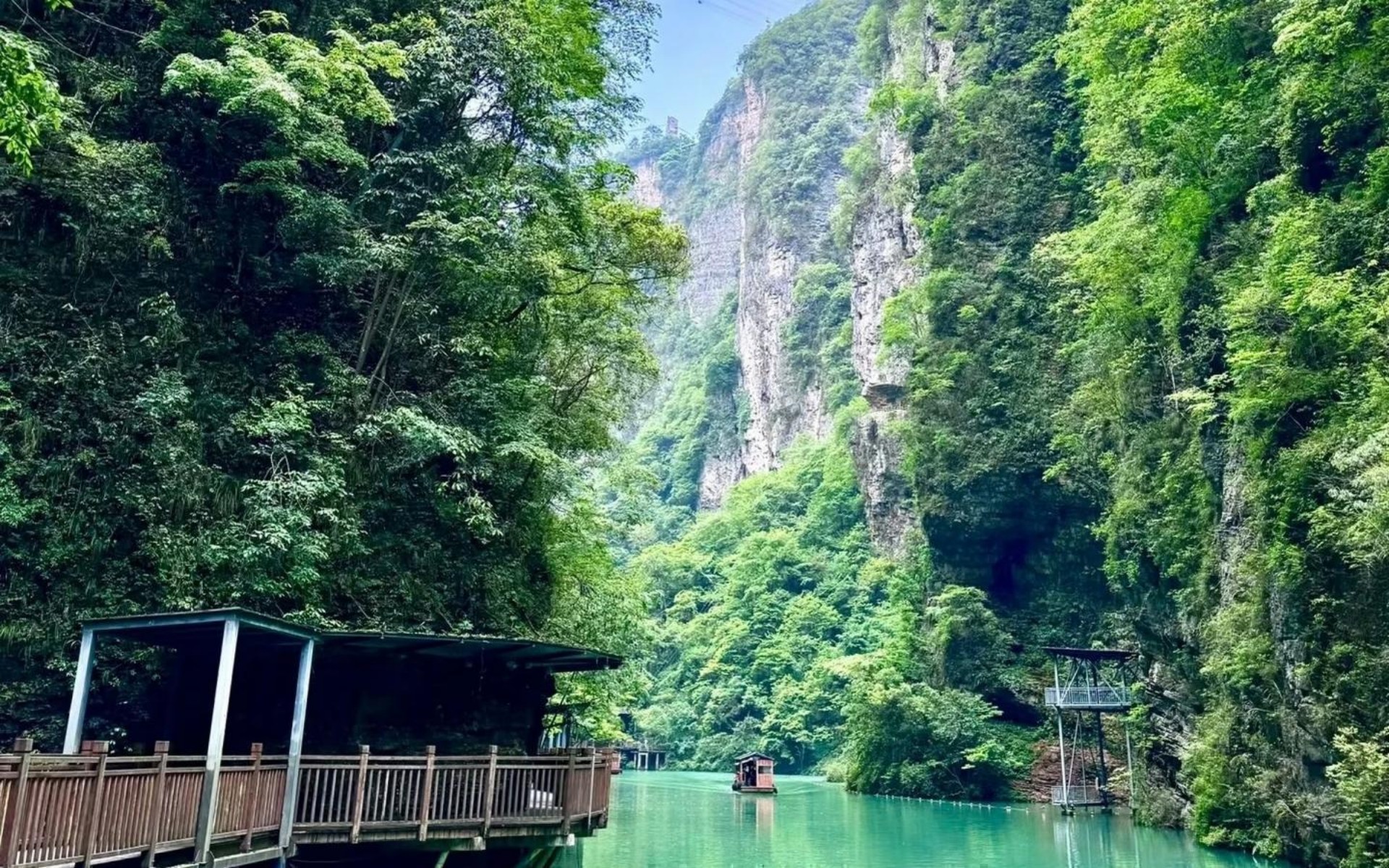
Read More